

Sunrise at Gadisar Lake: Jaisalmer’s Most Scenic Spot
8/16/2025
1) Introduction
Nestled just outside the golden walls of Jaisalmer Fort, Gadisar Lake (also Gadsisar Sar) transforms into a mystical vista at dawn. Once a vital water reservoir in the parched Thar Desert, today it stands as a symbol of Jaisalmer’s ingenuity, resilience, and enduring beauty. This guide explores its history, cultural importance, architecture, sunrise experience, and practical tips—offering everything you need to plan an inspiring visit at first light.
2) Historical & Cultural Significance
2.1 Origins & Construction
- Founded by Rawal Jaisal in 1156 AD as a rainwater reservoir to secure water for the newly built city.
- Later reconstructed in 1367 AD by Maharawal Gadsi Singh, earning its current name.
2.2 Architectural Enhancements
- Around this man-made lake, chhatris (cenotaphs), elaborate ghats (steps), and small temples sprung up, including the famed Tilon Ki Pol, built by the courtesan Tilon.
- Destined to channel both sacred rituals and royal processions, the lake’s structures blend Rajput and Jain aesthetics.
2.3 Lifeline & Living Heritage
- For centuries, the lake was Jaisalmer’s main water source until the Indira Gandhi Canal rerouted Himalayan waters in 1965, ensuring its permanence.
- Its shores host festivals like Gangaur and Teej, infused with devotional rituals and folk performances.
3) The Sunrise Experience
3.1 The Morning Magic
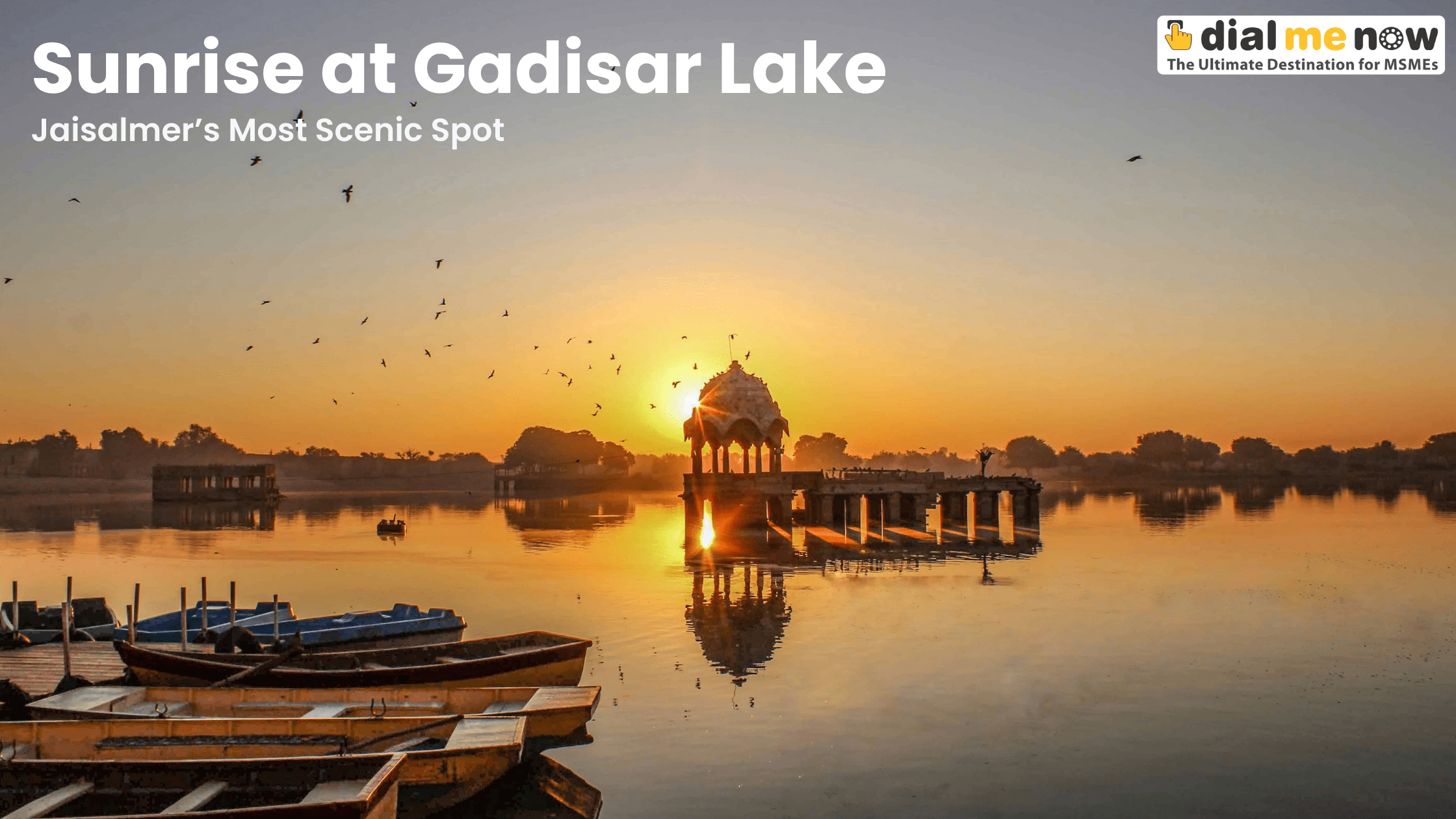
As first light strikes the sky, sandstone chhatris reflect on the glassy water. The gentle dawn breeze carries hymns and temple bells, while local fishermen prepare their boats—each moment a photographer’s dream.
3.2 Spiritual Tranquility
Not just visuals—sunrise is a sacred interlude. Early risers perform rituals by the ghats, offering flowers and prayers. That sense of stillness, as the world awakens, is immersive.
3.3 Birdlife & Flora
Winter draws migratory visitors like demoiselle cranes, Siberian cranes, ducks, and kingfishers. Dawn, when wildlife stirs, is ideal for binoculars.
3.4 Boat Rides at Dawn
Calm mornings are perfect for a serene rowboat or paddle boat. At ₹100–300 for a 30-minute ride, you glide past temples and chhatris, framed by rising sunbeams.
4) Architecture & Surroundings
4.1 Chhatris & Ghats
Elegant features dot the shoreline—intricately carved chhatris and tiered ghats combine beauty and ritual significance.
4.2 Tilon Ki Pol & Temples
Named for Tilon, its ornate gateway leads to shrines of Lord Shiva, Lord Krishna, and Jain deities—sites of cultural reverence and artistry.
4.3 Folklore Museum
On the lake’s banks, the Jaisalmer Folklore Museum (Mehar Bagh Garden) collects costumes, photographs, folk music/video exhibits, and artifacts of desert life.
5) Cultural Rituals & Community Life
5.1 Religious Practices
Mornings bring rituals—flower garlands floated in memory of ancestors, devotional chants, and temple services that make the lake a spiritual hub.
5.2 Festivals & Celebrations
During festivals like Gangaur, communities gather for boat processions and devotional music. This cultural fervor enlivens the lake with stories of love, loyalty, and harvest.
5.3 Local Life at Dawn
Watch fishermen casting nets, monks meditating, and chai vendors supplying morning tea—all against the backdrop of amber dawn—offering a slice of local routine.
6) Visiting Guide
6.1 Best Time & When to Go
- Visit October–March for moderate temperatures and winter.
- Aim for sunrise (about 6 AM) when peace meets vibrant skies.
6.2 Entry & Fees
- Entry: Free.
- Boating: ₹100–300 per 30-minute session.
- Museum: Nominal charge for the folklore museum.
6.3 Getting There
- Just 1.5–2 km from Jaisalmer Fort; reachable by auto, rickshaw, bike, or a 20-minute walk.
6.4 What to Pack
- Sunscreen, sunglasses, hat—dawn sun is deceptive.
- Light jacket for cold mornings.
- Camera, tripod, binoculars.
- Bottled water, though chai stalls are available.
6.5 Etiquette & Respect
- Remove shoes before ghats and temples.
- Ask permission before photos.
- Keep the lake clean; avoid littering.
7) Beyond Sunrise: Things to Do
7.1 Boat Ride Experience
Evening sails at sunset offer soft light reflections and quieter surroundings. Ideal for romantic or contemplative experiences.
7.2 Folklore Museum Visit
Learn about Thar traditions—music, desert crafts, camel and horse artifacts—adding depth to the visual beauty.
7.3 Evening Wanders
Return at dusk to enjoy lamp-lit chhatris and soft reflections—carry a warm shawl to enjoy this tranquil time.
7.4 Continuing the Heritage Trail
Nearby are Jaisalmer Fort, ornate havelis (Patwon Ki, Salim Singh Ki), and the Desert Culture Centre—ideal for a full day of exploration.
8) Photography & Birdwatching Tips
- Use long exposure for misty water effects.
- Golden hour at sunrise lends warmth to sandstone structures.
- Bring binoculars to spot migratory birds—winters yield rich sightings.
- Include local life—vendors and meditating pilgrims—for cultural context.
9) Itinerary Sample
| Time | Activity |
| 5:45 AM | Arrive; position at main chhatris for the first light |
| 6–6:30 AM | Capture sunrise reflections and prayer rituals |
| 6:30–7 AM | Early boat ride around temples and ghats |
| 7–7:30 AM | Visit Folklore Museum & grab chai from lakeside stall |
| 7:30–8 AM | Walk to Jaisalmer Fort or explore havelis nearby |
| Post8 AM | Return to hotel or proceed to further sightseeing |
10) Local Stories & Legends
- Tilon Ki Pol’s Rebellion: Tilon tricked the Maharawal into installing her gateway before placing Vishnu’s idol—a reflection of folk ingenuity.
- Royal Rituals: Maharavas used to conduct celebrations and processions around the lake’s shoreline, tying it deeply to royal heritage.
11) Conservation & Responsible Visits
- Benefit from Himalayan-fed canals—lake levels now dependable.
- Support lake restoration legal efforts; local movements aim to preserve its historic architecture.
- Avoid plastic, pick up litter, and respect rituals and prayer spaces.
12) Cultural Context in Jaisalmer Tourism
Gadisar Lake is more than a photograph—it symbolizes water, culture, and continuity in a desert city. Its proximity to other key attractions makes it a keystone of any Jaisalmer itinerary, connecting ecological history, community life, spirituality, and architectural grandeur in one serene space.
13) Final Reflection
At dawn, as sunbeams filter through village trees, and the lake’s calm mirrors centuries-old monuments, you witness the living spirit of Jaisalmer. It’s not just scenery—it’s the pulse of history, resilience, faith, and art converging at sunrise.
🛑 Disclaimer
This blog is for informational purposes only. Verify sunrise timings, boat availability, museum hours, and COVID-19 protocols before visiting. The author and affiliates are not responsible for any inconvenience. Respect local customs, follow conservation guidelines, and prioritize respectful travel.
Frequently Asked Questions (FAQs)
Q1. Is sunrise the only time to visit?
Sunset is also beautiful—but sunrise offers a quieter, spiritual ambiance.
Q2. Are boats safe for kids/families?
Yes—boats are stable and guided; life jackets may be available.
Q3. Can I photograph rituals?
Yes, but ask locals or priests for permission courteously.
Q4. Are boats available in off-season?
Winter is best; summer afternoons may not have boat services due to heat.
Q5. How long should I stay?
Allocate 1.5 to 2 hours for sunrise, boat ride, and museum.
Q6. Is there a dress code?
Modest attire; cover shoulders and knees near temples and ghats.
Q7. What wildlife might I see?
December-February sighting of migratory cranes, ducks, kingfishers.
Q8. Are there restrooms/refreshments?
Basic restrooms are available; chai stalls serve tea and snacks.
Q9. Does timing change by season?
Sunrise time varies; in summer as early as 5 AM, winter closer to 7 AM.
Q10. Is wheel‑chair access possible?
Ghats have steps; accessibility is limited—best used for boardwalk areas.