

The Leather Craft of Jodhpur: Exploring the Mojari Clusters
2/12/2026
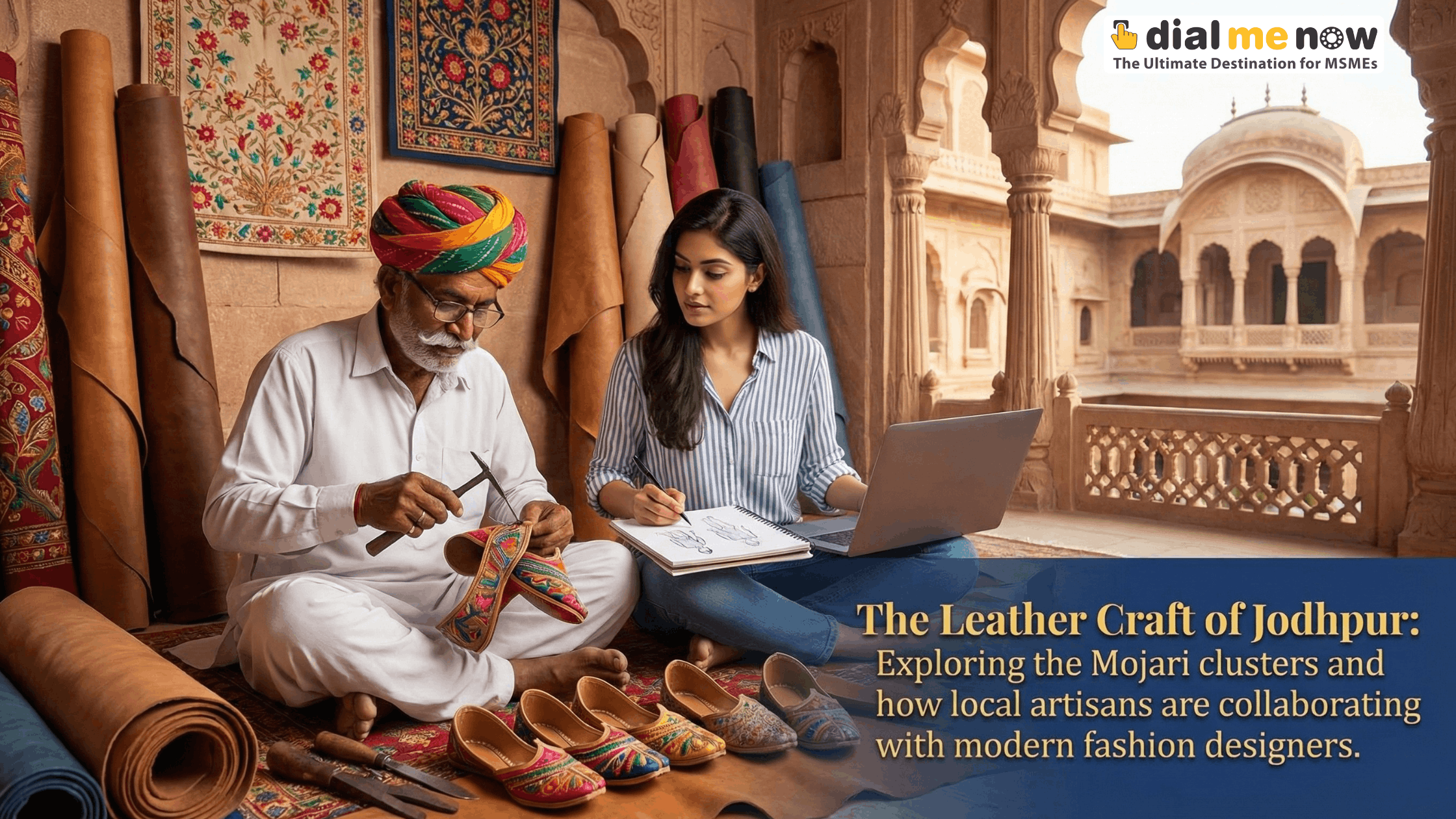
In the labyrinthine blue lanes of Jodhpur, a rhythmic tak-tak sound echoes through the courtyards of Jingar Mohalla and Sivanchi Gate. This is the heartbeat of a 500-year-old legacy: the making of the Jodhpuri Mojari. While the world knows the “Blue City” for its majestic Mehrangarh Fort, its true soul is stitched into the supple hides of its legendary leather footwear.
As we move through 2026, this ancient craft is experiencing a high-fashion renaissance. No longer confined to the dusty local bazaars, Jodhpuri Mojaris are walking the runways of Paris and Milan, thanks to a powerful new wave of collaboration between hereditary artisan clusters and modern fashion visionaries.
The Heritage of the Hide: A Royal Foundation
The story of the Jodhpuri Mojari is inextricably linked to the Rajput and Mughal eras. Originally, these shoes were the hallmark of nobility—heavily ornamented with gems, pearls, and real gold or silver Zari (metallic thread).
The Master Communities: Jingars and Mochis
- The Jingars: Taking their name from Jins (meaning “saddle”), the Jingar community were traditionally the master saddlers and armorers for the Marwari cavalry. Their expertise in creating heavy-duty, resilient leather for the battlefield was eventually adapted into the creation of the royal Juttis.
- The Mochis: Historically the specialized cobblers of every Rajasthani village, the Mochi community perfected the art of “Kashida” (embroidery) on leather, turning a functional item into a work of art.
The Anatomy of a Mojari: Sustainable Craftsmanship
A genuine Jodhpuri Mojari is an engineering marvel designed for the harsh Thar Desert. Every material is chosen for a specific functional property, ensuring the shoe is airy, tough, and flexible.
The Material Palette
- Buffalo Leather: Used for the soles (Tala) because of its extreme toughness and durability against the rocky Aravalli soil.
- Goat or Sheep Suede: Used for the upper part (Panna) because it is soft, breathable, and easy to punch for intricate needlework.
- Camel Leather: Traditionally prized for its unique grain and historical significance in desert life.
The “Interspecies” Making Process
- Vegetable Tanning: Hides are cured using natural materials like Babul bark and pomegranate peels. This process, which takes nearly 18 days, ensures the leather is hypoallergenic and develops a rich patina that improves with age.
- The Master’s Cut: Men typically handle the heavy leatherwork—cleaning, cutting with a Rapi (chisel), and shaping the footwear on a three-piece wooden Farma (mold/last).
- The Needlework (Kashida): The women of the household take over the ornamentation. They draw designs from imagination directly onto the leather and use silk or nylon threads to create floral, peacock, and geometric motifs.
- The Final Stitch: The upper and sole are joined using waxed cotton threads. Unlike modern shoes, authentic Mojaris have no “left” or “right” foot; the leather is so supple that it molds to the wearer’s foot shape after just a few wears.
Comparison: Traditional vs. Contemporary Mojaris
In 2026, the market is divided between the “Old School” heritage styles and the “New School” designer fusions.
| Feature | Traditional Jodhpuri Mojari | Contemporary Fusion Mojari |
| Sole Construction | 100% Buffalo Leather | Leather with Foam/Rubber padding |
| Embroidery | Hand-stitched Silk/Metal Zari | Mix of Hand-embroidery & Digital prints |
| Shape | Symmetrical (No Left/Right) | Anatomically shaped for urban use |
| Primary Use | Weddings & Cultural Festivals | Casual wear, Office, and High-Fashion |
| Sustainability | Fully Biodegradable | High (Recycled materials often used) |
The Designer Collaboration Era: Global Runways
The most exciting development in 2026 is the bridge between the rural clusters of Jodhpur and international fashion houses. Designers like Raghavendra Rathore and global boutique brands are now working directly with Jodhpur’s National Award-winning artisans (like the Mohan Lal Gujar family) to redefine the craft.
- Modernizing the Last: Designers are introducing contemporary shoe lasts to create Mojaris with better arch support and anatomical left/right fitting, making them comfortable for 10,000-step city days.
- Innovative Uppers: By combining traditional leather soles with denim, upcycled velvet, or even sustainable hemp uppers, artisans are creating “Vegan-Hybrid” Mojaris that appeal to the eco-conscious Gen Z market.
- The “Slow Fashion” Export: High-end retailers in Paris and New York are now commissioning Jodhpur clusters for limited-edition drops. These pieces often feature semi-precious stones and reclaimed brass hardware, selling as “Wearable Heritage” rather than just footwear.
❓ Frequently Asked Questions (FAQ)
Q1: Why are Jodhpuri Mojaris symmetrical (no left/right)?
A: This is a hallmark of traditional construction. The high-quality vegetable-tanned leather is so soft that it takes the unique shape of the wearer’s foot within 2-3 wears, providing a custom-fit feel.
Q2: How do I tell a real leather Mojari from a synthetic one?
A: Real leather has an earthy, woody smell from babul bark tanning. Synthetic versions often smell like plastic or glue. Also, check the sole—authentic Mojaris will have visible hand-stitching with thick cotton thread.
Q3: Can these shoes be worn with Western outfits?
A: Absolutely. In 2026, “Indo-Western Fusion” is a major trend. Jodhpuri Mojaris pair perfectly with raw denim jeans, linen trousers, or bohemian summer dresses.
Q4: How should I break in a new pair of Mojaris?
A: If the leather feels stiff, apply a small amount of mustard oil or coconut oil to the inner edges. Wear them with thin socks for the first hour at home to help them mold to your feet.
Q5: Are Jodhpuri Mojaris water-resistant?
A: While the buffalo leather sole is very tough, traditional Mojaris are not waterproof. If they get wet, let them dry naturally in the shade. Never put them near a heater or in direct sunlight, as the leather may crack.
Q6: What is “Kashida” embroidery?
A: It is the specific style of fine-needle embroidery practiced in Rajasthan. In Jodhpur, it often features bolder shades and higher contrasts than the delicate work found in Jaipur.
Q7: Do these shoes have a lifespan?
A: A well-made, hand-stitched leather Mojari can easily last 3 to 5 years with proper care. Many artisans offer repair and “sole-replacement” services.
Q8: Why is camel leather used?
A: Camel leather is highly durable and has a unique porous texture that makes it exceptionally breathable, perfect for the hot Rajasthani climate.
Q9: What are the main clusters in Jodhpur for this craft?
A: The primary clusters are located in Jingar Mohalla, Sivanchi Gate, and the bustling Girdikort Bazaar.
Q10: Are there “Vegan” Jodhpuri Mojaris available?
A: Yes, many modern artisans in 2026 are using high-quality resin leathers and organic cotton canvas for the uppers while maintaining traditional embroidery techniques.
Q11: Who are the famous artisans in Jodhpur?
A: Master craftsmen like Mohan Lal Gujar and Chandra Gujar are National Award winners who have been instrumental in preserving and modernizing the craft.
Q12: Is the embroidery done by machine now?
A: In commercial markets, machine embroidery is common. However, the high-end “Heritage” pieces and designer collaborations still rely on 100% hand-stitching by local women.
Q13: Why do some Mojaris have bells or seeds inside?
A: This is a traditional feature for certain tribal communities, like the Kalbeliyas. The sound was originally intended to deter snakes and scorpions during desert treks.
Q14: Are Jodhpuri Mojaris ethically made?
A: Traditional clusters operate on a “Family Workshop” model. By booking through platforms like DialMeNow, you ensure you are buying directly from the source, supporting fair wages and community development.
Q15: What is the price range for an authentic pair?
A: In Jodhpur, a standard high-quality pair starts around ₹800 to ₹1,500. Designer collaborations or those with real Zari work can range from ₹3,500 to ₹10,000+.
Disclaimer
The leather industry in Jodhpur is subject to local artisanal cycles and the availability of raw materials. While we promote sustainable and ethical clusters, we recommend checking for “Certified Handmade” labels to ensure the highest quality.
Conclusion
The Jodhpuri Mojari is a testament to the resilience of Rajasthani culture. It has survived the era of the Maharajas, the industrial revolution, and the age of fast fashion. Today, by embracing modern design and global standards, Jodhpur’s artisans are ensuring that this “wearable art” continues to walk into the future—one stitch at a time.