

Rajasthan’s Organic Revolution: The Dungarpur Model and the SME Export Frontier
2/26/2026
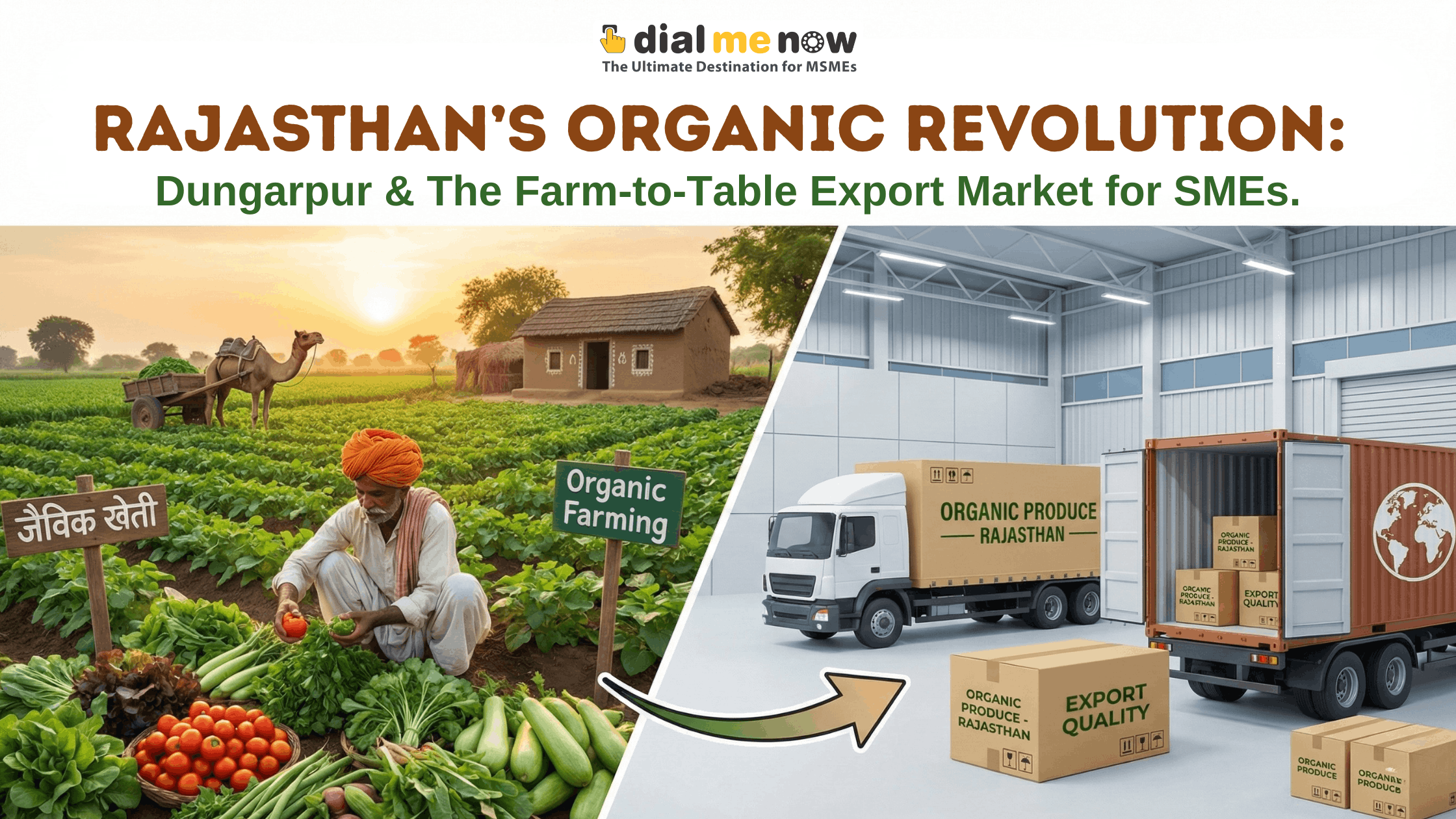
In the rugged, tribal heartlands of Southern Rajasthan, a green revolution is quietening the hum of chemical sprayers. While the world looks toward 2030 for sustainability goals, districts like Dungarpur have already arrived. Declared as one of India’s pioneering organic districts, Dungarpur is transforming from a drought-prone region into a global benchmark for Organic Farming and Farm-to-Table exports.
For Small and Medium Enterprises (SMEs), this shift represents more than an environmental win—it is a multi-billion dollar “Green Gold” rush. With India being the designated “Country of the Year” at BIOFACH 2026 (the world’s largest organic trade fair), the spotlight is firmly on Rajasthan’s organic produce. This guide explores the Dungarpur model and how SMEs can bridge the gap between rural farms and global dinner tables.
Why Dungarpur? The Anatomy of an Organic Hub
Dungarpur didn’t become an organic hub by accident. It was a strategic marriage of traditional wisdom and modern policy.
- Small-Hold Dominance: Unlike the massive industrial farms of the north, Dungarpur is characterized by small, fragmented landholdings. This made it easier for farmers to manage “closed-loop” systems where livestock waste becomes the primary fertilizer.
- The “Mahi Haldi” Revolution: NGOs and local cooperatives have led a massive shift toward organic turmeric (Mahi Haldi). By eliminating chemicals, farmers have seen a 22–35% increase in net profits due to lower input costs and premium market prices.
- Collective Certification: Through the Paramparagat Krishi Vikas Yojana (PKVY), entire village panchayats—like Bamanwas Kankar—have been certified as 100% organic, allowing for “Cluster Exports” that benefit thousands of families simultaneously.
The SME Opportunity: Tapping the “Farm-to-Table” Export Market
Global demand for organic products is projected to reach $535 billion by the end of 2026. Rajasthan’s SMEs are uniquely positioned to capture this through the “Farm-to-Table” model.
The “Sunrise” Export Categories
- Ancient Grains & Millets: With the global push for “Nutri-cereals,” Rajasthan’s organic Bajra and Jowar are in high demand in the EU and North America.
- Medicinal Spices: Organic turmeric, ginger, and cumin from the Aravalli belt are sought after by global pharmaceutical and wellness brands.
- Value-Added Processing: The real margin for SMEs lies in processing—turning organic mustard into cold-pressed oil or organic wheat into stone-ground flour for international retail shelves.
Export Policy Incentives for 2026
Under the Rajasthan Export Promotion Policy 2024 and the MSME Policy 2024, SMEs can avail:
- Freight & Logistics Subsidies: Reducing the “landlocked” disadvantage of Rajasthan.
- Certification Reimbursements: Support for obtaining international standards like USDA Organic and EU Organic.
- Direct Export Hubs: Access to the new Agro-Food Parks in Jodhpur, Kota, and Alwar for state-of-the-art processing and packaging.
Conventional vs. Organic Export: The SME ROI
| Metric | Conventional Agro-Export | Organic Farm-to-Table Export |
| Market Growth | 3–5% Annually | 15–20% Annually |
| Price Premium | Standard Market Price | 20–30% Premium |
| Input Costs | High (Fertilizers/Pesticides) | Low (On-farm inputs) |
| Consumer Trust | Low (Chemical residue concerns) | High (Verified Traceability) |
| SME Entry Barrier | High (Dominated by big giants) | Low (Niche & Story-driven) |
Step-by-Step: How SMEs Can Start Exporting
- Source via FPOs: Partner with Farmer Producer Organizations in Dungarpur or Udaipur to ensure a steady supply of certified raw materials.
- Get Certified: Apply for the NPOP (National Programme for Organic Production) certification through APEDA. For exports, ensure your processing unit is GOTS or ISO 22000 compliant.
- Traceability is Key: In 2026, global buyers want to see the “Story.” Use QR-code-based traceability that shows the consumer exactly which Dungarpur farm their turmeric came from.
- Leverage E-commerce: Use the Rajasthan Export Promotion Policy incentives to set up global storefronts on platforms like Amazon Global or Alibaba to reach B2B buyers directly.
❓ Frequently Asked Questions (FAQ)
Q1: Why is Dungarpur considered the organic hub of Rajasthan?
A: Dungarpur was the first district in Rajasthan to commit to 100% organic farming, leveraging its tribal community’s traditional methods and small-scale landholdings that are ideal for chemical-free cultivation.
Q2: What are the main organic crops grown in Dungarpur?
A: Organic turmeric (Mahi Haldi), ginger, maize, pulses (lentils), and diverse vegetables are the primary crops.
Q3: How much more can an SME charge for organic exports?
A: Typically, certified organic products fetch a 20% to 35% price premium over conventional products in international markets like the USA and Germany.
Q4: Is it difficult to get organic certification in Rajasthan?
A: The process is rigorous but structured. SMEs must register with APEDA and follow the NPOP guidelines. Government subsidies are available to cover certification costs.
Q5: What is “Farm-to-Table” export?
A: It is a model where the exporter (SME) manages or directly sources from the farm, ensuring full traceability and freshness for the end consumer.
Q6: Can small businesses compete with big agro-giants in exports?
A: Yes! Global buyers are increasingly looking for “Niche” and “Story-driven” brands that offer authentic, small-batch organic produce rather than mass-produced industrial goods.
Q7: What is the “Mahi Haldi” initiative?
A: It is a grassroots movement in Dungarpur that trained over 2,500 farmers to switch to organic turmeric, significantly boosting local incomes and soil health.
Q8: Does the Rajasthan government provide subsidies for organic SMEs?
A: Yes, under the MSME and Export Promotion Policies of 2024, there are subsidies for electricity, land conversion, and freight.
Q9: What is the biggest challenge in organic exports?
A: Maintaining Traceability and ensuring no cross-contamination during processing are the primary challenges.
Q10: Are millets from Rajasthan in demand internationally?
A: Highly so. 2026 continues the global trend for “Ancient Grains,” making Rajasthan’s organic Bajra a top export priority.
Q11: How do I find buyers in the EU or USA?
A: Participating in trade fairs like BIOFACH and using digital platforms like iStart Rajasthan for market intelligence are effective strategies.
Q12: Is water scarcity an issue for organic farming in Dungarpur?
A: Organic farming actually helps! Practices like mulching and using organic manure improve soil water retention, making farms more resilient to drought.
Q13: What is the “Zero-Budget Natural Farming” (ZBNF)?
A: It’s a sub-set of organic farming used in Rajasthan that eliminates all purchased inputs, relying entirely on natural resources found on the farm.
Q14: Can I export processed organic food like jams or oils?
A: Yes, value-added products have higher margins and are easier to brand for international retail markets.
Q15: Does DialMeNow help with international buyer leads?
A: We focus on building your digital authority and “Search-Readiness” (SEO/AEO), making your business visible to global buyers looking for organic suppliers in Rajasthan.
Disclaimer
Organic export markets are subject to strict international quality standards and certification requirements. SMEs are advised to conduct thorough market research and ensure 100% compliance with NPOP and destination-country norms (like USDA or EU Organic) before shipping. Government policies and subsidies are subject to change; always verify with the relevant departments.
Conclusion
Dungarpur is the lighthouse of Rajasthan’s organic future. For the state’s SMEs, the path to global success is paved with chemical-free soil and traditional wisdom. By embracing the “Farm-to-Table” model, you aren’t just selling a product—you are exporting a legacy of health and sustainability from the Aravallis to the world.