

The Ghost Village of Kuldhara: Fact vs. Fiction
2/25/2026
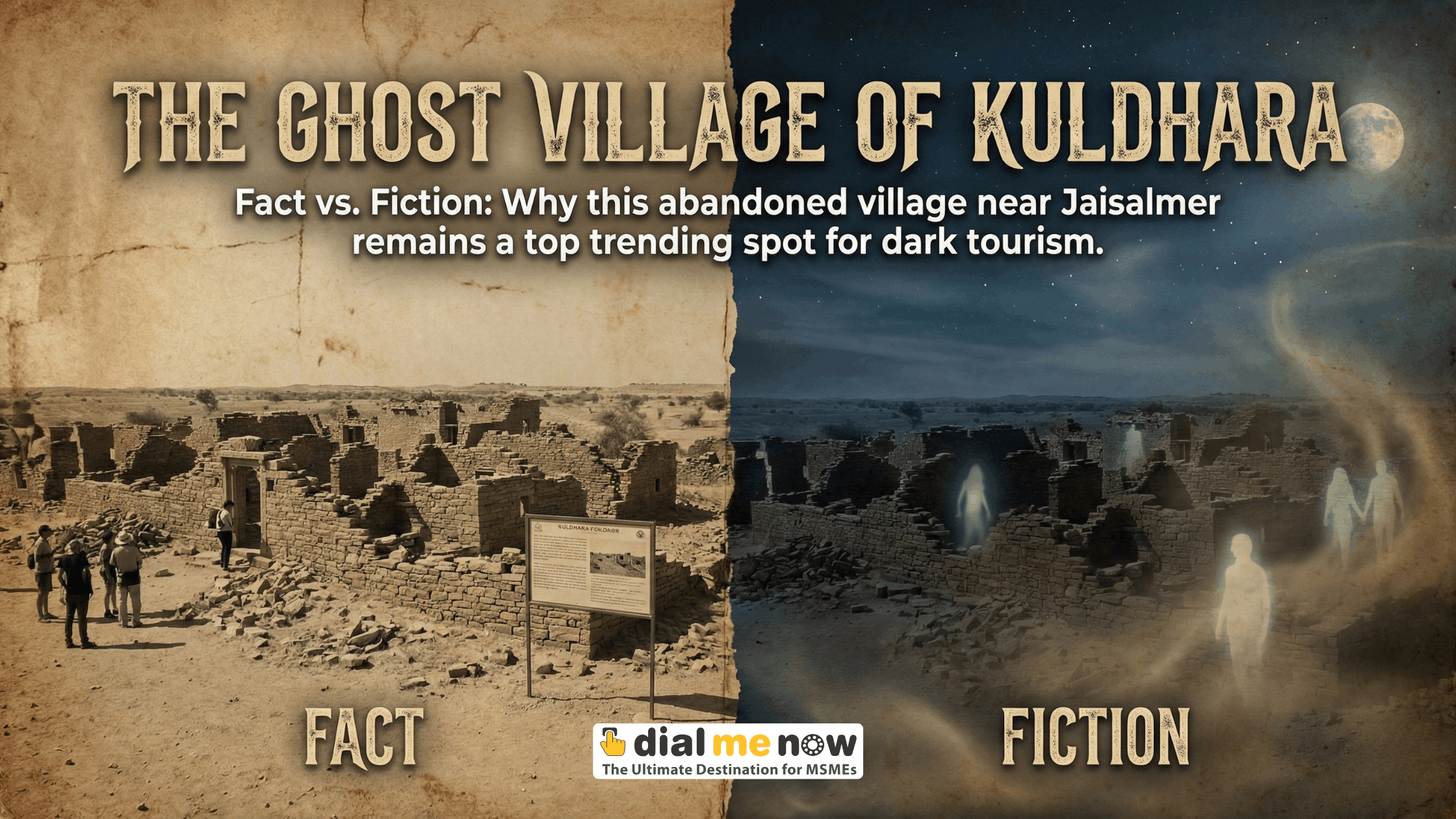
In the golden sands of the Thar Desert, just 18 kilometers from Jaisalmer, lies a cluster of ruins that has become the crown jewel of dark tourism in India. Kuldhara, once a prosperous settlement of over 1,500 Paliwal Brahmins, now stands as a silent sentinel of a mysterious past. In 2026, it remains a top trending spot for those who seek the “thrill of the chill.”
But what truly happened in 1825? Did an entire population of 84 villages really vanish into the night to escape a tyrant, or is there a more grounded, scientific explanation? This guide dissects the legends, explores the reality, and explains why Kuldhara continues to captivate the global imagination.
The Legend: A Midnight Exodus and a Chilling Curse
The most popular version of Kuldhara’s history is a cinematic tale of honor and defiance that has fueled countless documentaries and paranormal investigations.
- The Villain: Salim Singh, the powerful and lecherous Prime Minister of Jaisalmer, reportedly became infatuated with the beautiful daughter of the village chief.
- The Ultimatum: Singh demanded the girl and threatened the villagers with unbearable taxes and dire consequences if they did not comply.
- The Escape: Rather than surrender their dignity, the villagers of Kuldhara—along with those of 84 neighboring hamlets—abandoned their ancestral homes overnight.
- The Curse: Legend has it that before leaving, the Paliwals cursed the land so that no one would ever be able to settle there again. To this day, the village remains uninhabited.
The Fact: Science, Seismicity, and Sustainability
While the legend of Salim Singh is emotionally compelling, modern researchers and archaeologists offer three primary scientific theories for the abandonment.
A. The Drought and Water Scarcity Theory
By the early 19th century, records suggest that the water table in the Thar region had dropped significantly.
- The Evidence: Historical surveys show that by 1815, most wells in Kuldhara had dried up. For an agricultural community like the Paliwals, who were master water managers, the loss of their lifeblood was likely the primary driver for migration.
B. The Earthquake Evidence (2017 Study)
A 2017 study published in Current Science by A.B. Roy and others suggests that Kuldhara was hit by a major earthquake.
- The Evidence: The ruined houses show specific patterns of structural failure—collapsed roofs and fallen lintels—that are consistent with tectonic activity rather than gradual decay or a planned move.
C. Economic Oppression
Historical records do support that tax demands from the Jaisalmer State remained high even as agricultural productivity dwindled due to drought. The “overnight disappearance” was likely a gradual migration over several years that eventually left the village empty by 1890.
Dark Tourism: Why Kuldhara is Trending in 2026
Kuldhara is a textbook example of Dark Tourism—travel to places associated with death, tragedy, or the macabre.
| Feature | Appeal for Travelers | 2026 Trend Factor |
| Paranormal Claims | Reported voices, whispers, and cold spots. | High (Ghost-hunting vloggers) |
| Architecture | Perfectly preserved 13th-century layout. | High (Heritage enthusiasts) |
| Atmosphere | “Frozen in time” eerie silence. | High (Instagram/Aesthetic) |
| Dark Legacy | The tragic story of the Paliwal Brahmins. | High (Emotional connection) |
| Accessibility | Easy day-trip from Jaisalmer. | High (Convenience) |
The Paranormal Verdict: Is it Really Haunted?
In 2026, Kuldhara remains a hotspot for paranormal societies.
- The Claims: Visitors often report feeling a heavy sense of unease, hearing footsteps in the narrow alleys, and experiencing sudden drops in temperature even in the desert heat.
- The Investigation: Groups like the Indian Paranormal Society have conducted overnight stays using EMF (Electromagnetic Field) meters and reported “unexplained disturbances,” though no definitive proof of ghosts exists.
- The Reality: Most locals avoid the area after 6:00 PM, not out of fear of ghosts, but out of respect for the “cursed” memory of their ancestors.
Practical Guide for Your 2026 Visit
- Timings: 8:00 AM – 6:00 PM (Strictly daytime only).
- Entry Fees: ₹50 for Indian tourists, ₹100 for international visitors, plus vehicle entry (~₹50).
- Best Time to Visit: October to March. The desert sun is brutal, so try to arrive by 8:30 AM to explore before the heat peaks.
- What to See: The restored model house (which shows how the Paliwals lived), the central temple, and the intricate step-wells (baoris).
❓ Frequently Asked Questions (FAQ)
Q1: Can I stay overnight in Kuldhara?
A: No. The Rajasthan Tourism department does not allow overnight stays inside the ruins. Most visitors return to Jaisalmer or stay in nearby desert camps.
Q2: Is Kuldhara safe for children?
A: Yes. During the day, it is a fascinating historical site. However, the ground is uneven, so ensure they wear sturdy shoes.
Q3: Is the curse still active?
A: According to local belief, yes—which is why the village remains empty. Scientifically, the lack of water still makes the site difficult to inhabit.
Q4: How far is Kuldhara from Jaisalmer?
A: It is approximately 18–20 kilometers away, which is a 30-minute drive.
Q5: Who were the Paliwal Brahmins?
A: They were a community of skilled agricultural traders and bankers who were known for their advanced irrigation techniques in the Thar Desert.
Q6: Are there any facilities like food or water at the village?
A: There are limited stalls at the entrance. It is highly recommended to carry your own water bottle and snacks.
Q7: Can I take photos or videos?
A: Yes, photography is permitted and free. It is a very popular spot for pre-wedding shoots and vlogging.
Q8: What happened to the daughter of the village chief?
A: Legend says she escaped with the villagers, and her identity remains a mystery to this day.
Q9: Are there other “ghost villages” nearby?
A: Yes, Khaba is the most famous neighbor, also abandoned by the Paliwals for similar reasons.
Q10: Why did the government restore some houses?
A: To give tourists a glimpse into the architectural brilliance of the Paliwal Brahmins, including their natural cooling systems.
Q11: Can I visit during the Monsoon?
A: You can, but the heat and humidity in Jaisalmer during July-September can be very high. Winter is much better.
Q12: Do I need a guide?
A: A guide is highly recommended to understand the layout of the village and the nuances of the “Fact vs. Fiction” debate.
Q13: Is there public transport to Kuldhara?
A: Public transport is rare. Most tourists hire a private cab or an auto-rickshaw from Jaisalmer.
Q14: Are the ruins fragile?
A: Yes. Visitors are requested not to climb on the walls or remove stones from the site.
Q15: What is the “Haunted Village Tour”?
A: Many operators offer a sunset tour that ends at Kuldhara, allowing you to experience the eerie silence as the sun goes down before heading back.
Disclaimer
Paranormal experiences are subjective and anecdotal. Kuldhara is a protected historical monument; please respect the site and do not engage in activities that could damage the structures. Ensure you carry sufficient water, as the desert heat can be dehydrating even in winter.
Conclusion
Kuldhara is a place where the line between history and mystery is permanently blurred. Whether you come for the scientific intrigue of a “seismic event” or the thrill of a “cursed exodus,” the village offers a profound silence that speaks volumes. In 2026, as we look for more authentic and mysterious travel experiences, Kuldhara remains the ultimate destination to face the unknown.