

The Coriander Capital: Why Ramganj Mandi Controls 80% of India’s Coriander Trade in 2026
4/20/2026
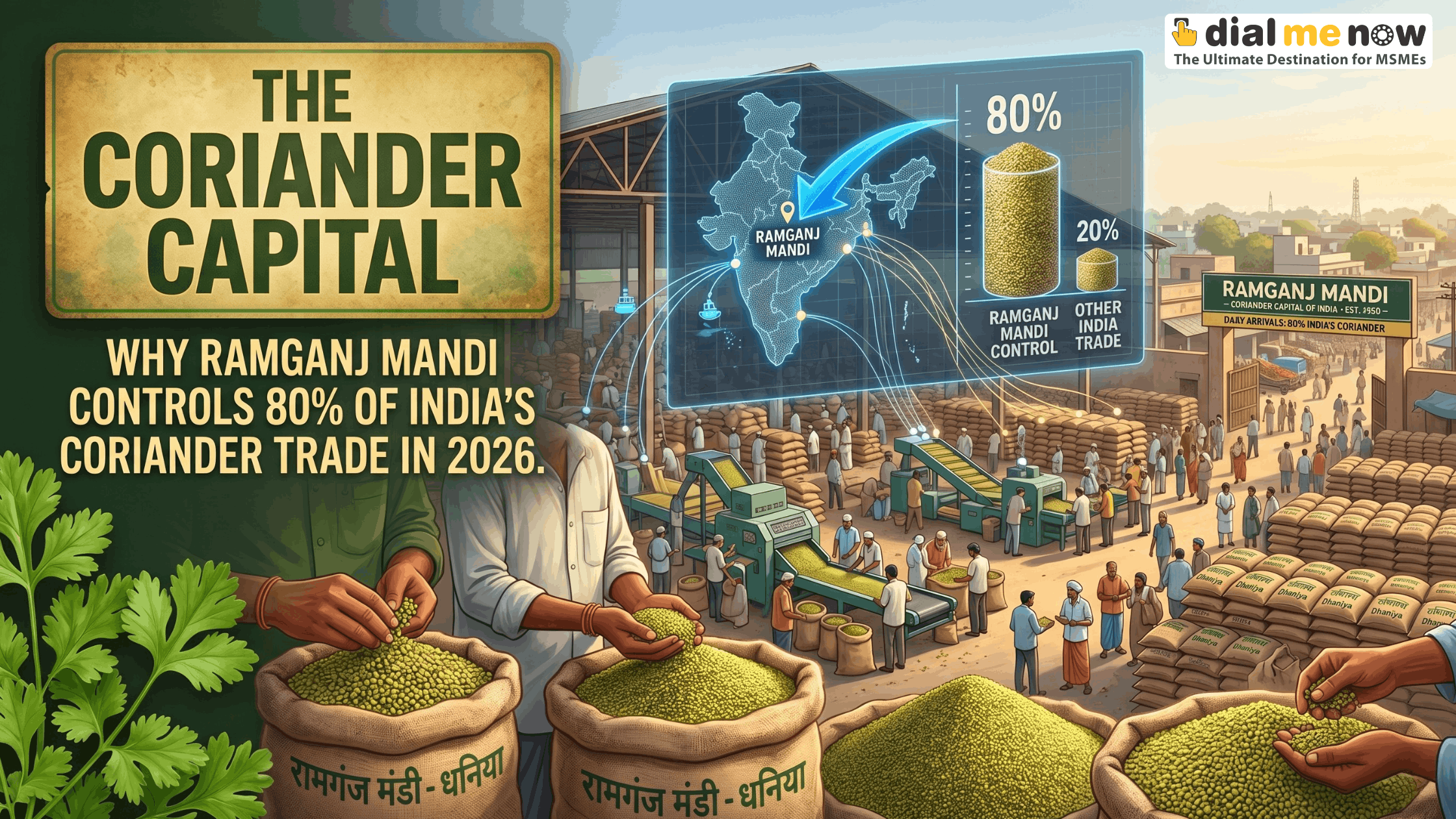
The aroma of freshly harvested dhaniya (coriander) doesn’t just fill the kitchens of India; it defines the economy of a small yet powerhouse town in Rajasthan. Welcome to Ramganj Mandi, the undisputed “Coriander Capital of the World.”
As we move through 2026, the global spice market has faced significant supply chain shifts, yet one thing remains constant: Ramganj Mandi controls a staggering 80% of India’s coriander trade. But how did a municipality in the Kota district become the nerve center for a spice used from Mexican salsas to Indian curries?
This deep dive explores the infrastructure, the “Eagle” and “Badami” grades, and the economic masterclass that keeps Ramganj Mandi at the top.
The Geographic Goldmine: The Hadoti Region Connection
Ramganj Mandi’s dominance isn’t an accident of history; it’s a result of geography. Located in the Hadoti region of Southeast Rajasthan, the town sits at the crossroads of the most fertile coriander-growing belts in India.
- Proximity to Production: The town is surrounded by major producing districts like Baran, Jhalawar, and Kota in Rajasthan, as well as the Guna and Mandsaur districts in Madhya Pradesh.
- Climate Advantage: The semi-arid yet well-irrigated plains of Hadoti provide the perfect “dry-cold” window required for coriander seeds to develop high volatile oil content—the secret behind that punchy citrus aroma.
Infrastructure: More Than Just a Grain Market
By 2026, Ramganj Mandi has evolved from a traditional mandi into a high-tech spice hub.
- The Spices Park Advantage: The Spices Board of India’s dedicated Spice Park in Ramganj Mandi has revolutionized value addition. Instead of just selling raw seeds, the hub now offers advanced cleaning, sorting, and steam sterilization.
- Massive Arrivals: On peak season days, the market handles upwards of 6,500 tonnes of coriander seeds daily. This sheer volume allows the mandi to dictate national and international price cues.
- Connectivity: Situated on the Delhi-Mumbai railway line and connected via NH-12, the logistics network ensures that coriander processed in the morning can be on its way to Mundra Port for export by evening.
Decoding the “Ramganj Grades”: Eagle, Badami, and Scooter
If you walk through the trading floor, you won’t just hear people asking for “coriander.” The trade is segmented into specific quality tiers that Ramganj Mandi has standardized for the global market:
| Grade | Characteristics | Primary Use |
| Eagle | High luster, greenish-brown, very clean. | Premium export and retail packaging. |
| Badami | Light brown/yellowish, slightly duller but high aroma. | Bulk powder manufacturing and local grinding. |
| Scooter | Mid-range quality, uniform size. | Industrial food processing. |
| Single/Double Parrot | Vibrant green color, premium appearance. | High-end culinary garnish and garnishing powders. |
2026 Market Dynamics: Supply vs. Demand
In 2026, the coriander market has seen a “tighter” supply landscape. While total Indian production is estimated at roughly 9.5 million bags, the demand—including growing exports to the Middle East and Europe—exceeds 14 million bags.
Because Ramganj Mandi holds the largest “carryover stock” and the most sophisticated storage facilities (Cold Storages), it acts as a buffer. When production in Gujarat or Madhya Pradesh dips, the world looks to the warehouses of Ramganj to stabilize prices.
The Economic Impact: One District, One Product (ODOP)
The Government of India officially recognized “Coriander” as the One District One Product (ODOP) for Kota. This has unlocked:
- Subsidies for small-scale processing units.
- Better lab-testing facilities to meet European Union pesticide residue standards.
- Direct-to-farmer digital payment systems that bypass predatory middlemen.
FAQs: Everything You Need to Know About Ramganj Mandi Coriander
1. Why is Ramganj Mandi called the Coriander City?
It hosts the largest wholesale coriander market in Asia, handling the majority of India’s total output.
2. What is the current coriander price in Ramganj Mandi for 2026?
Prices fluctuate daily, but in early 2026, “Eagle” quality has been hovering between ₹9,200 to ₹9,500 per quintal.
3. Does Ramganj Mandi only trade coriander?
While coriander is king, it is also a massive hub for “Kota Stone” (limestone) and other grains.
4. How can I identify high-quality coriander from this market?
Look for seeds with a moisture content below 9% and high volatile oil content (aroma).
5. What are “Split Coriander Seeds” (Dhaniya Dal)?
These are processed seeds used primarily as a mouth freshener or in specific spice blends.
6. Is the coriander organic?
A significant portion of the new arrivals in 2026 is certified organic, catering to European export demands.
7. Which states supply coriander to this mandi?
Primarily Rajasthan and Madhya Pradesh, with occasional arrivals from Gujarat.
8. What is the peak season for coriander arrivals?
The peak season typically starts in February and lasts through April.
9. How does the Spices Board help traders here?
Through the Spice Park, providing cleaning, grading, and warehouse facilities.
10. What is “Stem Gall” disease?
It’s a common coriander disease (locally called Longia) that traders and farmers in Ramganj are currently fighting with resistant varieties like RKD-18.
11. Can I buy coriander online from Ramganj Mandi?
Yes, many wholesalers now operate through digital B2B platforms.
12. What determines the “Green” color in premium grades?
The drying process. Shade-dried coriander retains a vibrant green color (Parrot quality) compared to sun-dried seeds.
13. Is Ramganj Mandi coriander exported?
Yes, it is exported to over 50 countries, including the USA, UK, UAE, and Malaysia.
14. What is the role of AGMARK in this trade?
AGMARK provides the official government grading that ensures purity and safety standards.
15. How many villages contribute to this mandi?
Over 160+ villages in the Ramganj Mandi sub-district alone depend on this market.
Conclusion: The Future of the Spice Trade
Ramganj Mandi’s control over 80% of the trade isn’t just about volume; it’s about a legacy of trust and specialized infrastructure. As global consumers become more conscious of spice purity and “farm-to-fork” traceability, Ramganj Mandi is leading the way with standardized grading and tech-enabled auctions.
Whether you are a spice enthusiast, a bulk trader, or a food business owner, the quality coming out of this Rajasthan town is the benchmark for the entire industry.
Experience the Authentic Taste of Rajasthan! > Looking for the finest, AGMARK-certified coriander directly from the heart of the “Coriander City”? Don’t settle for stale supermarket spices. Book your bulk or retail orders directly through our website to get the freshest harvest with the highest volatile oil content. We guarantee farm-to-table transparency and the best prices in the 2026 market.
Disclaimer
The market prices and production statistics mentioned are based on early 2026 projections and mandi reports. Commodity trading involves market risks; users are advised to check real-time “mandi bhav” (market rates) before making large-scale financial commitments.