

Jalore’s Cumin Clusters: Navigating the World’s Most Potent “Jeera” Market for Bulk Procurement
4/27/2026
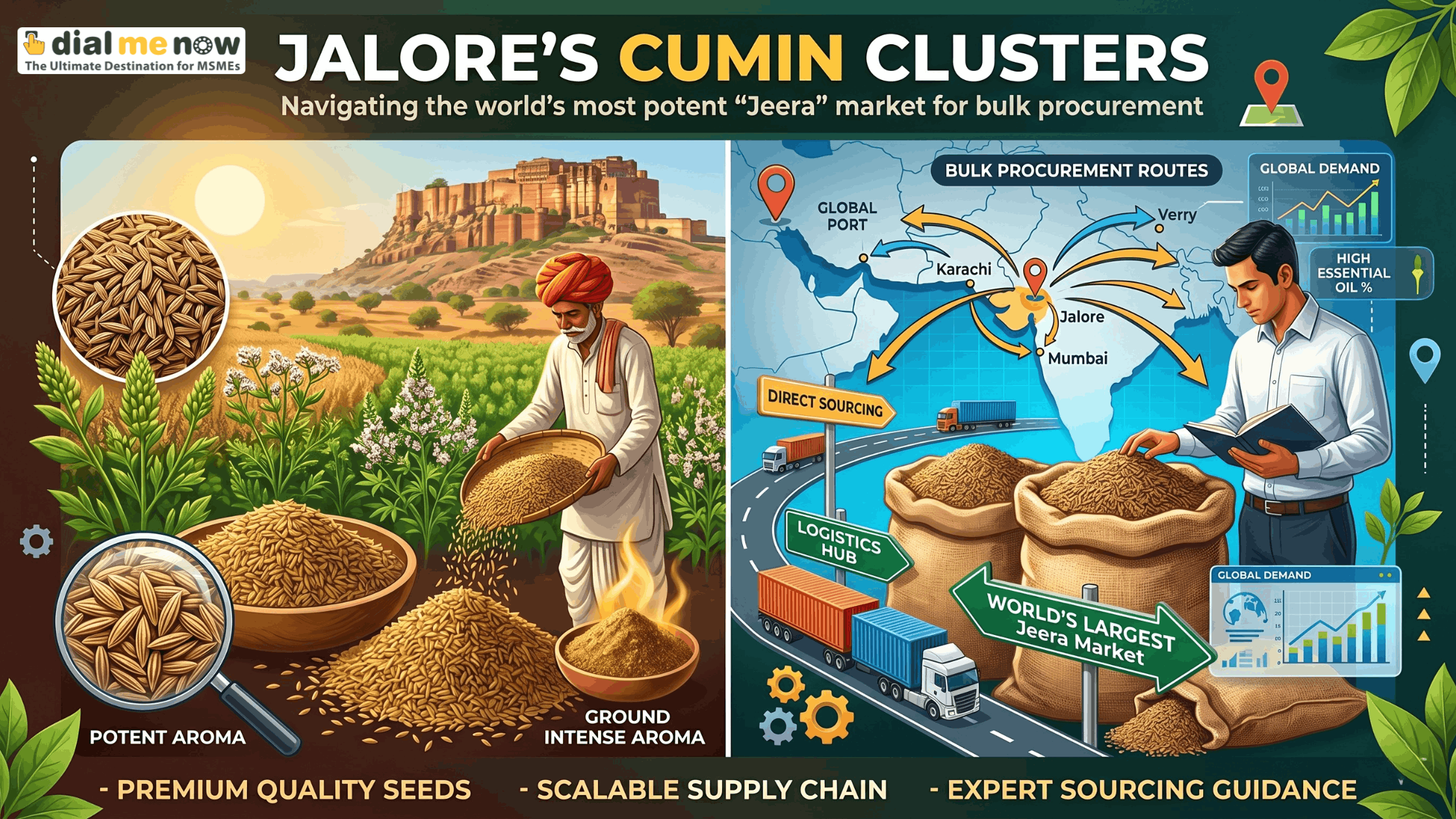
In the arid, sun-drenched landscapes of Southwest Rajasthan lies a district that holds the secret to the world’s most aromatic spice racks. While Gujarat often makes headlines for volume, Jalore is the silent titan of potency. As of 2026, Jalore’s cumin clusters have become the primary destination for international exporters and premium domestic brands seeking the highest essential oil content in Cuminum cyminum.
If you are a bulk buyer, food processor, or spice enthusiast navigating the 2026 market, understanding the “Jalore Advantage” is no longer optional—it is a competitive necessity.
The Science of Potency: Why Jalore Cumin is Different
What makes Jalore’s “Jeera” the gold standard for bulk procurement? It comes down to the Terroir—the unique combination of soil, climate, and traditional farming.
- High Volatile Oil Content: While average cumin seeds hover around 2.0% to 3.0% volatile oil, Jalore’s premium harvests in 2026 are testing as high as 4.5%. This means more flavor per gram and a longer shelf life for ground powders.
- The “Desert Stress” Factor: The extreme temperature fluctuations in Jalore—cold winter nights and blistering spring days—force the cumin plant to concentrate its defensive compounds, primarily cuminaldehyde, which is responsible for that signature earthy, spicy punch.
- Size and Luster: Jalore seeds are known for being “Medium-Bold,” with a distinct greyish-brown luster that signifies fresh, well-dried stock.
Navigating the 2026 Market Dynamics
The 2026 cumin season has been a year of “The Great Shift.” While production in Gujarat saw a decline due to acreage shifts, Rajasthan—led by Jalore and Barmer—has seen a 15% increase in production.
Current Price Trends (April 2026)
| Grade | Average Price (per Quintal) | Market Sentiment |
| Europe Quality (99.5% Purity) | ₹22,500 – ₹24,000 | High Demand / Export Focused |
| Singapore Quality (99% Purity) | ₹19,800 – ₹21,500 | Stable / Bulk Industrial Use |
| FAQ (Fair Average Quality) | ₹16,000 – ₹18,500 | Domestic Grinding / Local Markets |
Note: Prices are based on April 2026 Mandi arrivals and are subject to daily fluctuations.
The Bulk Procurement Roadmap: From Mandi to Port
Procuring from Jalore requires more than just a checkbook; it requires local intelligence. The Jalore cluster is not just one market but a network of Up-mandis and processing units.
Step 1: Selecting the Right Hub
While Jalore city is the administrative heart, significant volumes flow through Sanchore, Bhinmal, and nearby Raniwara. In 2026, Sanchore has emerged as a high-tech processing hub with new Sortex cleaning facilities that meet EU standards.
Step 2: Quality Inspection (The 5-Point Check)
When buying in bulk, always verify:
- Moisture Level: Must be below 9% to prevent fungal growth (Aflatoxin risk).
- Sortex Cleaning: Ensure the seeds are 99.9% free from “stones, stalks, and dust.”
- Oil Content Analysis: Demand a lab report for volatile oil percentage.
- Pesticide Residue: Especially critical for the 2026 European and US markets.
- Aroma Integrity: Rub a handful of seeds; the aroma should be immediate and pungent, not musty.
Step 3: Logistics and Storage
Jalore is well-connected via the Amritsar-Jamnagar Expressway, making transport to Mundra or Kandla ports faster than ever before. For domestic buyers, Jalore’s proximity to the North-South corridor ensures efficient pan-India delivery.
One District One Product (ODOP) & Export Growth
Under the “Make in India” and ODOP initiatives, Jalore’s cumin industry has received massive infrastructure boosts:
- NABL Accredited Labs: Traders no longer need to send samples to Mumbai; Jalore now has local testing facilities.
- Organic Clusters: Specific pockets in Jalore have been certified as “Organic Cumin Zones,” catering to the 2026 global wellness trend.
FAQs: Procuring Cumin from Jalore (2026 Edition)
1. What is the “best time” to buy Jalore cumin?
The new crop arrives in late February. Buying between March and May ensures the freshest stock and the best prices before storage costs add up.
2. What is the difference between “Singapore” and “Europe” quality?
“Singapore” is 99% pure, while “Europe” quality is 99.5% pure with stricter limits on pesticide residues.
3. Why is Jalore cumin more expensive than others?
You are paying for the volatile oil content. Higher oil means the spice is more potent, requiring less volume in food formulations.
4. Is Jalore cumin the same as Black Cumin (Kala Jeera)?
No. Jalore specializes in Cuminum cyminum (Brown/White Cumin). Black cumin (Nigella sativa) is a different botanical entirely.
5. How can I verify a supplier in Jalore?
Ensure they have a valid APEDA registration, FSSAI license, and a Spices Board CRES certificate.
6. Does the 2026 weather affect the quality?
Yes. The sudden heat in early March 2026 slightly reduced grain weight but increased the concentration of oils.
7. What is “Sortex-cleaned” cumin?
It is cumin processed through laser-sorting machines that remove any seed that doesn’t match the color or shape of pure cumin.
8. Can I get organic-certified cumin from Jalore?
Yes, several “Organic Clusters” have been established in the district for export-grade produce.
9. What is the standard packaging for bulk cumin?
Usually 25kg or 50kg multi-layer PP bags or jute bags with inner liners.
10. How long can I store Jalore cumin?
If kept in a cool, dry place (ideally cold storage), it retains its potency for 12–18 months.
11. Who are the biggest buyers of Jalore cumin?
Major spice brands in the USA, Middle East (UAE, Saudi Arabia), and China.
12. Is there a minimum order quantity (MOQ)?
Most wholesale traders in Jalore start at 1 Metric Tonne, though many can handle smaller 500kg trial orders.
13. Are prices in Jalore different from the Unjha Mandi?
Often, Jalore prices are slightly lower at the source, but Unjha (Gujarat) remains the larger price-setting auction hub.
14. What is “Machine Cleaned” vs “Sortex Cleaned”?
Machine-cleaned (98%) still has some dust/stalks. Sortex (99.9%) is the premium standard.
15. How does Jalore’s cumin help with health?
It’s rich in iron and contains Thymol, which aids digestion—a key selling point for the wellness industry.
Conclusion: The Heart of the Global Spice Rack
As we navigate the complexities of the 2026 global supply chain, Jalore stands out as a beacon of quality and reliability. For bulk procurement, the Jalore Cumin Cluster offers an unbeatable combination of potency, processing technology, and logistic efficiency. Whether you’re manufacturing masalas or exporting to the EU, Jalore is where your search for the perfect Jeera ends.
Disclaimer & Call to Action
The market data, prices, and production figures are based on 2026 projections and current Mandi trends. Commodity markets are volatile; we recommend professional consultation before high-value transactions.
Source Your Premium Jeera Today! > Don’t compromise on aroma or purity. Our platform connects you directly with verified Jalore producers, ensuring AGMARK and ISO certified quality. Book your consultation or order directly through our website to access exclusive 2026 harvest rates and secure your supply chain before the peak export season ends.