

Meharngarh Fort: Jodhpur’s Towering Pride
7/16/2025
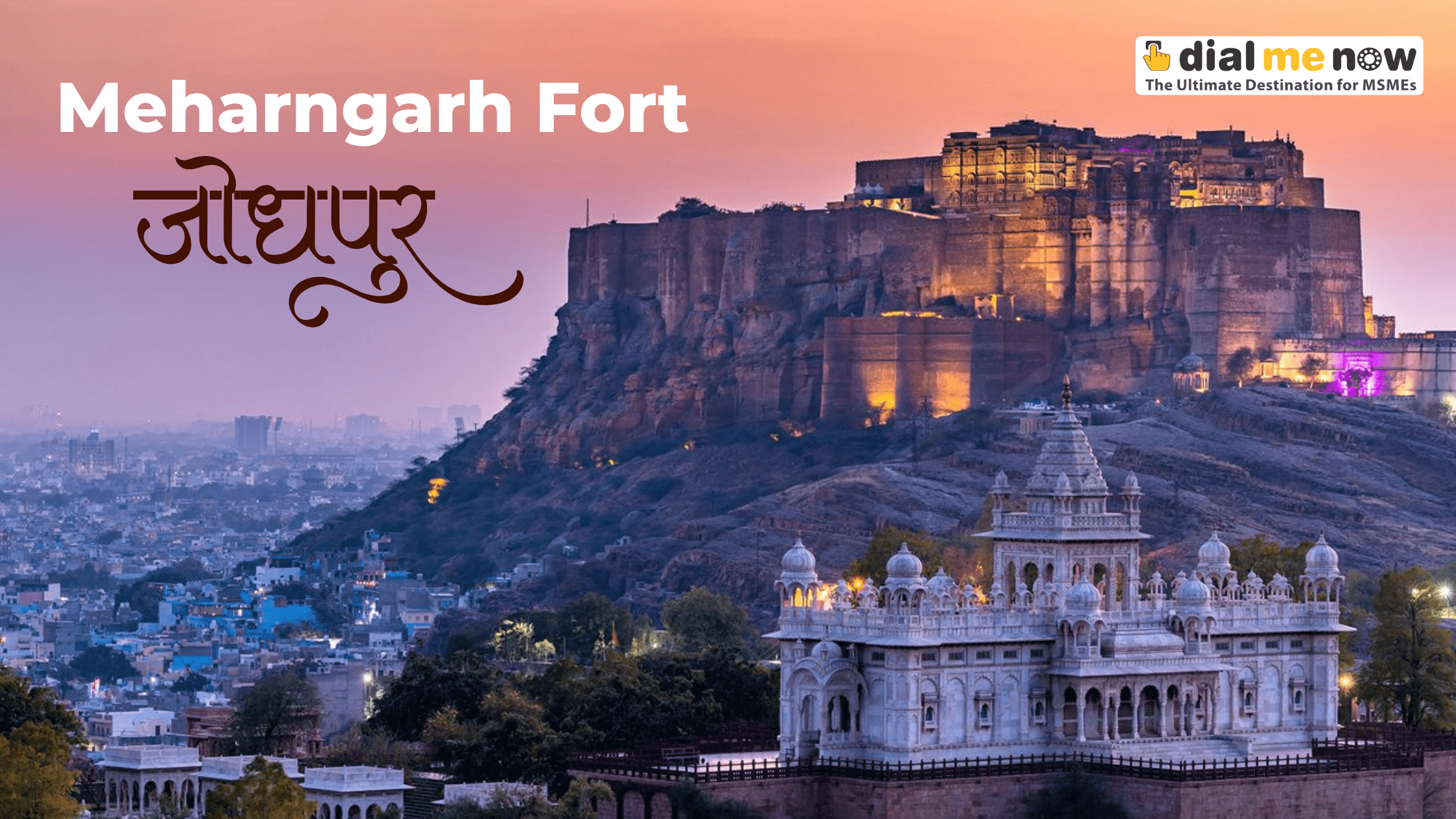
1. Introduction & Setting the Scene
Perched majestically atop a steep hill in Jodhpur—often called the “Blue City” of Rajasthan—Mehrangarh Fort stands as a towering sentinel, both architecturally formidable and culturally profound. Dominating the skyline at nearly 400 feet above the dusty plains, its vast sandstone walls change hues with the day, glowing golden at sunrise and deepening to russet as dusk descends. Dubbed the “Fort of the Sun,” Mehrangarh is more than a fortress—it’s a living chronicle of Marwar’s legacy, Rajput valor, artistry, and spiritual identity.
Rudyard Kipling poetically described it as “a palace that might have been built by Titans and coloured by the morning sun,” capturing the sandstone giants that seem sculpted, not carved, from the rocky spine of the Aravalli hill. Traversing its ramparts is like walking through centuries—through dynastic triumphs, cultural fusion, artistic flourishes, and modern rejuvenation.
Today, Mehrangarh is much more than relic and ruin. It is a museum complex, a conservation hub, a venue for global festivals, and an eco-cultural powerhouse. Visitors can explore opulent courtyards and mirror chambers, admire exquisite weaponry and textiles, stroll through a modern desert-plant haven, or attend a light-and-sound show under the stars. This blog goes deep into the heart of Mehrangarh: its history, art and architecture, cultural resonance, ecological initiatives, and practical guidance for today’s travelers—ensuring you experience every layer of its grandeur and spirit.
2. Founding History & Royal Legacy
2.1 Rao Jodha: The Visionary Founder
In 1459 CE, Rao Jodha, thirteenth ruler of the Rathore dynasty, founded Mehrangarh Fort. He relocated his capital from Mandore to Bhakurcheeria—“Bird Mountain.” The reason was strategic: Bhakurcheeria’s elevation offered better defense than the vulnerable plains. Local lore speaks of Rao Jodha’s decision to move a hermit, Cheeria Nathji, who cursed the hill with drought. To compensate, Rao Jodha built a temple atop the ridge—still standing within the fort’s walls.
Legend also tells of a human sacrifice at the foundation: a man from the Meghwal community was buried alive so the walls would stand firm. Today, his descendants honor him with offerings at yearly rituals near the Sunder Pol gate. These stories reveal the depth of symbolism and sacrifice infused into Mehrangarh’s foundations.
2.2 Dynastic Patronage & Expansion
Rao Jodha established the core foundation, but it was his successors—Jaswant Singh, Ajit Singh, Takhat Singh, Man Singh, and others—who sculpted its character. Over centuries:
- Jaswant Singh added intricate palaces and refined interior design.
- Ajit Singh, who led military campaigns, introduced royal courtyards.
- Takhat Singh and Abhaya Singh enriched the interiors with frescoes.
- Man Singh, after defeating Jaipur and Bikaner in 1806, built the Jai Pol—celebrating Rathore supremacy.
Together, these rulers forged Mehrangarh into a layered palace-fortress that blends Rajput military might with Mughal aesthetics, Persian decoration, and local craftsmanship.
2.3 Cultural Melting-Pot & Political Relevance
By the 17th century, Marwar had become a hub connecting the North-South trade route. Mehrangarh served as both royal residence and administrative center. Its art collection reflects interactions with Mughal emperors—evident in its mirrored chambers, calligraphy, and fresco work.
Under British colonial rule, the fort remained significant. The royal family managed alliances, treaties, and social events here. While its direct political clout diminished, Mehrangarh transitioned into a repository of heritage—its value growing as a symbol of identity and pride.
3. Architectural Grandeur: Form & Function
3.1 Ramparts, Walls & Strategic Design
Mehrangarh’s massive ramparts stretch nearly 1,200 acres, with sandstone walls soaring up to 36 m (118 ft) in height and 21 m (69 ft) at the base—built on volcanic basalt formations of the Aravalli Ridge. These walls aren’t merely imposing; their asymmetrical thickness absorbs shockwaves from cannon fire, creating a sophisticated defense. Strategically placed seven gates form concentric security layers:
- Loha Pol (Iron Gate)
- Dedh Kangra Pol (fired upon by cannons in 1806–07)
- Jai Pol (Victory Gate)—built by Maharaja Man Singh in 1806
- Fateh Pol (Victorious Gate)—created after repelling Mughal incursions in 1707
- Amruti Pol, Suraj Pol, Gopal Pol
Each gate narrates part of the fort’s martial history and architectural wisdom.
3.2 Layout: Courtyards & Defensive Sequencing
The fort’s interior unfurls through a succession of seven courtyards, each maintaining height differences to block direct sightlines, confuse attackers, and offer elevated vantage points for defense. These open-to-sky spaces connect to enclosed halls, audience chambers, and palatial suites—balancing communal space, ceremony, and administration. Water tanks were built in courtyards, capturing rain to sustain internal needs during sieges.
3.3 Materials & Local Craftsmanship
Constructed mostly from red sandstone, quarried within the fort’s premises, the walls echo the desert sun’s color. Local artisans carved elaborate jharokhas, ornate jaali screens, and painted elaborate murals in cool interiors. Workshops at the base supported skills in stone carving, mirror-laying, metalwork, and miniature painting—many of which persist today in local craft clusters.
3.4 Environmental & Symbolic Aspects
The very landscape—the hillside ridge—was both a natural fortress and a spiritual monument. The fort aligns with cardinal directions, and select elements—like the Krishna temple, Nagnech, and Shiva temple—suggest celestial alignment for cosmic protection.
4. Palaces Within: Artistry in Stone & Space
4.1 Moti Mahal (Pearl Palace)
Once the public audience hall, Moti Mahal sports gilded ceiling panels, mirrored in polished marble. Its high arches open onto an expansive courtyard. Walls adorned with paintings depict royal lineage and mythological scenes, signaling both power and cultural patronage.
4.2 Phool Mahal (Flower Palace)
A private palace and music chamber built under Maharaja Abhaya Singh, this palace is named after intricate floral frescoes and motifs. Pillars are topped with lotus capitals, and walls display bold golden hues. Watch mezzanine balconies for private spectator vantage points.
4.3 Sheesha Mahal & Dipak Mahal
The Mirror Palace dazzles with antique mirrors reflecting light from lamps, creating a cinematic shimmer. The Dipak Mahal, adjacent, blends Mughal arch influence with fortified Rajasthani layouts—once the administrative core with views of the palace grounds.
4.4 Sileh Khana & Armory
The Armory (Sileh Khana) holds centuries of weaponry—from matchlock muskets, curved sabres, composite bows, to ornate shields embedded with silver and gemstones. The raw martial energy is balanced by artistic inlay and engraving—every weapon is historical and ceremonial.
4.5 Temples & Sacred Spaces
Within Mehrangarh lie several shrines—Chamunda Mata, Krishna Mandir, Kali Temple, and Nagnech (snake deity). These are beautiful stone temples featuring ritual niches and carvings. They served both personal devotion and public invocation. The Chamunda goddess statue is worshipped daily by the royal family, maintaining continuity with tradition.
5. Mehrangarh Museum & Cultural Legacy
5.1 Establishment of the Museum
The Mehrangarh Museum Trust (MMT) was formed in 1972 under Maharaja Gaj Singh II to preserve, document, and share the fort’s cultural treasures. The museum exhibits showcase Rajputana art, courtcloth, textiles, manuscripts, arms, and howdahs.
5.2 Museum Galleries
- Daulat Khana: displays jewel-studded howdahs and royal travel gear.
- Turban Gallery: 150+ turbans from every kingdom accent Rs-pre-colonial color and status.
- Paintings Gallery: miniature paintings depicting Rathore court life.
- Ceremonial Elephant & Palanquins: gold-plated howdahs with intricate enamel.
- Armor Gallery: complete chainmail, helmets, shields from the 18th century.
5.3 Cultural Programs & Festivals
Mehrangarh regularly hosts:
- Rajasthan International Folk Festival (RIFF)—October
- World Sacred Spirit Festival—April
- Teej & Gangaur—traditional festivals with folk dances
Under moonlit ramparts, the fort becomes a stage—bolstering heritage tourism and global cultural exchange.
5.4 In Film & Literature
Scenes from Christopher Nolan’s “The Dark Knight Rises”, “The Jungle Book” (2016), and the BBC series “Wolf Hall” were shot here. This cinematic presence has increased tourism and visibility.
6. Conservation & Rao Jodha Desert Rock Park
6.1 Ecological Renaissance Beside the Fort
Adjacent to Mehrangarh lies one of India’s most unique eco-restoration projects—Rao Jodha Desert Rock Park, spread over 70+ hectares. Developed in 2006, the park was built to restore the desert ecology and remove invasive species like Prosopis juliflora that had overtaken the rocky terrain.
Here, native plants like Dhonk, Rohida, and Khejri thrive alongside desert grasses, succulents, and medicinal shrubs. Winding trails, stone bridges, and interpretive signboards guide visitors through this rich and sustainable ecosystem. It’s also a hotspot for birdwatching—home to bee-eaters, sunbirds, doves, and even peacocks.
The park complements the grandeur of Mehrangarh by linking historical architecture with modern environmental responsibility.
6.2 Mehrangarh Museum Trust (MMT) Initiatives
The Mehrangarh Museum Trust, under Maharaja Gaj Singh II, not only preserves artifacts but also actively:
- Restores old buildings and frescoes
- Archives ancient manuscripts
- Trains local artisans
- Hosts education programs for schools
- Promotes global conservation through UNESCO partnerships
Together, the fort and the park form a living classroom where history, ecology, and community intersect.
7. Visitor Guide: How to Explore Mehrangarh Fort
7.1 Timings & Tickets
- Opening Hours: 9:00 AM – 5:00 PM (daily)
- Entry Fee:
- ₹100 (Indians)
- ₹600 (Foreigners)
- Audio Guide: ₹200
- Elevator (optional): ₹50 per head
- Free Entry for students with ID on select days
7.2 Getting There
Mehrangarh is just 15–20 minutes from Jodhpur city center.
- By Auto-rickshaw or taxi
- Walking via the steep climb through the Blue City alleys (advisable only in cooler months)
7.3 Things to Do
- Explore palaces, courtyards, museums
- Visit Chamunda Mata Temple
- Zipline across the ramparts with Flying Fox Jodhpur
- Attend folk music events or festivals
- Walk the Rao Jodha Rock Park trails
- Shop for handicrafts and textiles at the museum store
- Grab a coffee at the Chokelao Café inside the fort complex
7.4 Travel Tips
- Visit during October to March for pleasant weather
- Wear comfortable shoes—some paths are uneven
- Dress modestly (temples inside are active)
- Bring a camera but avoid flash inside galleries
- Join a guided tour or use the audio guide for deeper insights
8. Conclusion: Mehrangarh – A Living Legacy
Mehrangarh Fort is not just an architectural wonder—it’s a symbol of Rajasthan’s resilience, creativity, and identity. Rising like a sentinel over the city, it reminds every visitor that history isn’t static—it’s something you can walk through, hear, feel, and even shape.
Whether you’re admiring mirror-work ceilings, listening to a desert folk tune, tracing bullet marks on a gate, or watching a peacock dance beside a sandstone trail—Mehrangarh leaves you enriched. It connects past valor to present vibrance and future sustainability.
Come not just to see Mehrangarh—come to understand what makes Rajasthan royal, rooted, and radiant.
⚠️ Disclaimer
This blog is an informational resource curated to help travelers and history enthusiasts understand Mehrangarh Fort’s significance. All historical facts, timings, and ticket rates are accurate as per the latest available data, but subject to change. For bookings and current updates, please consult the official Mehrangarh Fort website or local tourism boards.
❓ FAQs – Mehrangarh Fort, Jodhpur
Q1. What is Mehrangarh Fort famous for?
Mehrangarh is renowned for its massive architecture, historical significance, museum collections, and panoramic views of the Blue City.
Q2. Who built Mehrangarh Fort?
Rao Jodha, the founder of Jodhpur, built the fort in 1459 CE.
Q3. How much time is needed to explore the fort?
At least 2–3 hours. For museum lovers and photographers, 4+ hours is ideal.
Q4. Is Mehrangarh Fort wheelchair accessible?
Partially. The elevator helps access upper levels, but not all paths are flat.
Q5. What can I see inside?
Palaces, courtyards, museums, armories, temples, and panoramic city views.
Q6. Are guided tours available?
Yes, both audio guides and human-guided tours are available in multiple languages.
Q7. Is photography allowed?
Yes, but no flash photography inside galleries. Drones are not allowed without permission.
Q8. What’s the best time to visit?
October to March is ideal due to the cooler climate and festival events.
Q9. Can I book tickets online?
Yes, many online travel portals and the official fort website allow advance booking.
Q10. What is Rao Jodha Desert Rock Park?
An adjoining ecological park developed to restore native desert flora and promote sustainable eco-tourism.
Q11. Are there eateries inside the fort?
Yes, Chokelao Café and a museum shop offer light refreshments.
Q12. Is it safe for solo travelers and families?
Absolutely. It’s one of Rajasthan’s best-managed historical sites.
Q13. Was Mehrangarh Fort featured in any films?
Yes! Most notably in The Dark Knight Rises, The Jungle Book, and multiple Indian period dramas.
Q14. Is there any religious significance?
Yes, temples like Chamunda Mata and Nagnech still serve as active worship spaces.
Q15. Are any festivals held at the fort?
Yes, including the Rajasthan International Folk Festival (RIFF) and World Sacred Spirit Festival.