

Discover Jaipur’s Hidden Stepwell: Panna Meena Ka Kund
6/20/2025
1) Introduction
Tucked away near Amber Fort, Panna Meena Ka Kund is Jaipur’s hidden gem—an exquisite 16th-century stepwell adorned with geometric symmetry and laden with history. Though smaller and lesser-known than Rajasthan’s grand stepwells, its charm lies in its intimacy, photogenic staircases, and serene atmosphere. This blog illuminates its significance, explores its design, uncovers its cultural role, and guides you through visiting and preserving this architectural marvel.
2) Historical Significance & Legends
Origins and Era
Built during the 16th century under Maharaja Sawai Jai Singh I’s reign, Panna Meena Ka Kund served as a vital water reservoir for the residents of Amber (Amer). Though some sources attribute deeper origins or Meena community influence, the 16th-century date is most widely accepted.
Folk Legends
- Panna Meena, the musician or courtier: Popular lore suggests a musician named Panna Meena inspired its name.
- Meena warriors: A legend describes Meena clan warriors laying down their weapons to bathe at the kund, only to be ambushed—leading to the name commemorating them.
Historical Role
This stepwell wasn’t merely functional—it became a communal hub, a cooling spot during arid summers, and even a site for religious rituals in the adjoining chamber on its north wall.
3) Architecture & Design
Structural Layout
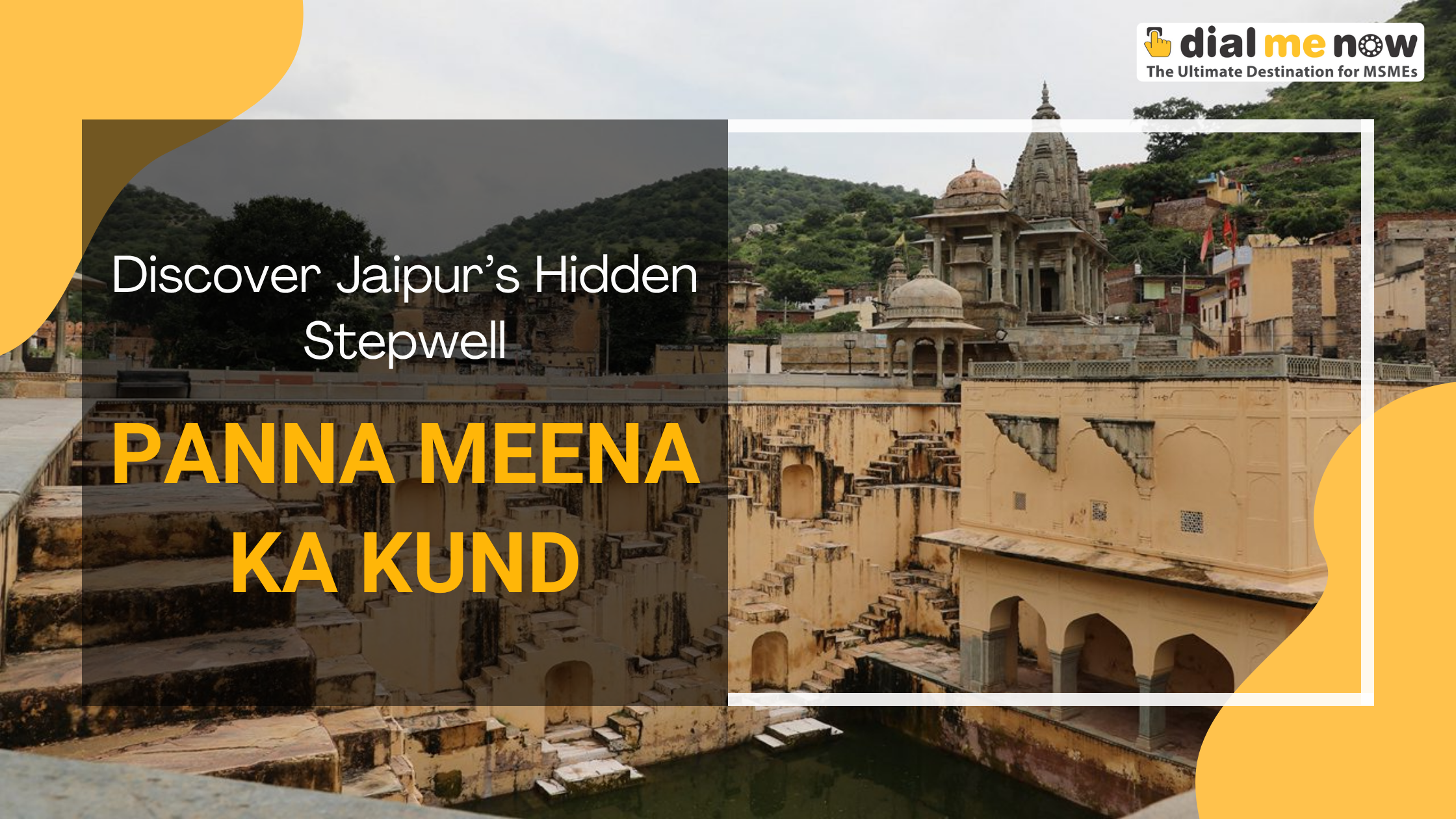
- Eight stories deep (~200 ft) with ~1,800 steps descending on three sides.
- One solid fourth wall houses a sheltered chamber and temple-like pavilion .
Geometric Precision
The criss‑cross symmetrical staircases create mesmerizing polygonal patterns—almost hypnotic—while octagonal terraces and chhatris (umbrella domes) cap each corner.
Materials & Construction
Built with yellow sandstone, the kund features no mortar between stones, relying on precision-fitting—a hallmark of vernacular Rajput craftsmanship.
Comparative Context
Unlike grander stepwells like Chand Baori, Panna Meena stands out with its intimate scale and functional simplicity, uniquely combining elegance and utility.
4) Cultural & Practical Purpose
Water Conservation
In arid Rajasthan, stepwells were crucial for monsoon water capture, providing reliable year-round supply during drought seasons.
Social Spaces
These baoris were gathering grounds—especially for women—who accessed water, shared stories, and escaped the heat together. Travelers and pilgrims also found respite here.
Spiritual Utility
A ritual chamber suggests the kund hosted wedding preparations and auspicious ceremonies—linking religion and civic architecture.
Heritage Value
Today, it represents Jaipur’s commitment to preserving vernacular water systems and celebrating traditional Rajasthan architecture.
5) How to Visit: A Complete Guide
Location & Transport
- Near Amber Fort, approximately 2 km downhill from its main entrance.
- By auto, taxi, bike rental, or walking from the fort’s postern exit.
Entry & Timings
- No entry fee, open daily from early morning to sunset (7 AM–7 PM approx.).
- A guard restricts stepwell access for safety—descending is only possible with special permission, like for film shoots.
Safety & Guidelines
- Stay behind barriers; stairs can be slippery.
- Respect the site: no littering or graffiti.
- Combine a visit with Amber Fort and nearby attractions like Anokhi Museum and Ganesh Temple.
6) Best Time to Visit & Photography Tips
Ideal Seasons
- October–March: Pleasant weather.
- Monsoon (Jul–Sep): Scenic with puddles, though riskier for slip hazards.
Best Light
- Early morning & late afternoon for soft, even light and fewer crowds.
Tips for Photographers
- Shoot patterns of stairs from opposite corners.
- Capture reflections/green hues in the pool.
- Use wide-angle to show depth and Marigold-colored architecture.
- Include people for scale and storytelling.
- Respect guards and signs—no unauthorized shooting under or inside the kund.
7) Preserving Heritage: Conservation Efforts
Maintenance
The municipal authority maintains the site, especially given its popularity in Bollywood shoots like Dabangg 3 and Dhadak.
Protection
Guards prevent descent into unsafe areas. Restricted access helps preserve structure and visitor safety .
Awareness
Coverage in heritage blogs, travel platforms, and local voices underlines community engagement and need for preservation .
8) Nearby Attractions
- Amber Fort – majestic hill fortress 2 km away.
- Anokhi Museum of Hand Printing – traditional crafts nearby.
- Ambikeshwar & Ganesh Temples – local spiritual sites.
- Jaigarh & Nahargarh Forts – hilltop forts with views.
- Chand Baori in Abhaneri – a shorter day trip but architecturally grander.
9) Disclaimer
This guide is for informational purposes only. Details like timings, access permissions, and conditions are subject to change. Before visiting, verify current information with official sources or local operators. The author and publisher do not take responsibility for any changes or consequences arising from the use of this content.
10) Frequently Asked Questions (FAQs)
Q1: Is there an entry fee?
A: No, entry is free. Guarded access to descend the kund requires special permission.
Q2: Can visitors go down the steps?
A: Usually no—ascending or descending requires official permission due to safety concerns.
Q3: What’s the best time to visit?
A: Morning or late afternoon in October–March; monsoon visits are scenic but slippery.
Q4: How deep is it?
A: Approx. 8 stories deep (~200 ft) with 1,800 symmetrical steps.
Q5: Can I photograph?
A: Yes! Photos from the top are allowed—avoid drones or bottom-up shots without permission.
Q6: How do I reach it?
A: Drive, cycle, or walk from Amber Fort’s secondary gate or hire auto/cab from Jaipur. Easily walkable post-fort visit.
Q7: Why is it called ‘hidden’?
A: It’s tucked away, off mainstream tourist routes, often overshadowed by Amber Fort—but easy to find via local directions.
Q8: Are there guided tours?
A: Yes, some Jaipur offbeat tours include it. Alternatively, hire local guides near Amer for ₹200–300 for short walks.
11) Conclusion
Panna Meena Ka Kund stands as an architectural poem carved in stone—an intimate, functional, and timeless tribute to water, community, and heritage. Its geometry reflects centuries of ingenuity, its staircases echo with the voices of women, travelers, and ceremonies past, and today it draws photographers, historians, and pilgrims alike.
Visiting Panna Meena isn’t merely about snapping an Insta-worthy shot—it’s about connecting with an ancient water tradition, strolling through Rajasthan’s sustainable past, and supporting heritage that endures quietly off the beaten track. So next time you’re near Amer, step in—not just into the kund, but into a story etched in stone, water, and symmetry.