

The Gems of Johari Bazaar: Insight into Jaipur’s Coloured Gemstone Industry
1/22/2026
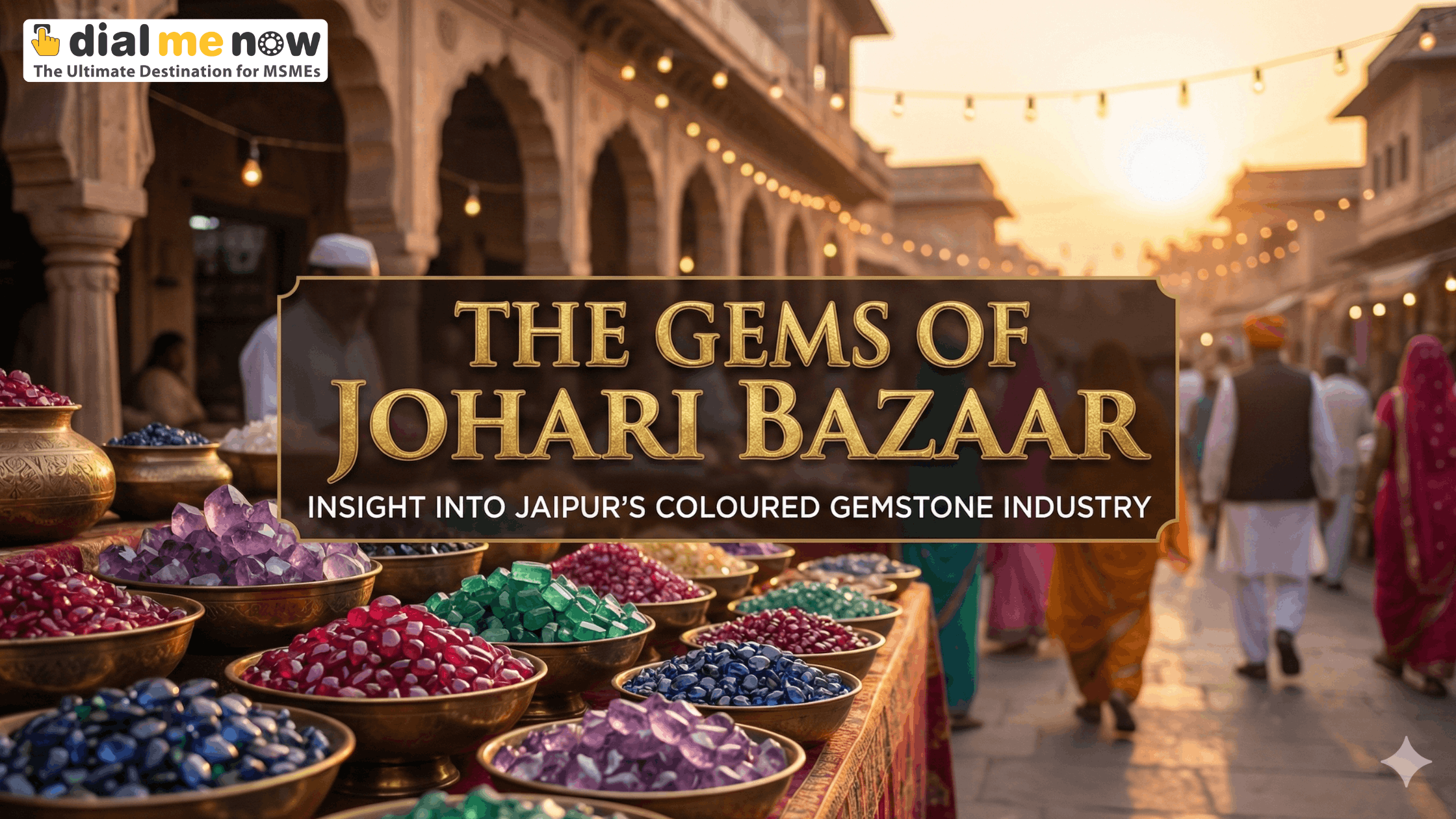
Jaipur, the radiant “Pink City” of Rajasthan, is not just a destination of forts and palaces; it is the beating heart of the world’s coloured gemstone industry. At the center of this sparkling empire lies Johari Bazaar—the legendary “Market of Jewellers.”
By 2026, Jaipur has solidified its position as the global hub for gemstone processing, accounting for over 90% of India’s gemstone manufacturing. Whether it is a lush African emerald, a fiery Brazilian ruby, or a rare Paraiba tourmaline, there is an 80% chance it was cut, shaped, and polished by the skilled hands of an artisan in the narrow lanes of the old city.
The Heritage of Johari Bazaar: A Royal Foundation
The history of Jaipur’s gemstone industry is as old as the city itself. Founded in 1727 by Maharaja Sawai Jai Singh II, Jaipur was designed with commerce in its DNA. The Maharaja, a great patron of the arts, invited master jewellers, lapidaries, and craftsmen from across India and Persia to settle in his new capital.
- Planned Perfection: Johari Bazaar was part of the original grid-like planning of the city, designed by architect Vidyadhar Bhattacharya to provide a grand stage for trade.
- Generational Mastery: Today, many shops in the bazaar are run by the 7th or 8th generation of the same family, preserving secret cutting techniques that machines simply cannot replicate.
A Kaleidoscope of Stones: What Jaipur Offers
Jaipur processes more than 300 different varieties of precious and semi-precious gemstones. While it is famous as the “Emerald Capital of the World,” its repertoire is vast.
The Big Three
- Emeralds: Jaipur’s emerald market is the largest globally. Most rough emeralds from Zambia, Brazil, and Colombia are shipped here to be transformed into brilliant jewels.
- Rubies: Known for their deep red hues, rubies are expertly cut to maximize clarity and remove inclusions.
- Sapphires: From the classic blue to vibrant yellows and pinks, sapphires remain a top export.
Semi-Precious & Exotic Gems
- Amethyst & Citrine: Popular for their affordability and vibrant purple and golden hues.
- Tanzanite & Aquamarine: High-demand stones known for their unique oceanic colours.
- Paraiba Tourmaline: A rare, neon-blue gem that has become a favourite of high-end international designers in 2025-26.
The Art of Lapidary: From Rough to Radiant
In the hidden workshops behind the shopfronts of Johari Bazaar, the real magic happens. Unlike diamonds, which are largely machine-cut, coloured gemstones require the human eye—a skill known locally as “The Eye.”
The Processing Stages:
- Sourcing: Rough stones are imported from Africa, Latin America, and Southeast Asia.
- Assorting: Experts examine the rough for “inclusions” (natural trapped substances).
- Cleaving & Sawing: The stone is hacked into its basic shape to remove spots and blemishes.
- Faceting: This is where the sparkle is born. Artisans create sharp edges to reflect light.
- Polishing: The final buffing ensures the gem has a mirror-like finish.
“A machine can cut a thousand identical stones, but it takes an artisan to see the soul of a single emerald and cut it to hide a flaw while revealing its fire.” — Common Johari Bazaar Proverb.
The 2026 Market: Statistics and Growth
The industry has seen a structural shift towards high-value jewellery over loose stones.
- Export Powerhouse: Rajasthan accounts for 17.5% of India’s total gems and jewellery exports. Despite global tariff pressures in 2025, the sector remains resilient by diversifying into markets like the UAE, Australia, and Hong Kong.
- Economic Impact: The industry is a major job creator, with the upcoming Gem Bourse expected to generate over 1 lakh new jobs by late 2026.
- Certification Trends: Buyers in 2026 are increasingly demanding GIA, GRS, or IIGS lab certifications to ensure authenticity and ethical sourcing.
Tips for Buying Authentic Gemstones in Jaipur
Shopping in Johari Bazaar is an experience, but it requires caution. Follow this checklist to ensure you get a “Gem of a Deal.”
- Seek Certification: Never buy an expensive stone without a certificate from a reputed lab (GIA, IGI, or the local Jaipur Diamond & Gem Laboratory).
- Check for “Doublets”: Some sellers glue a thin layer of precious stone onto glass. Look at the stone from the side to ensure it is solid.
- Lighting Matters: Always view a stone in natural daylight. Showroom LEDs can often mask the true colour of the gem.
- Bargain Respectfully: Bargaining is part of the culture, but remember that high-quality craftsmanship has a fair price.
❓ Frequently Asked Questions (FAQ)
Q1: Is Johari Bazaar open on Sundays? A: Most shops in Johari Bazaar are open 7 days a week, though some smaller wholesale units may be closed on Sundays.
Q2: How do I know if an emerald is real? A: Real emeralds almost always have “inclusions” (internal flaws). A stone that looks 100% perfect and clear is often synthetic or glass. Always ask for a lab certificate.
Q3: Can I get custom jewellery made in Johari Bazaar? A: Yes! Jaipur is famous for its bespoke services. You can select a loose stone and have it set in gold or silver within 48–72 hours.
Q4: What is “Kundan” and “Meenakari”? A: Kundan is a traditional Indian gemstone jewellery where gold foil is used between the stone and its mount. Meenakari is the art of enamelling metal surfaces with vibrant colours.
Q5: Which is the most expensive stone in Jaipur? A: High-quality Emeralds (especially Russian or Colombian) and rare Paraiba Tourmalines are currently among the most expensive gems per carat in the market.
Q6: Is it safe to carry expensive purchases? A: Jaipur is generally very safe, but we recommend keeping high-value items in your hotel safe or using insured shipping services offered by reputed jewellers.
Q7: Can I ship my purchases internationally? A: Yes, most large showrooms in Johari Bazaar provide insured international shipping via FedEx or DHL and handle the necessary export documentation.
Q8: What is the best time to visit the market? A: The market is most vibrant between 11:00 AM and 7:00 PM. For photography, early mornings (around 10:00 AM) are best before the crowds arrive.
Disclaimer
Gemstone prices are subject to market volatility and depends on the 4 Cs: Colour, Clarity, Cut, and Carat weight. While we recommend verified dealers, buyers should perform their own due diligence. All tours booked through our platform are led by licensed guides to ensure your safety and a quality experience.