

The Blue Pottery Trail: A Guide to Buying Authentic Ceramics in Jaipur
1/15/2026
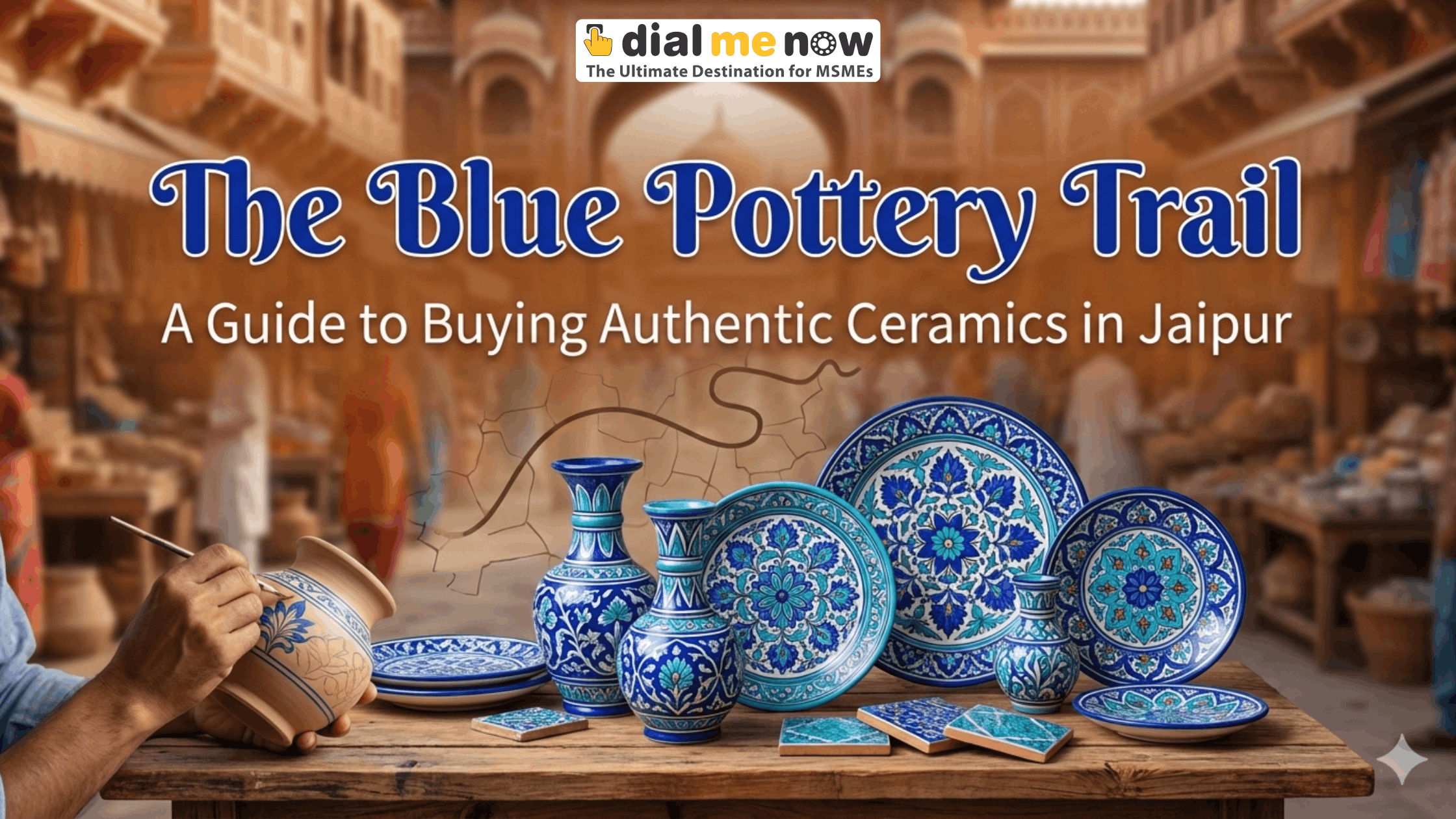
Jaipur, the “Pink City,” is a kaleidoscope of crafts, but one art form stands out for its ethereal glow and striking cobalt hues: Blue Pottery. Unlike traditional ceramics, this centuries-old craft is a delicate fusion of Persian aesthetics and Rajasthani spirit. It is the only pottery in the world that uses no clay, making it a marvel of material science and artistic dedication.
By 2026, Jaipur’s Blue Pottery has evolved from a royal curiosity into a global design icon. However, for a traveler, navigating the markets to find “the real deal” can be daunting. The Blue Pottery Trail, helping you distinguish authentic art from mass-produced imitations while discovering the hidden workshops where the magic happens.
What Makes Blue Pottery Unique? (No Clay!)
To appreciate what you are buying, you must understand the “Dough.” Standard pottery is made of red or black clay; Blue Pottery, however, is made from a complex “frit” mixture.
The “No-Clay” Ingredients:
- Quartz Stone Powder: The primary structure.
- Powdered Glass (Cullet): Provides the translucent, vitreous quality.
- Multani Mitti (Fuller’s Earth): Acts as a binding agent.
- Borax, Gum, and Water: To create a pliable dough.
Why it matters: Because there is no clay, the pottery does not shrink during firing. This makes it incredibly hard to shape but results in a non-porous, glass-like finish that is resistant to chipping.
A Brief History: From Persia to the Pink City
The art form traveled from Persia to India with the Mughals in the 14th century, primarily used to decorate tombs and palaces. In the 19th century, Maharaja Sawai Ram Singh II was so impressed by the craft during a kite-flying competition (where local potters had used blue glaze to strengthen their kite strings) that he invited the artists to Jaipur.
After nearly vanishing in the 1950s, the craft was revived by the legendary muralist Kripal Singh Shekhawat, whose signature style—using dozens of colors beyond blue—now defines the “Kripal Kumbh” school of art.
The Blue Pottery Trail: Where to Buy Authenticity
When shopping for authentic Blue Pottery in Jaipur, you must choose your destination based on your budget and interest (retail vs. experience).
A. For the Connoisseur: Kripal Kumbh
Founded by Kripal Singh Shekhawat himself, this is the “Mecca” of Blue Pottery. If you want a piece that is a work of fine art rather than just a souvenir, this is where you go.
- Best For: Intricate murals, vases with 15+ colors, and collector’s items.
B. For Modern Design: Neerja International
Established by Leela Bordia, Neerja has been instrumental in making Blue Pottery functional for modern homes.
- Best For: High-quality doorknobs, bathroom sets, coasters, and tea sets with contemporary patterns.
C. For the Experience: Ram Gopal Blue Pottery
Led by Shilp Guru Gopal Saini, this studio in Vishnu Garden is a living workshop. You can see the entire process—from dough preparation to kiln-firing—before buying directly from the source.
- Best For: Authentic handcrafted tiles, traditional plates, and hands-on workshops.
D. For the Explorer: Sanganer & Kot Jewar Villages
The heart of production lies on the outskirts of Jaipur. Visiting these villages allows you to buy from family cooperatives at a fraction of the city prices.
- Best For: Bulk buying and witnessing the communal scale of the craft.
How to Identify Authentic vs. Mass-Produced “Fakes”
As the popularity of Blue Pottery grows, so does the influx of cheap, machine-made ceramic imitations sold in street bazaars. Here is how to spot the real thing:
- The Weight Test: Authentic Blue Pottery is surprisingly lightweight because it lacks heavy clay. If a plate feels as heavy as a standard dinner plate, it is likely ordinary ceramic.
- The Surface Texture: Look for imperfections. Real Blue Pottery is hand-painted and fired in traditional kilns; you will see tiny pin-sized holes in the glaze and subtle brushstroke variations. Machine-made “fakes” will be “too perfect” and smooth.
- The Translucency: Hold a thin piece (like a saucer) up to the light. Authentic Blue Pottery is semi-transparent and has a milky, vitreous glow.
- The Sound: Flick the edge with your fingernail. Authentic pieces produce a clear, high-pitched metallic ring, whereas clay-based ceramics produce a dull thud.
Caring for Your Blue Pottery
Because it is fired at low temperatures (around 800–850°C), Blue Pottery is more fragile than porcelain.
- Hand-Wash Only: Never put authentic Blue Pottery in a dishwasher. The harsh chemicals and high heat can crack the glaze.
- Avoid Microwave: The metallic oxides (cobalt and copper) used in the dyes can react negatively in a microwave.
- Temperature Sensitivity: Avoid pouring boiling water into a cold Blue Pottery mug; the thermal shock can cause “crazing” (fine cracks in the glaze).
❓ Frequently Asked Questions (FAQ)
Q1: Is Blue Pottery microwave and dishwasher safe? A: Generally, no. Most traditional Blue Pottery contains metallic oxides that can spark in a microwave, and the glaze can be damaged by dishwasher detergents.
Q2: Why is Blue Pottery so expensive compared to normal pottery? A: The process is extremely tedious (taking 12–15 days for a single batch) and has a high breakage rate in the kiln. Every piece is hand-painted by skilled artisans, not machines.
Q3: Does the blue color fade over time? A: No. The blue comes from cobalt oxide, which is fused with the glaze at high temperatures. It will remain vibrant for centuries if kept out of direct, harsh abrasion.
Q4: Can I buy Blue Pottery tiles for my bathroom or kitchen? A: Yes! Blue Pottery tiles are non-porous and highly durable, making them perfect for decorative borders or backsplash areas.
Q5: What is the most famous motif in Jaipur Blue Pottery? A: Traditional motifs include flora and fauna (birds and flowers) and Mughal arabesque (geometric) patterns.
Q6: Is there any lead in Jaipur Blue Pottery? A: Traditionally, glazes contained lead. However, modern studios like Neerja and Kripal Kumbh have transitioned to lead-free glazes for all tableware and kitchenware.
Q7: Can I visit the villages where it is made? A: Yes, villages like Kot Jewar (near Jaipur) are centers for the craft. We recommend going with a guide as many workshops are tucked away in residential alleys.
Q8: How do I know if the shop is selling GI-tagged pottery? A: Look for the Geographical Indication (GI) logo on the packaging or store display. Reputable outlets like the Jaipur Blue Pottery Art Centre proudly display their certification.
Disclaimer
Blue Pottery is a handcrafted item and minor variations in color and shape are hallmarks of its authenticity. While we recommend specific studios, buyers should perform their own quality checks. All tours booked through our website are led by registered local experts to ensure the highest safety and ethical standards.