

Sawai Madhopur Gateway to Ranthambore: Best Vegetarian Food & Local Delicacies
10/17/2025
Introduction
Nestled in southeastern Rajasthan, Sawai Madhopur is best known as the entry point to the majestic Ranthambore National Park, a top wildlife safari destination. But beyond the roar of Bengal tigers, the region also whispers with aromatic flavors, rustic traditions, and the culinary heritage of Sherpur, Meena hills, and local Rajasthani kitchens.
For travelers seeking vegetarian food near Ranthambore, Sawai Madhopur offers hidden gems — from simple highway dhabas to upscale resorts — serving Rajasthani thalis, Ker Sangri, Gatte ki Sabzi, Rabdi Malpua, and more. In this blog, we’ll explore the local cuisine, where to eat along the Ranthambore road, tips, FAQs, and SEO-savvy sections so your post ranks strongly under “Sawai Madhopur best food” and “vegetarian food near Ranthambore.”
Why Sawai Madhopur as a Food Destination
While wildlife is the main magnet, food aficionados will pleasantly be surprised. The region’s gastronomic identity is shaped by:
- Desert climate & water constraints, which shaped a cuisine using dried beans, berries (ker), gram flour, yogurt and minimal fresh vegetables.
- Rajasthani culinary heritage, especially Marwari, Dhundhari, and Meena influences, with signature dishes like Ker Sangri, Gatte ki Sabzi, Dal-Bati-Churma, and sweets like Rabdi, Malpua.
- Tourist demands, particularly for comfortable vegetarian options, leading resorts and dhabas near the Ranthambore road to refine quality and presentation.
- Cultural pride, where serving a full “Rajasthani thali” becomes an expression of local hospitality.
Hence, for a visitor, combining a tiger safari with a flavorful vegetarian feast becomes part of the travel narrative.
Key Foods You Should Try
Below are the signature dishes you must experience in and around Sawai Madhopur / Ranthambore:
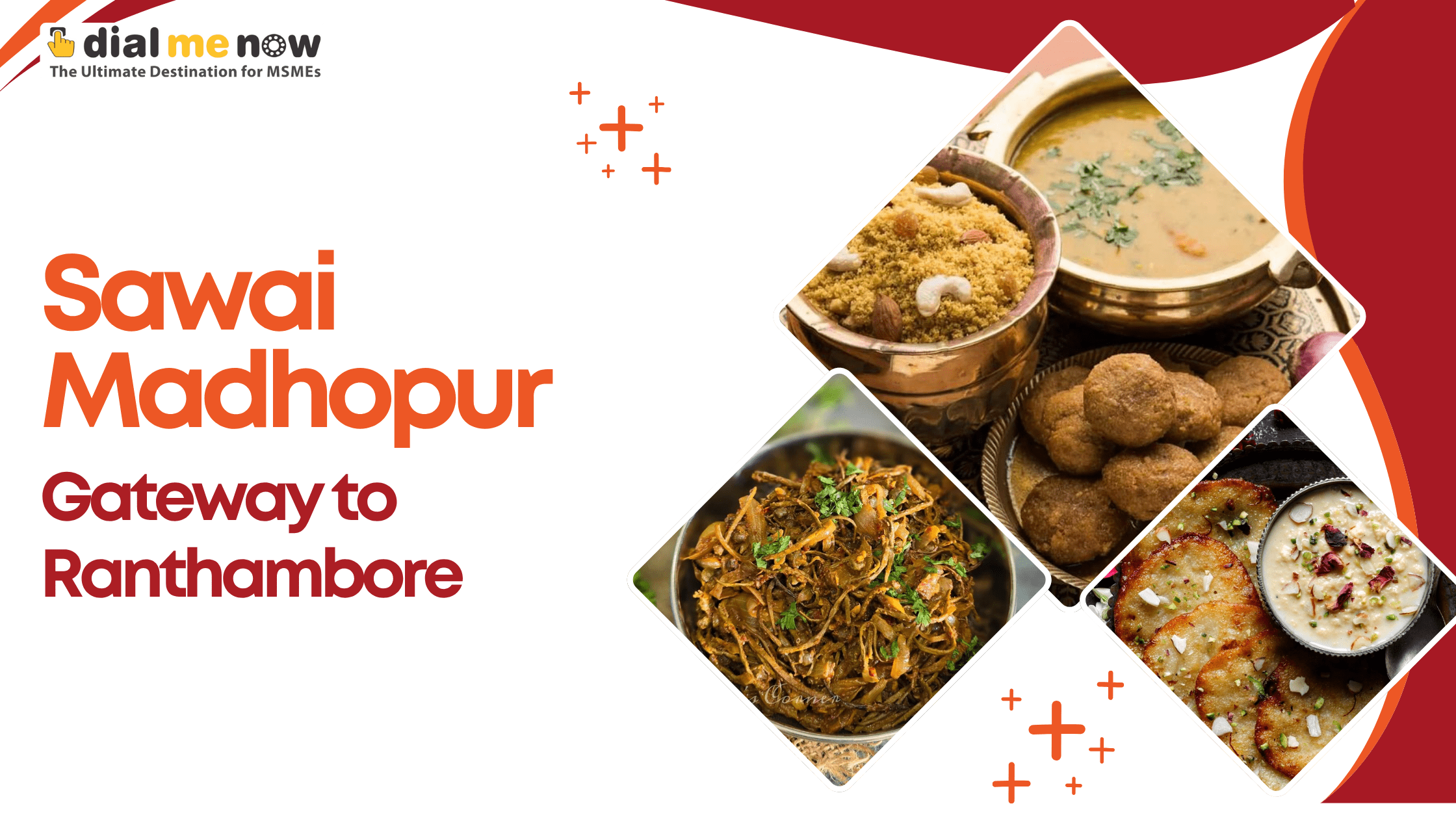
1. Rajasthani Thali (Vegetarian)
A Rajasthani thali is not just a meal — it’s a tapestry of regional flavors in one platter. You’ll typically get:
- Dal (lentils)
- Bati (baked wheat balls)
- Churma (sweet crushed bati mixed with ghee & jaggery)
- Seasonal Sabzis (vegetable curries)
- Gatte ki Sabzi
- Ker Sangri
- Rotis / Bajra roti / Missi roti
- Khichdi or plain rice
- Condiments: pickles, chutneys, raita
- Sweets (e.g. Malpua, rabdi)
Many restaurants in and around Ranthambore offer versions of “Rajasthani Thali” or “Marwari Thali” with these components.
This gives you a full spectrum of flavors — sweet, spicy, tangy, and savory — in one seating.
2. Ker Sangri
Ker Sangri is a desert specialty made from dried ker berries (a wild berry) and sangri beans. It’s typically sautéed with spices, seasoned with tangy notes (lemon or amchur) and served as a dry side dish.
Because it’s dry, it pairs beautifully with roti, bajra roti, or as part of the thali.
3. Gatte ki Sabzi
Made of gram-flour dumplings (gatte) cooked in a tangy yogurt (curd) or tomato-based gravy, this is a staple of Rajasthani vegetarian cuisine.
In some versions, the gatte are boiled first, then sliced and simmered in the gravy. It’s ideal when fresh vegetables are scarce.
4. Rabdi & Malpua
For dessert, Malpua — fried pancakes soaked in sugar syrup — and Rabdi — thickened sweetened milk — are very popular. Combined, they become a decadent treat: Rabdi Malpua.
This is especially served in resorts or in more elaborate thalis.
5. Supporting Dishes
Along with the above, you’ll often find:
- Rajasthani Kadhi (yogurt + gram flour gravy)
- Khoba roti / bajra roti / Missi roti
- Pickles, chutneys, lassi
- Sweet treats (besan ladoo, ghevar, singhare ki barfi)
- Seasonal specialties (e.g. papad ki sabzi)
Together, these foods deliver a strong sense of place and culture.
Where to Eat: Dhabas, Resorts & Roadside Eateries
Travelers often want good food without straying far from Ranthambore road or their resort. Here are guidelines and some likely options:
Location strategy
- Highway dhabas near the Ranthambore approach roads usually offer simple but dependable vegetarian meals.
- Resorts near the park gates often maintain in-house restaurants that serve local Rajasthani thalis to guests.
- Guest houses and local eateries in Sawai Madhopur or near the forest buffer zones may offer customized vegetarian feasts.
- Look for “Marwari / Rajasthani Thali Restaurants” when you drive through or search in listings.
Sample restaurants & eateries
While I don’t have an exhaustive real-time list, here are some references you can check or validate:
- Marwadi Thali Restaurants in Ranthambore / Sawai Madhopur — several exist per listing sites offering Gatte ki Sabzi, Ker Sangri etc.
- Rajasthani Thali Restaurants in Ranthambore / Sawai Madhopur — a few establishments in JustDial listings promoting full thalis.
- Resorts’ in-house dining — many premium resorts cater to their guests with thematic spreads of local cuisine.
- Roadside dhabas on Ranthambore road — ask locals or resort staff for “best vegetarian dhaba near gate no. X”.
When you arrive, check the menu: if they list Ker Sangri, Gatte ki Sabzi, Rajasthani Thali, Rabdi Malpua, you’re in the right place.
Sample Itinerary: Food + Safari Day
Here’s how you can combine wildlife and food on a typical day:
| Time | Activity | Food Plan |
| Early morning safari | Ranthambore Tiger Safari | Light breakfast at resort (paratha, poha) |
| Mid-morning | Return and freshen up | Snack — lassi, samosa |
| Noon / Lunch | Full Rajasthani Thali at resort or nearby restaurant | Dal, Bati, Churma, Gatte ki Sabzi, Ker Sangri, roti, dessert |
| Afternoon | Relax, local walk, photography | Tea + biscuits or mawa jalebi |
| Evening | Sundowner + dinner | Try Rabdi Malpua or Thali again, plus rotis, kadhi etc. |
| Late night | Rest | Warm milk / kheer if available |
This way, you get to cycle through local favorites across meals.
Food Tips & Traveler Advice
- Ask for vegetarian or Jain versions — many places can omit onion/garlic or adjust according to taste.
- Start small — some dishes like Ker Sangri are intense; try a small portion first.
- Pair wisely — dry dishes (Ker Sangri) go well with roti; gravies (Gatte ki Sabzi) go well with rice or roti.
- Water safety — stick to boiled or filtered water.
- Advance request — if staying in a resort, you can ask them ahead to prepare the thali or dessert you desire.
- Seasonality — sweets or special dishes may only be served in certain seasons or festivals.
- Support locally run dhabas — your patronage helps local families and traders.
FAQ (Frequently Asked Questions)
Q1. Are there good vegetarian-only restaurants near Ranthambore?
Yes — there are several Marwari / Rajasthani Thali restaurants in Sawai Madhopur and near Ranthambore that cater to pure vegetarian diets. Search terms such as “vegetarian food near Ranthambore” or “Marwari thali Sawai Madhopur” will yield results.
Q2. What’s the best time to have these heavy local thalis?
Lunch is ideal, as you have time to digest before heading out for safari or evening walks. Dinner can be lighter, focusing more on rotis, kadhi, or dessert.
Q3. Is it safe to eat roadside dhabas near the forest zone?
Yes, many dhabas serve simple vegetarian fare. But check cleanliness, whether food is freshly cooked, and prefer busy ones (which suggests turnover). Also, eating cooked, hot food is safer than leftovers.
Q4. How spicy is the local cuisine?
Rajasthani cuisine can be bold with chili, dry spices, and tangy flavors. But most places are flexible — you can request mild versions.
Q5. Can I get dishes like Ker Sangri or Gatte ki Sabzi in hotels in Jaipur or Delhi?
Possibly, especially in thematic Rajasthani restaurants. But the freshness, flavor authenticity, and aroma in Sawai Madhopur or Ranthambore-area kitchens is often unmatched.
Q6. Are there vegan or gluten-free options?
Many dishes are naturally vegetarian. For vegan, you may avoid ghee or dairy-based items. For gluten-free, “bati / roti” may be a concern, but you can request rice-based meals or avoid wheat. Always clarify with the cook.
Sample Recipe: Ker Sangri & Gatte ki Sabzi
Below is a simplified version you can include in your blog:
Ker Sangri
Ingredients:
- 1 cup dried ker + sangri mixture (soaked)
- 2 tbsp oil
- ½ tsp cumin seeds
- Pinch of asafoetida (hing)
- 1 tsp red chili powder
- ½ tsp coriander powder
- ¼ tsp turmeric
- Salt to taste
- 1 tsp jaggery (optional)
- Lemon juice / dry mango (amchur) to taste
Method:
- Soak ker and sangri overnight; boil or pressure cook until soft.
- Heat oil, add cumin & hing, sauté.
- Add spices (turmeric, chili, coriander), then add ker-sangri.
- Cook for ~5 minutes on medium heat.
- Add jaggery (if desired) and lemon/ amchur, mix well and serve dry.
Gatte ki Sabzi
Ingredients:
- 1 cup besan (gram flour)
- ½ tsp ajwain + pinch of turmeric + chili + salt
- Water to knead
- 1 cup curd (yogurt) + 1 tbsp besan
- 1 onion (optional) + tomato (optional)
- 1 tbsp oil + cumin, ginger, garlic (optional)
- 1 tsp coriander powder, pinch of garam masala
Method:
- Knead a stiff besan dough with spices, make logs, boil, slice into discs.
- Whisk curd + besan to smooth form, keep aside.
- In a pan, heat oil, add cumin, optionally onion/garlic, tomato, then temper.
- Add whisked curd mix, stir and cook until slightly thick.
- Add sliced gatte, simmer until cooked, finish with coriander and kasuri methi.
Include this in your post with pictures—to get search traffic for “Ker Sangri recipe”, “Rajasthani gatte ki sabzi”.
Disclaimer
The food descriptions, restaurant references, and suggested recipes are for informational & illustrative purposes only. Always confirm with the restaurant directly before visiting, as menus, opening hours, or ingredients may change. While the recipes are based on traditional methods, individual tastes, dietary restrictions, or seasonal variations may require adjustments.