

Lalgarh Palace Bikaner: A Timeless Royal Marvel in Rajasthan
9/10/2025
Introduction: Rajasthan’s Crown Jewel in Red Sandstone
The golden sands of Rajasthan have always whispered stories of valor, grandeur, and royal legacy. Among its many magnificent forts and palaces, Lalgarh Palace Bikaner stands out as a unique blend of tradition and modernity. Unlike ancient forts that dominate Rajasthan’s skyline, Lalgarh is a relatively modern palace, yet it radiates an aura of heritage, elegance, and timeless luxury.
Commissioned by Maharaja Ganga Singh in the early 20th century, the palace is an architectural jewel that embodies Rajputana pride while embracing Indo-Saracenic artistry. Today, it functions not only as a royal residence but also as a museum and luxury heritage hotel, welcoming travelers into the legacy of Bikaner’s aristocracy.
This blog dives into the history, culture, architecture, and significance of Lalgarh Palace, while also serving as a comprehensive travel guide for those planning to experience its regal beauty firsthand.
History of Lalgarh Palace: A Vision Beyond Time
The story of Lalgarh Palace begins in 1902, when Maharaja Ganga Singh commissioned the palace in memory of his father, Maharaja Lal Singh. The idea was to build a residence that would reflect both the splendor of Rajput traditions and the aspirations of a progressive ruler.
Unlike the medieval Junagarh Fort, where the royal family resided earlier, Lalgarh was designed with a vision of modern comfort, European elegance, and Indian tradition.
A Royal Dream in Red Sandstone
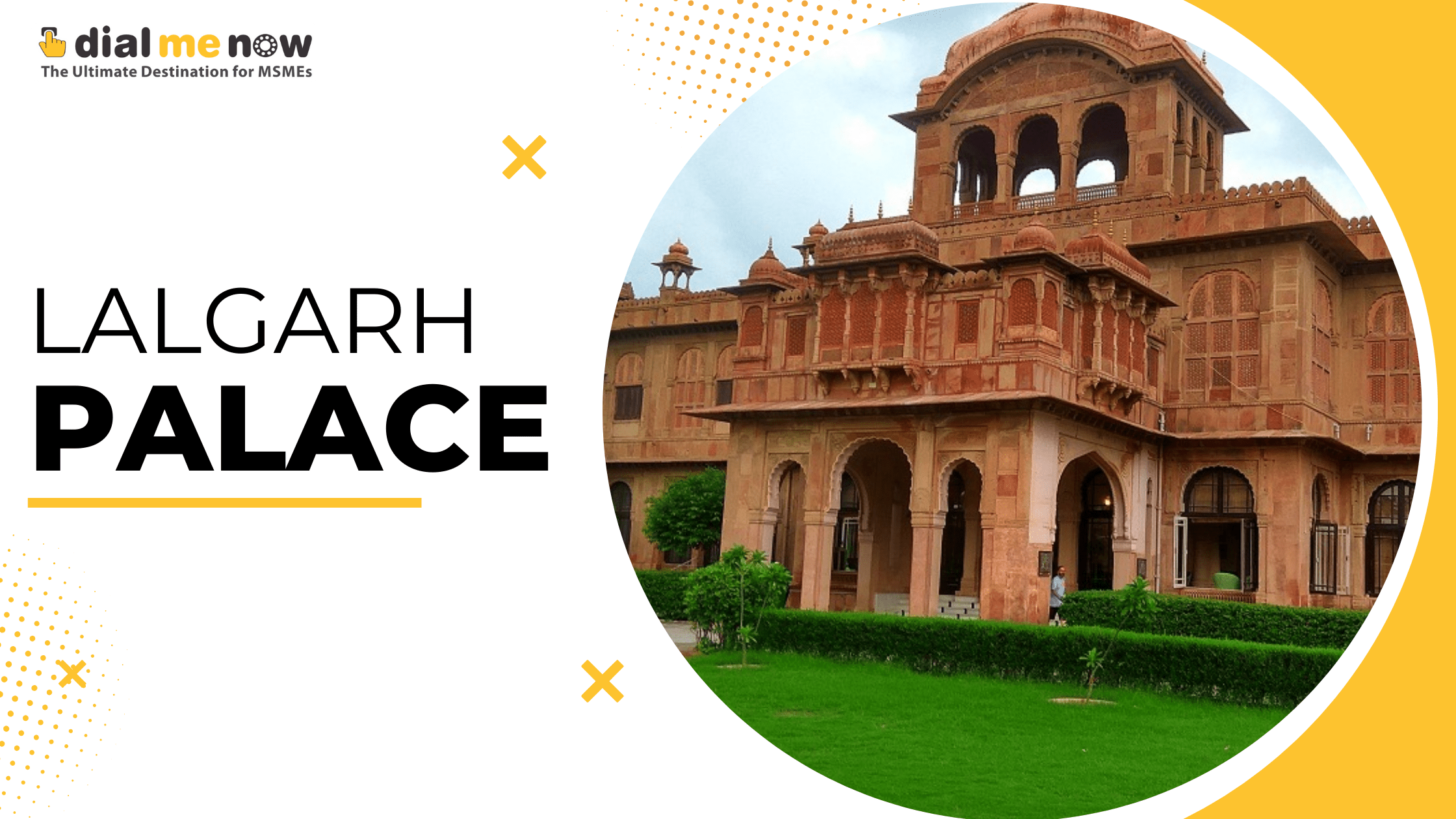
Constructed using deep red sandstone from the Thar Desert, the palace came alive as a majestic residence that redefined architectural brilliance in Bikaner.
The renowned British architect Sir Samuel Swinton Jacob was chosen to design the palace. His Indo-Saracenic style combined:
- Rajputana jali work (intricate lattice)
- Mughal arches and courtyards
- Victorian-style colonnades
- European fireplaces and windows
This unique fusion gave Lalgarh its iconic look, setting it apart from other Rajasthani palaces.
Architectural Grandeur: A Symphony of Styles
When you walk through Lalgarh Palace, it feels less like entering a building and more like stepping into a cultural canvas.
Key Architectural Highlights:
- Sprawling Courtyards: The palace is structured around vast courtyards that once hosted royal gatherings and processions.
- Darbar Hall: Located in the Karni Niwas wing, the darbar hall boasts intricately carved pillars and chandeliers that echo royal grandeur.
- Indoor Swimming Pool: An art-deco style pool, rare in early 20th-century India, reflects the progressive taste of Maharaja Ganga Singh.
- Library: One of the world’s largest private libraries once housed here contained thousands of rare manuscripts, books, and royal records.
- Stucco and Filigree Work: The lattice windows, jharokhas, and delicate detailing display the mastery of artisans who spent decades completing this palace.
The palace cost significantly more than the estimated budget—it was originally meant to cost ₹100,000, but ballooned to over ₹1 million, symbolizing the king’s commitment to a masterpiece that would outlive him.
Cultural Significance of Lalgarh Palace
Beyond its stone walls and carved corridors, Lalgarh Palace embodies Rajasthan’s cultural journey from medieval to modern.
A Royal Hub of Diplomacy
During Maharaja Ganga Singh’s reign, Lalgarh Palace was more than a residence—it was a hub of political discussions and royal diplomacy. It hosted esteemed guests like:
- Lord Curzon (Viceroy of India)
- King George V and Queen Mary
- Lord Irwin and Lord Harding
These visits not only highlighted Bikaner’s significance but also positioned Lalgarh as a global symbol of Indian royalty.
A Blend of Cultures
The palace reflects a cultural blend where Rajput pride meets European sophistication. Maharaja Ganga Singh was a visionary who wanted his state to stand shoulder-to-shoulder with modern powers. His palace became a reflection of that ambition.
Lalgarh Palace Today: Living Heritage
Over time, Lalgarh Palace has evolved into three distinct wings serving different purposes:
-
Sri Sadul Museum (West Wing):
- Open to the public
- Showcases hunting trophies, paintings, vintage photographs, royal costumes, and railway carriages
- Houses manuscripts and the legacy of the Bikaner royal family
-
Heritage Hotels:
- Lallgarh Palace Hotel (operated by the Maharaja Ganga Singh Ji Trust)
- Laxmi Niwas Palace (now a luxury heritage hotel popular for weddings)
Staying here offers a chance to live like royalty while enjoying modern luxuries.
-
Private Residence:
- A portion of the palace still remains home to the descendants of the Bikaner royal family.
Travel Guide: Visiting Lalgarh Palace Bikaner
If you’re planning to visit, here’s everything you need to know:
Location
- Situated about 3–5 km from Junagarh Fort and Bikaner Railway Station
- Easily accessible via taxi, auto-rickshaw, or private car
Timings
- Museum: 10 AM – 5 PM
- Closed on Sundays
Entry Fee
- Museum entry is affordable, generally ranging between ₹25–₹50 for Indians and slightly higher for foreign visitors (check locally for updates).
Best Time to Visit
- November to March: Cool weather makes exploration pleasant
- Summers (April–June) can be extremely hot and are best avoided
Time Required
- Museum tour: 1–2 hours
- Full experience (including gardens and hotel stay): Half a day or more
Things to Do Nearby
- Junagarh Fort – Another architectural marvel just minutes away
- Karni Mata Temple (Deshnok) – Famous “Rat Temple” located 30 km away
- National Research Centre on Camel – A must for camel lovers visiting Bikaner
Why You Should Visit Lalgarh Palace
- Architectural Brilliance: A rare blend of Rajput, Mughal, and European influences
- Cultural Depth: Offers insight into Bikaner’s royal history
- Museum & Library: Perfect for history buffs
- Heritage Stay: Live like royalty in palace-turned-hotels
- Peaceful Atmosphere: Less crowded than other Rajasthan palaces
Visiting Lalgarh Palace is not just about sightseeing—it’s about immersing yourself in Rajasthan’s cultural evolution and royal elegance.
FAQs about Lalgarh Palace Bikaner
Q1: Who built Lalgarh Palace?
Maharaja Ganga Singh built it in memory of his father, Maharaja Lal Singh, between 1902 and 1926.
Q2: What is Lalgarh Palace famous for?
It’s famous for its Indo-Saracenic architecture, royal museum, heritage hotel, and being a symbol of Bikaner’s royal history.
Q3: Can tourists stay in Lalgarh Palace?
Yes. Parts of the palace function as heritage hotels where guests can enjoy royal-style stays.
Q4: How do I reach Lalgarh Palace?
It’s about 3–5 km from Bikaner Railway Station. The nearest airport is Jodhpur (about 250 km away).
Q5: What is the best time to visit Lalgarh Palace?
Between November and March, when the desert climate is most pleasant.
Disclaimer
This blog is based on extensive research and reliable sources to provide accurate information about Lalgarh Palace Bikaner. However, details such as entry fees, hotel availability, or opening hours may change. Visitors are advised to confirm updated information before planning their trip.
Conclusion
Lalgarh Palace Bikaner is not just a monument—it is a living story of Rajasthan’s royal transformation from traditional strongholds to modern residences. Its architectural finesse, cultural depth, and luxurious hospitality make it one of the most fascinating palaces in India.
Whether you’re a history buff, a culture enthusiast, or a traveler seeking royal indulgence, Lalgarh Palace promises an unforgettable experience.