

Kota Stone vs. Italian Marble: Understanding Rajasthan’s Construction Material Giants
1/16/2026
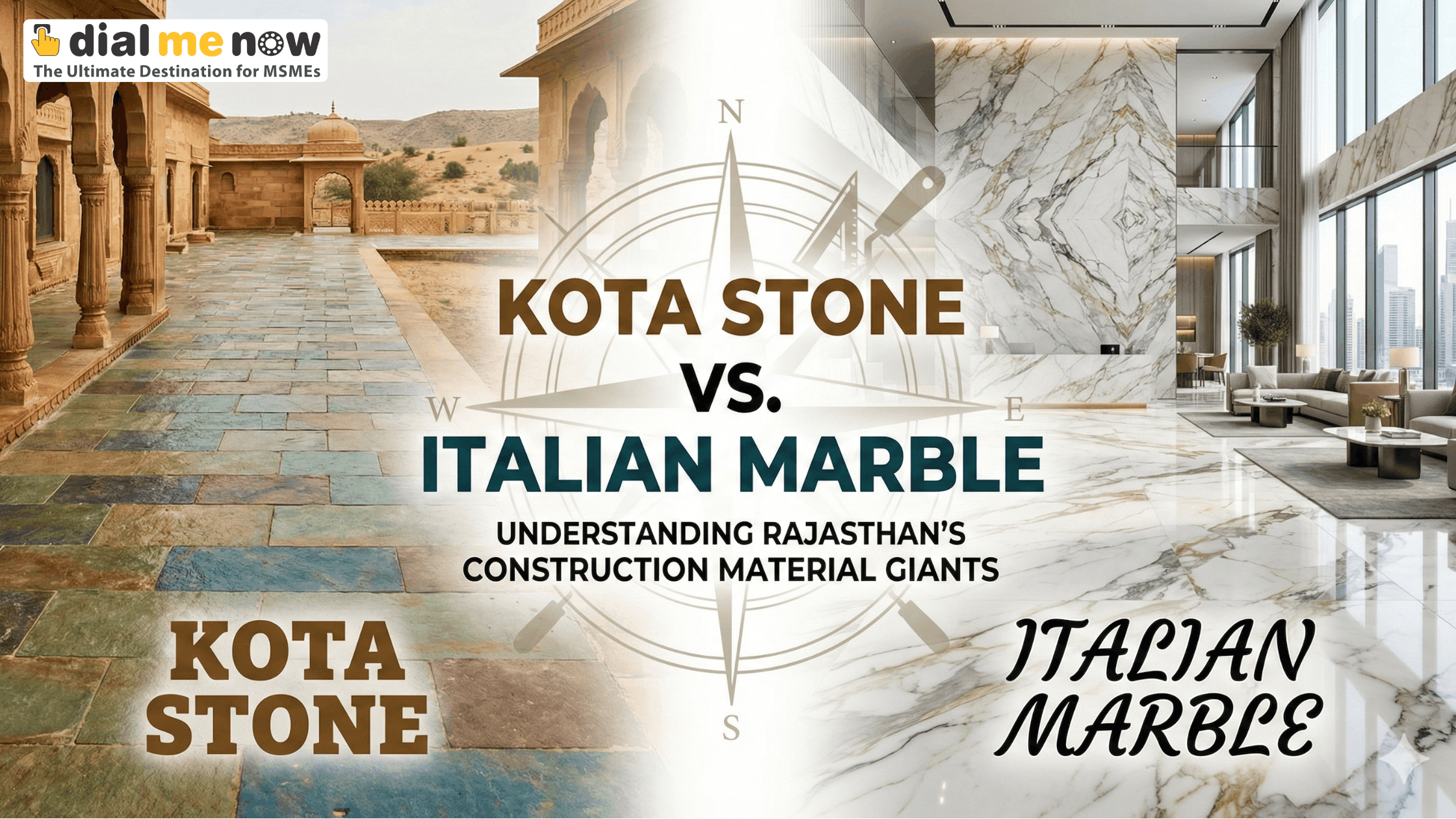
Rajasthan is not just the “Land of Kings”; it is the “Land of Stones.” As the global hub for natural minerals, Rajasthan produces two of the most iconic yet contrasting construction materials in the world: Kota Stone and Italian Marble. While one is a rugged, affordable workhorse from the mines of Ramganj Mandi, the other is a symbol of imported opulence curated in the processing units of Kishangarh.
If you are building a home or a commercial project in 2026, choosing between these two giants isn’t just about aesthetics—it’s about balancing durability, maintenance, and budget.
The Heritage of the Giants
The Local Legend: Kota Stone
Kota Stone is a fine-grained, naturally split-able limestone quarried in the Kota and Jhalawar districts of Rajasthan. It is famous for its earthy tones—greenish-blue, brown, and grey. For decades, it has been the go-to choice for government buildings, railway stations, and high-traffic areas across India due to its sheer toughness.
The Global Icon: Italian Marble
While sourced from Italy (carrara, statuario, botticino), Italian Marble is “processed” in Rajasthan. Kishangarh, near Jaipur, is the marble capital of the world where blocks from Italy are sliced into slabs. It is a metamorphic rock prized for its high calcium carbonate content, giving it a lustrous, mirror-like finish and delicate veining patterns.
Durability & Strength: The Resilience Test
| Feature | Kota Stone | Italian Marble |
| Rock Type | Sedimentary (Limestone) | Metamorphic (Marble) |
| Hardness | Extremely Hard | Relatively Softer |
| Scratch Resistance | High | Low (Prone to scratches) |
| Traffic Suitability | High Traffic (Airports, Driveways) | Low Traffic (Living Rooms, Foyers) |
| Porosity | Low (Non-porous) | High (Porous) |
The Verdict: If you need a floor that can survive the heavy boots of a factory or the constant movement of a public lobby, Kota Stone is the undisputed winner. Italian Marble, being softer and more porous, is susceptible to chipping and staining if not handled with care.
Aesthetics & Design Versatility
The Rustic Charm of Kota
Kota Stone offers a “muted” elegance. It doesn’t scream luxury, but it provides a warm, organic feel. In 2026, Leather Finish Kota Stone has become a trending choice for modern minimalist homes.
- Colors: Blue-grey (most popular), Honey Brown, Black, and Beige.
- Finishes: Natural (Rough), Honed (Matte), Mirror Polish, and Shot-blast.
The Grandeur of Italian Marble
Italian Marble is a “statement” material. No two slabs are identical, allowing you to create a unique art piece on your floor.
- Colors: Pristine White, Statuario, Beige, Grey, and Gold.
- The “Gloss” Factor: It can be polished to a much higher shine than Kota Stone, creating a sense of space and grandeur in smaller rooms.
The Price Gap: Budgeting Your Project
The price difference is the most significant factor for many builders in Rajasthan.
| Material | Price Range (per sq. ft.) in 2026 | Installation Cost |
| Kota Stone | As per market | Economical & Simple |
| Italian Marble | As per market | High (Requires skilled labor) |
- Kota Stone is a budget-friendly powerhouse. For a large area like a 10,000 sq. ft. industrial shed, Kota Stone saves millions.
- Italian Marble is an investment. It adds significant resale value to luxury properties but requires a substantial initial capital outlay.
Maintenance: The Long-Term Commitment
Maintaining Kota Stone
Kota stone is nearly “maintenance-free.” It resists moisture and harsh chemicals. However, over several years, it may “flake” if not polished periodically. A simple mop with water is usually enough.
- Tip: Avoid using strong acids, as it is a limestone and will react (pitting).
Maintaining Italian Marble
Italian Marble is high-maintenance. Because it is porous, a spilled cup of coffee or a drop of lemon juice can leave a permanent stain if not wiped immediately.
- Requirement: It needs professional Sealing every 2–3 years to prevent water absorption and regular re-polishing to maintain its mirror finish.
Best Use Cases for Indian Homes
- Driveways & Porches: Use Kota Stone (Natural Finish). It is slip-resistant and can handle the weight of SUVs.
- Bathrooms & Kitchens: Use Kota Stone (Honed). Its non-slip property is a safety must-have for wet areas.
- Living Rooms & Master Bedrooms: Use Italian Marble. This is where you want to show off elegance and create a “Wow” factor.
- Staircases: Use Kota Stone with Bullnosed edges for safety and durability in public areas; use Marble for internal decorative stairs.
❓ Frequently Asked Questions (FAQ)
Q1: Is Kota Stone slippery when wet?
A: No. Kota stone is naturally non-slippery, especially in its matte or leather finish, making it much safer for bathrooms and balconies compared to polished marble.
Q2: Does Italian Marble get yellow over time?
A: If it is poor quality or contains high iron content, it can develop a yellowish tint. Sourcing “Premium Grade” through verified suppliers like DialMeNow prevents this.
Q3: Can I use Kota Stone for my kitchen countertop?
A: Yes, but be careful with acids (lemon/vinegar). While it’s tough, the limestone will “etch” (lose its shine) if it comes into contact with acidic substances.
Q4: Which is more eco-friendly?
A: Kota Stone. It is a local natural resource with a low carbon footprint (low transportation energy). Italian Marble has a high carbon footprint due to sea and road transport from Europe to Rajasthan.
Q5: Can I polish Kota Stone to look like Marble?
A: You can achieve a “Mirror Finish” on Kota Stone which is very shiny, but it will never have the translucent veining of Italian Marble.
Q6: What is “Leather Finish” Kota Stone?
A: It is a process where the stone is brushed to give it a soft, textured feel that looks like leather. It’s highly popular for interior living rooms seeking a modern-rustic look.
Q7: Why is Italian Marble sold in “Lots”?
A: Marble is cut from a single block. To ensure color and vein consistency across your entire floor, you must buy a “Lot” (a sequence of slabs from the same block).
Q8: Can Kota Stone be used for wall cladding?
A: Absolutely. Thinner slabs of Kota stone are excellent for exterior wall cladding as they are weather-resistant and don’t fade under the harsh Rajasthan sun.
Disclaimer
Stone prices fluctuate based on market demand, quarry availability, and currency exchange rates (for Italian Marble). All technical specifications are based on standard industrial grades in 2026. Buyers are advised to physically inspect slabs for cracks or fills before purchase. All bookings through our website are subject to the terms of the individual verified vendors.