

Kirti Stambh, Chittorgarh: The Jain Heritage Monument—History, Meaning, and a Complete Visitor Guide
9/6/2025
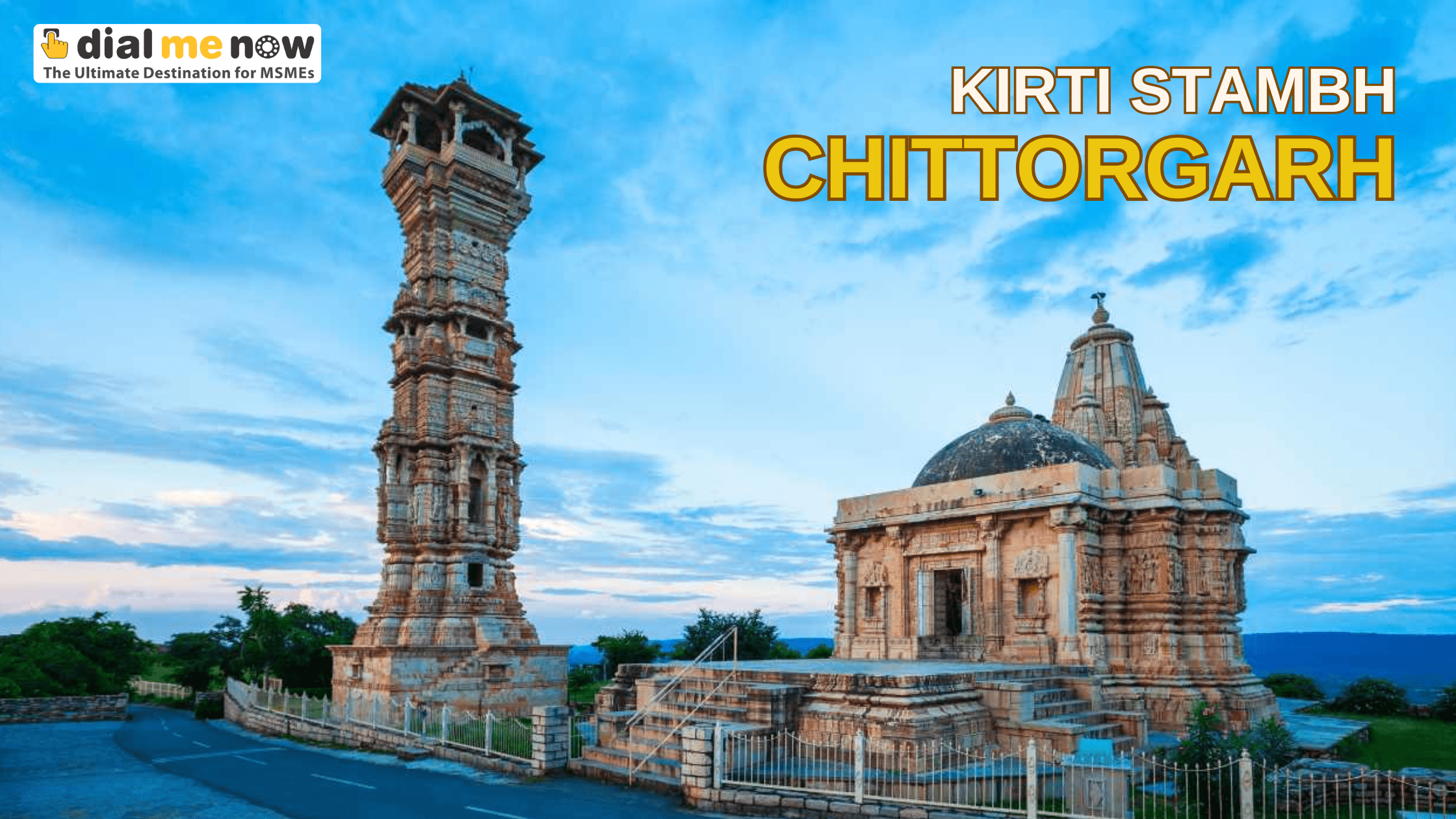
If Chittorgarh Fort is Rajasthan’s epic of stone, Kirti Stambh is its lyrical prologue—a slender, intricately carved Jain tower that predates the more famous Vijay Stambh and quietly centers the fort’s multi-faith story. Rising roughly 22 meters within the fort walls, the “Tower of Fame” is dedicated to Adinath (Rishabhanatha), the first Tirthankara of Jainism, and stands beside historic Jain temples that still anchor pilgrimage and practice today.
Why Kirti Stambh Matters
Kirti Stambh (Tower of Fame) is one of India’s earliest surviving, free-standing Jain commemorative towers. Most sources place its construction in the late 12th century under the patronage of Rawal Kumar Singh of Mewar, commissioned by the Bagherwal Jain merchant Jeeja (Jija/Jijaji) Bhagerwala. Some local signage and secondary accounts cite a slightly later completion (even VS 1357 / AD 1301) and add Punyasing as a co-patron—an instructive example of how medieval monuments gather multiple memory strands over time. What’s consistent across sources is the intent: to glorify Jain dharma, proclaiming the longevity of Jain communities in Mewar.
Its importance widens when you see it in context. Chittorgarh Fort—one of six “Hill Forts of Rajasthan” on UNESCO’s World Heritage list—was a vast Rajput capital layered with palaces, stepwells, shrines, and towers. Within this military citadel, Kirti Stambh signals a parallel sacred geography: Jain temples and learning traditions deeply rooted here since at least the Kushan period.
A Quick Orientation Inside the Fort
- Location: Within Chittorgarh Fort, near the Saat-Bees (Satbis) Jain temple cluster; you’ll often see Kirti Stambh framed by nearby Digambara/Śvetāmbara temple shikharas.
- Dedication: Adinath (Rishabhanatha); the monument is a Jain Digambara affiliation in spirit and iconography.
- UNESCO context: The fort itself is part of the Hill Forts of Rajasthan serial inscription (2013) and features dozens of temples (Jain and Hindu), palaces, and water systems.
Architecture: Māru-Gurjara (Solanki) Sculpture in the Round
Kirti Stambh is a tour-de-force of the Māru-Gurjara (Solanki) style—the Western Indian idiom famous for razor-fine carvings, jali panels, and rhythmic bands of figures. The tower rises in seven discernible tiers (many travel guides casually count six storeys—a difference that usually comes from whether you count the crowning pavilion/plinth level). Official and government-linked summaries describe it as ~22 m tall and “seven-storeyed”; several travel guides list six. Either way, plan for a slim, vertical sequence of balconies and bands that reward slow looking.
Key features worth seeking out:
- Nine-meter square plinth: The tower lifts from a compact, square base—9 × 9 m—reinforcing its columnar feel in the open.
- Niches with Jina images: Many niches originally housed life-size images of Adinath (Rishabhanatha), while friezes narrate Jain themes. Even with time-wear, the iconographic program remains legible.
- Named courses: Sources preserve old names such as Hansh Pīṭh, Siṃha-mukh Thar, Gaja Thar, and Nava Thar—useful for guides and scholars mapping how worshipers engaged the tower’s levels.
Don’t confuse towers: Kirti Stambh (Jain, smaller, earlier) vs. Vijay Stambh (Rajput victory tower of Rana Kumbha, 15th century). You’ll likely see both on your fort circuit; Kirti Stambh is the older of the two.
History in Brief: Jain Mewar, Merchant Patrons, Scholar Lineages
Chittor (the town and its environs) has been a Jain intellectual center since antiquity. Textual traditions link it to luminaries like Acharya Haribhadra Suri (6th c.) and Virasena (9th c.), reflecting a learned ecosystem that predated the tower and likely encouraged its creation. Medieval inscriptions tie Kirti Stambh to the Bagherwal Jain community; from the 15th to 17th centuries, it even served as a seat of a Bhattaraka, a monastic authority in the Digambara tradition. That continuity—inscriptional, institutional, mercantile—makes the “Tower of Fame” a social document, not just a sculptural one.
What the Tower Represents in Jain Culture
A stambha in Jain architecture gestures upward to the Jain ideal of kevala-jñāna (perfect knowledge) and the victory of dharma through ahimsa and restraint. It also works as a mandala in stone—a vertical pilgrimage where the viewer’s gaze (and sometimes body) moves level by level toward clarity. At Chittorgarh, Kirti Stambh’s dedication to Adinath recalls the origins of the Jain tradition itself; the adjacent temple clusters and inscriptions embed this tower within an active tīrtha-like setting rather than a standalone monument.
Practical Visitor Guide
Getting There
- By air: Udaipur (UDR) is the nearest major airport; Chittorgarh is roughly 2–3 hours by road depending on traffic.
- By rail/road: Chittorgarh is a key rail junction and is well connected by state highways and buses from Udaipur, Jaipur, Kota, Ajmer.
- Inside the fort: Kirti Stambh sits on the main fort circuit, near Satbis (Saat-Bees) Jain Temples; local autos, taxis, or hired cars do loops, or you can walk between clusters if the weather is forgiving.
Timings & Tickets
- Fort entry times and fees change periodically—always verify the latest on the ASI online portal or at the fort gate. Recent ranges you’ll see in travel advisories: ~9:00/9:45 AM to ~6:00/6:30 PM; ticket amounts vary by nationality and may be bundled for specific sites or shows. Check and book via ASI’s ticketing page for the most current info.
Can you climb Kirti Stambh?
Access to upper levels is often restricted for conservation/safety. Some older guide blurbs mention climbing, but most recent visitor notes suggest no general public access to the top. Confirm on the day with the ASI guard/guide.
How Long to Spend
- 30–45 minutes to admire Kirti Stambh itself (walk around slowly).
- 2–4 hours to do a fort loop that includes Vijay Stambh, Rana Kumbha Palace, Padmini’s Palace, major temples, stepwells, and key view points. (Chittorgarh is sprawling—plan generously.)
Best Season & Daylight
- October–March is the sweet spot for weather and light.
- Aim for early morning or late afternoon for gentler light on the carvings.
Dress & Etiquette
- Wear comfortable shoes, carry water, and dress respectful for temple surroundings—shoulders/knees covered is appreciated.
- No touching/leaning on carvings; avoid feeding animals. (Conservation efforts in the fort area are ongoing.)
Reading the Stone: What to Look For Up Close
- Carved belts of Jinas: Identify Adinath (sometimes by bull / vṛṣabha emblem in context). Other Tirthankaras appear in meditative postures; look for srivatsa marks and attendant motifs.
- Frieze programs: Musicians, dancers, and floral scrolls—typical Māru-Gurjara surface vitality—in alternating bands.
- Balcony brackets & jalis: Notice how projecting balconies break the shaft’s verticality and how perforated screens (where extant) filter light.
- Proportions: Despite its modest height (about 22 m/72 ft), the tower reads tall because of compressed base and tight vertical registers, crowned by a chhatri-like pavilion.
Kirti Stambh vs. Vijay Stambh (Don’t Mix Them Up)
- Kirti Stambh: Jain, earlier (late 12th/early 13th c.), ~22 m, beside Jain temples, celebrates Adinath and the Jain community.
- Vijay Stambh: Rajput victory tower by Rana Kumbha (15th c.), ~37 m, commemorates a military triumph; its conservation is a major ASI focus today. See both to grasp Chittorgarh’s plural heritage.
The People Behind the Stone: Donors, Monks, Communities
Inscriptions connect the tower to Jeeja/Jija (Bagherwal) Bhagerwala, representing the merchant networks that financed Jain art across Western India. Later records speak of a Bhattaraka seat here (15th–17th c.), indicating extended institutional life—monastic oversight, liturgy, and study, not merely standalone sculpture. In that sense, Kirti Stambh documents a continuum: lay patronage, monastic stewardship, and artisan brilliance converging in one vertical landmark.
One Monument, Multiple Dates? How to Read the Chronology
- Dominant view: c. 1179–1191 CE, during Rawal Kumar Singh, by Jeeja Bhagerwala (inscriptions point to Bagherwal community).
- Alternate memory: A local board cited by travelers says VS 1357 (AD 1301) and mentions co-patron Punyasing. Reasons for the mismatch may include later repairs, dedicatory inscriptions added after completion, or scribal/calendar conversions. For visitors, the key takeaway is its precedence over Vijay Stambh and its Jain dedication, both widely accepted across reputable sources.
Suggested Half-Day Itinerary at Chittorgarh (Self-Guided)
- Suraj Pol entry → Fort ramparts: Pause for panoramic orientation.
- Jain cluster: Kirti Stambh and Saat-Bees (27-temple) complex; spend time identifying Tirthankara imagery and Māru-Gurjara motifs.
- Vijay Stambh: Contrast scale, plan, and narrative (victory inscriptions, royal symbolism).
- Rana Kumbha Palace → Meera Temple → Padmini Palace: Round out the Rajput story of statecraft, devotion, and legend.
- Golden light return to Kirti Stambh: If time allows, circle back for evening photographs; the relief casts deeply as the sun lowers.
Responsible Travel & Photography Notes
- Respect barriers; don’t climb or lean on carved surfaces.
- Ask before photographing worshipers or rituals in adjoining temples.
- Use a guide licensed by the Department of Tourism/ASI for layered interpretation; it deepens the visit and supports local livelihoods.
Frequently Asked Questions (FAQs)
1) What is Kirti Stambh, and who is it dedicated to?
A free-standing Jain commemorative tower inside Chittorgarh Fort, dedicated to Adinath (Rishabhanatha), the first Tirthankara.
2) How old is Kirti Stambh?
Most sources date it to the late 12th century (often 1179–1191 CE), while some local signage/travel accounts cite VS 1357 / AD 1301. It predates Vijay Stambh.
3) How tall is it, and how many storeys does it have?
About 22 meters (~72 ft). Government/official summaries call it seven-storeyed, while some travel guides count six based on different counting conventions.
4) Can visitors climb to the top?
As of recent visitor notes, access is generally restricted; verify on site with ASI staff.
5) Is Chittorgarh Fort a UNESCO World Heritage Site?
Yes—part of the Hill Forts of Rajasthan serial inscription (2013).
6) Where exactly is Kirti Stambh inside the fort?
Near the Saat-Bees (Satbis) Jain temple complex inside the fort’s main circuit.
7) What’s the difference between Kirti Stambh and Vijay Stambh?
Kirti is Jain, earlier, smaller, and devotional; Vijay is a 15th-century victory tower by Rana Kumbha—taller and martial in theme.
8) What are the visiting hours and ticket prices?
They change periodically. For accurate timings/fees and to pre-book, use the ASI booking portal for Chittorgarh Fort.
Disclaimer
- This guide synthesizes information from reputable references and official summaries to help you plan a meaningful visit. Monument access, timings, ticketing, and photography rules change; always confirm current conditions at the gate or on the ASI portal before travel.
- Historical dates for medieval monuments can vary across inscriptions, boards, and secondary literature; where discrepancies exist, we’ve flagged them transparently.
Please respect religious sensibilities at Jain and Hindu shrines within the fort, dress modestly, and follow conservation guidance from on-site staff.