

Exploring Achalgarh Fort: History & Spirituality at Mount Abu
8/29/2025
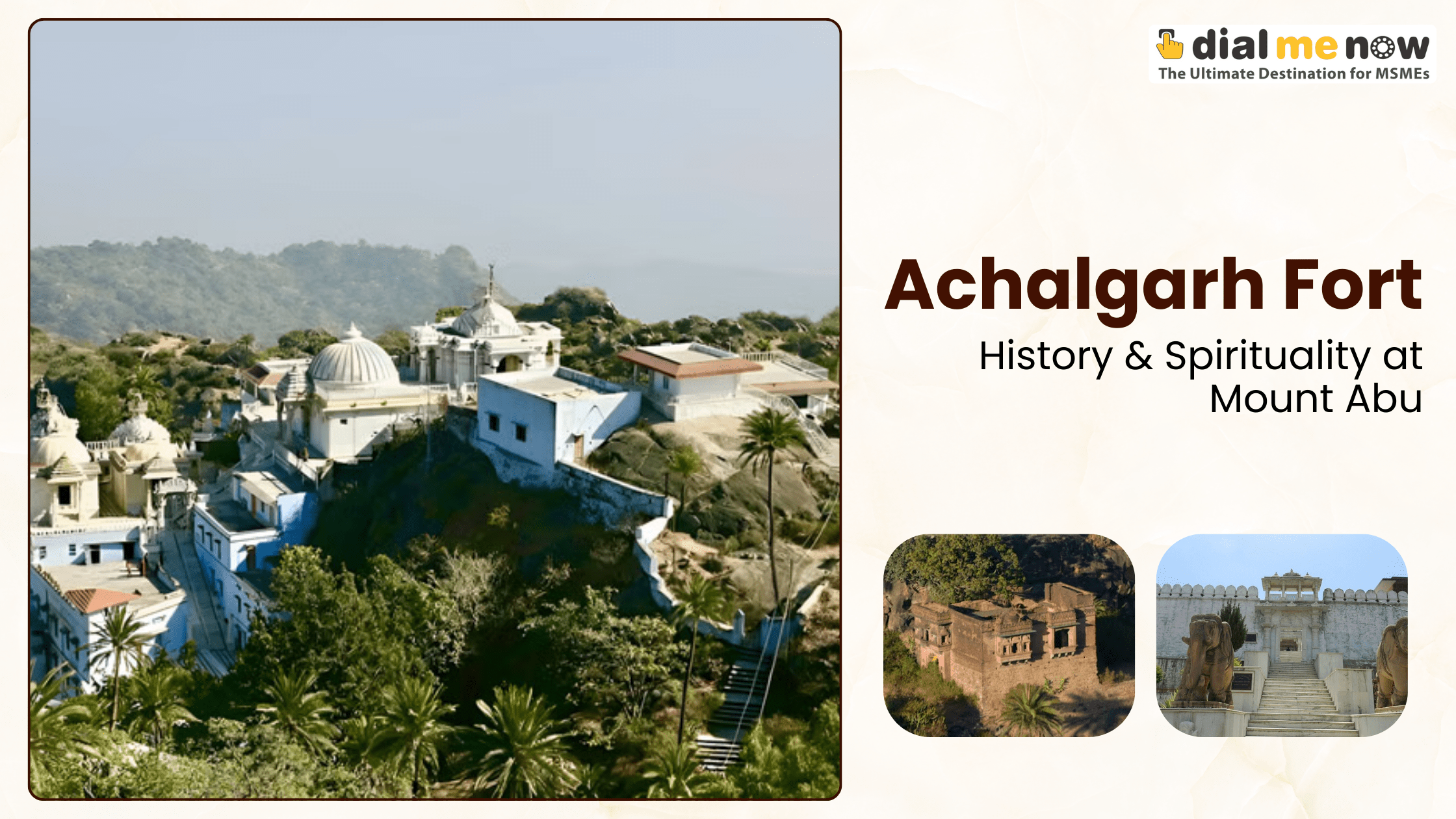
Perched on a high spur of the Aravalli, Achalgarh (Achalgadh) is where Rajasthan’s martial past meets living faith. Just north of Mount Abu’s lakefront bustle, ruined ramparts, ancient gates, and a profoundly revered Shiva shrine create a compact heritage circuit that blends stone, story, and spirituality.
A quick snapshot
- Where: ~9–11 km north of Mount Abu town, Sirohi district, Rajasthan.
- Why it matters: A Paramara-era hill fort later rebuilt by Maharana Kumbha in 1452 CE—and home to the famed Achaleshwar Mahadev Temple.
- Signature sights: Hanuman Pol & Champa Pol gates, bastioned walls, the Achaleshwar complex with its legendary toe-print of Shiva, a four-ton panchadhatu (five-metal) Nandi, and a pond ringed by stone buffaloes.
The history in brief
Achalgarh’s original fortifications are attributed to the Paramara dynasty, who controlled parts of present-day Rajasthan. In the mid-15th century, the fort was rebuilt and renamed Achalgarh by the Mewar ruler Maharana Kumbha—a prolific fortifier credited with dozens of forts across his realm. Today, Achalgarh survives in romantic ruin but still showcases Mewar’s hill-fort engineering.
Strategically, its position above the valleys north of Mount Abu gave Mewar an elevated watchpost to monitor incursions—one reason Kumbha invested in strengthening the site.
Architecture you can still read in the stone
Twin Gateways:
You enter through Hanuman Pol, the lower gate marked by hefty grey-granite towers. A steep ascent leads to Champa Pol, the inner gateway into the citadel. Even with masonry eroded by time, the sequence of lower to inner fort is easy to trace.
Walls & Bastions:
Sections of curtain wall fold over the knobby hilltop, punctuated by bastions that once held sentries. The fort’s silhouette today is fragmentary—yet the placement still makes tactical sense when you look out over the valleys.
Within the precincts:
Besides military elements, Achalgarh encloses or abuts sacred spaces—including Jain temples dated to 1513 and the Shiva shrine of Achaleshwar just outside the main gate cluster.
Spiritual heart: Achaleshwar Mahadev Temple
Steps from the fort stands Achaleshwar Mahadev, a shrine with unusually layered legends:
- Toe-print of Shiva: Devotees worship a naturally occurring formation said to mark Shiva’s toe; beneath lies a mysterious pit many believe is bottomless.
- Nandi of Panchadhatu: The temple houses a roughly four-ton statue of Nandi cast in a five-metal alloy—gold, silver, copper, brass and zinc—linked by inscriptional references.
- Buffalo demons & the pond: Three great stone buffaloes stand by a pond; in lore they memorialize demons felled when the reservoir was filled with clarified butter (ghee).
The shrine’s fabric likely dates back to at least the 9th century CE (Paramara period), with later accretions over time. Festivals like Mahashivratri draw big crowds, and daily puja rhythms keep the site vibrantly “lived in.”
Culture & purpose: why this hill matters
Mount Abu is often called an “oasis in the desert,” a cool, forested plateau historically dotted with hermitages, temples, and monastic centers. Achalgarh anchors the hill’s defense story, while Achaleshwar anchors its devotional one—an emblematic pairing in Rajasthan where sacred peaks also served as strategic beacons.
Planning your visit
How to reach
- From Mount Abu town: 9–11 km by road via Oriya/Achalgarh—about 20–30 minutes by taxi, auto, or bike. Roads are narrow but motorable.
- Nearest rail: Abu Road (ABR), ~28 km from Mount Abu; taxis and buses connect up the ghat road.
- Nearest airports: Udaipur (UDR) ~185 km; Ahmedabad (AMD) ~221 km (often better flight connectivity).
Timings & fees (typical)
- Achalgarh Fort: Commonly reported 10:00 AM – 5:00 PM; no entry fee; some sources mention small camera/photography charges (~₹10).
- Achaleshwar Temple: Generally 6:00 AM – 6:00 PM (some list sunrise–sunset); no entry fee. Aarti times vary by day/season.
Tip: Arrive by late morning, explore the fort first (cooler), then move to the temple for darshan and a serene hour by the pond. Weekdays are calmer than festival days.
What to wear & respect
- Comfortable walking shoes for uneven steps and rock ledges.
- For the temple, modest attire; remove footwear at the threshold. Photography may be restricted in inner sanctums.
Best seasons
- Oct–Mar is pleasant and clear for views; winters can be crisp. Summers are milder than the plains but midday sun is strong.
What to see & do (a short trail)
- Hanuman Pol → Champa Pol: Read the fort plan in sequence, note vantage points and bastions.
- Temple forecourt: Examine carvings and the panchadhatu Nandi; ask the priest about the inscriptional tradition if available.
- Pond with stone buffaloes: A fine example of myth embedded in landscape.
- Jain temples (1513): Quiet courtyards that testify to Achalgarh’s multi-faith canvas.
Nearby add-ons: Dilwara Temples, Nakki Lake, Guru Shikhar, and Mount Abu Wildlife Sanctuary—all within easy reach for a half-day or overnight plan.
Travel smarts & responsible visiting
- Carry water & sun protection; shade is intermittent on the ramparts.
- Mind the edges: Some parapets are low or broken; avoid risky selfies.
- Support the shrine: If you appreciate the upkeep, consider a small donation to the temple trust.
- Leave no trace: Pack back plastic and food waste; macaques may be curious—don’t feed wildlife.
FAQs
1) Is Achalgarh Fort worth it if I’ve seen big Rajasthan forts already?
Yes—Achalgarh is intimate rather than grand. The twin gates, hilltop views, and temple legends make it a distinct Mount Abu experience.
2) How long should I budget?
About 2–3 hours for the fort + temple at an easy pace; add more if you like photography or quiet temple time. (Multiple travel guides suggest ~1 hour each for fort or temple as a baseline.)
3) Are there entry fees?
Most sources list no entry fee for both fort and temple; some note a small camera/photography charge at the fort. Always carry small change.
4) What are the exact timings?
Expect roughly 10 AM–5 PM for the fort and sunrise–sunset (≈6 AM–6 PM) for the temple; aarti timings vary. Check locally during festivals.
5) Is it suitable for seniors or kids?
Yes, with caution. The approach includes steps and uneven surfaces; a hand to hold and unhurried pacing help. (Temple forecourt is easier than upper ramparts.)
6) How do I get there without my own vehicle?
Hire a taxi/auto from Mount Abu town (≈20–30 min each way). For long-distance travelers, connect via Abu Road rail (28 km) or Udaipur/Ahmedabad airports.
Disclaimer
Visitor information (timings, fees, photography rules, and accessibility) can change due to conservation work, local administration orders, or festivals. Treat the fort’s masonry with care, follow priest/guard instructions, and verify on the spot before planning time-critical visits. Sources used include Rajasthan/Mount-Abu travel guides and encyclopedic references; where details conflicted (e.g., precise timings), the most commonly reported ranges are provided.