

Discovering Tonk – Heritage & Afghan Influence in Food and Culture
12/10/2025
Introduction
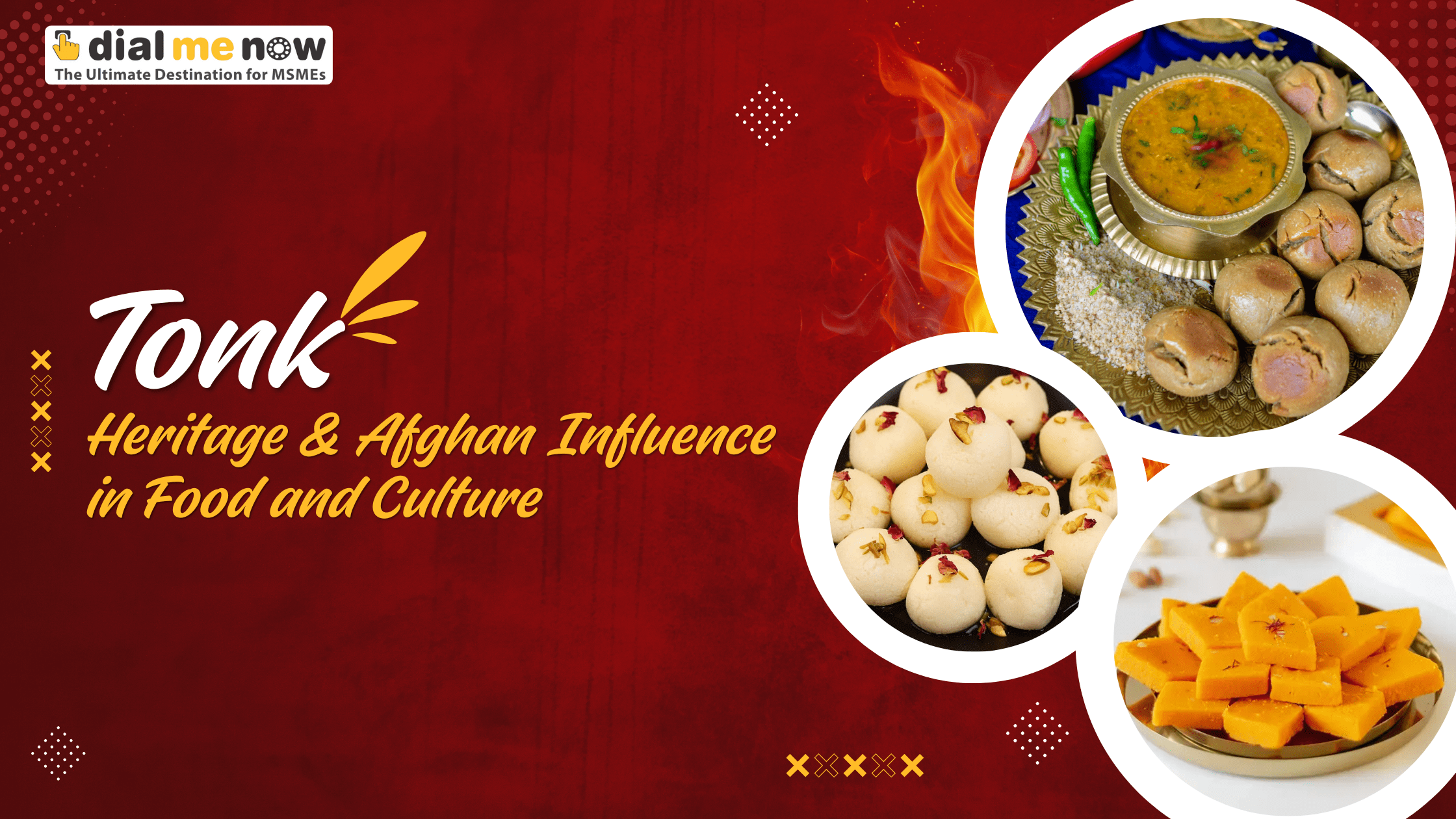
Tonk, located in Rajasthan, is a place where heritage, culture and cuisine converge in a unique way. As someone interested in both digital craft and storytelling, you’ll find here a rich narrative—starting from the history of the town, its Afghan-influenced past, and culminating in the food culture that is both traditional Rajasthani and touched by other threads of history. This blog will take you through the story of Tonk’s food heritage — with particular focus on its special mithaai (sweetmeats) and its vegetarian food scene (like dal baati and bajra rotis) present in the old bazaar sweet-shops.
The Historical Canvas of Tonk: Heritage & Afghan Influence
1.1 Origins & past rulers
The town of Tonk sits on the right bank of the river Banas and about 95 km south of Jaipur. Historically, it was the capital of a princely state under British India. The most interesting thread is that Tonk was ruled by Afghan-Pathan leaders (of the Salarzai clan from Afghanistan) and so the architecture, culture and cuisine bear distinctive influences.
In 1817, after the Third Anglo-Maratha War, the state of Tonk was recognised under British suzerainty, its ruler being of Afghan descent. The result: though Rajasthan in many ways is known for Rajput, Marwari, desert traditions — Tonk also carries a Nawabi flavour, blending Rajasthani tradition with Muslim-Persian-Afghan cultural layers.
1.2 Cultural and architectural heritage
The town still reflects this blend. For instance, the grand hall Sunehri Kothi in Tonk — built by the Nawab of Tonk for poetry recitals, dance, and music — shows Indo-Persian and Rajasthani motifs merging. The result? When you walk through the old bazaar in Tonk, you feel a layering of desert traditions with Nawabi aesthetics—a perfect prelude to understanding its food culture.
1.3 Why this matters for food
Food doesn’t happen in a vacuum: what people eat, how they eat, and where they buy sweets or bread is deeply rooted in heritage. In Tonk, the Afghan/Muslim heritage means that sweets, mithai shops, and vegetarian feasts carry both local Rajasthani flavours and influences from Mughal/Afghan kitchens (rich sweets, use of ghee, saffron, nuts). Meanwhile the staple vegetarian dishes like dal baati, bajra roti come from desert agricultural traditions and Rajasthani culinary practice. When you combine both, Tonk offers something distinct: a “veg food guide” rooted in heritage and a “sweet-tour” of old bazaar shops.
Food Heritage of Tonk – A Two-Track Journey
Let’s explore two major food tracks you asked for: the sweets (mithaai) in old bazaar shops and the vegetarian food (especially dal baati and bajra roti).
2.1 Tonk’s Special Mithaai – Sweet Stops in the Old Bazaar
When you walk through the old market area of Tonk, you’ll come across traditional sweet-shops that have been operating for decades (sometimes generations). Though we may not have detailed commercial histories of each shop, the overall tradition is clear: sweets here are rich, often made with generous ghee, milk solids, saffron, nuts and honour local festivals and patronage of Nawabi households.
One such sweet is the kesar barfi (or broadly barfi with saffron) but the term “Tonk’s Special Mithaai” in your brief suggests that there are sweets unique or popular in Tonk’s old bazaar. For example, local mentions note a shop called Rameshwar Misthan Bhandar is “famous” in the Tonk district for sweets.
What makes Tonk’s sweets distinct?
- Use of ghee, saffron, almonds/pistachios (owing to Nawabi taste).
- Sweet-shops located in old bazaar lanes: atmospheric, traditional, often hand-crafting the sweets.
- Mixed heritage: though Rajasthani, you’ll find sweets which may carry Mughal/Afghan roots (rich milk-based, nuts, layering) in a town whose rulers had Afghan origins.
- Local preference for celebrations, festivals, and offering sweets in Nawabi households means high quality and tradition.
Where & how to sample them
- Visit the old bazaar / chowk area of Tonk early afternoon, when sweets are freshly cut, packed.
- Ask for “Tonk special barfi”, “kesar barfi”, “mixed nuts barfi”, “milk peda” etc.
- Consider buying for takeaway: sweets travel well if packed right; ask for fresh same-day.
- Pair your sweet-tour with a cup of masala chai from a bazaar tea-vendor to complete the experience.
2.2 Vegetarian Food Guide: Dal Baati & Bajra Rotis
For the vegetarian food journey in Tonk, two staples stand out in your outline: dal baati and bajra rotis (millet flatbreads). Both are deeply Rajasthani, desert-region dishes adapted to local conditions (less water, high heat, durable breads) and served often with ghee and accompaniments.
Dal Baati – The crown vegetarian dish
The dish consists of three main components—dal (lentils), baati (roasted hard wheat bread balls) and churma (sweet crumbled bread) in many cases.
In Tonk, you’ll find pure-veg restaurants or dhabas offering dal baati with bajra roti, plenty of ghee, garlic chutney, perhaps kadhi or other Rajasthani side-dishes. According to some food-guides, Tonk’s cuisine is influenced by Rajasthani and Mughal traditions, meaning richness in preparation.
Bajra Roti – The rustic, wholesome flatbread
Millet (bajra) has been a major crop in Rajasthan’s semi-arid zones. The bajra roti is thicker and hearty, often paired with sabzis, ghee and dal. Particularly during winters or in desert zones, bajra rotis were preferred for their warmth, texture, and durability. The use of bajra also reflects the agrarian heritage of Rajasthan.
In Tonk’s vegetarian food-guide, you’ll want to look out for “bajra roti with ghee + seasonal sabzi”, or a “veg thali featuring bajra roti + dal”.
How to experience them in Tonk
- Select a pure-veg local restaurant or dhaba in old town of Tonk (look around old bazaar lanes).
- Order a “Rajasthani thali” if available, to include dal baati (or baati + dal) and bajra roti.
- Ask for extra ghee if you like richer taste (many local places will oblige).
- Enjoy with condiments: garlic chutney, green chutney, pickles; consider bajra roti dipped in ghee or paired with sabzi.
- Best time: lunch or early dinner. Use your phone to search for “Tonk veg food guide Tonk” as local listings might show small eateries.
Why Food, Heritage and Afghan Influence Matter Together
When you combine Tonk’s heritage, you create a richer lens to appreciate the sweets and vegetarian fare:
- The Nawabi/Afghan rulers brought with them appreciation for richer sweets, use of ghee, saffron, nuts—a refinement layered on rugged desert cuisine.
- Meanwhile local agrarian and desert influences meant staple foods like bajra, wheat baati, lentils took centre stage.
- The old bazaar becomes the meeting point: sweet-shops offering traditional mithai, vegetarian restaurants (pure veg) offering local savoury fare.
- The heritage architecture, cultural synthesis and food culture all tie together: when you sit in a local sweet-shop or restaurant, you are also experiencing the layered history.
In short: exploring “Tonk sweets famous” and “Tonk veg food guide” is as much about taste as it is about context and culture.
Frequently Asked Questions (FAQ)
Q1: Why is Tonk famous for sweets?
A: Tonk’s reputation for sweets springs from its old-bazaar tradition of hand-crafted mithai, combined with the legacy of Nawabi households and affluent Muslim-Patān patrons who valued rich milk-based, saffron-infused sweets. The continuity of these sweet-shops in the bazaar maintains that legacy.
Q2: What vegetarian dishes should I definitely try in Tonk?
A: The must-try is the classic Rajasthani vegetarian combo: dal baati (lentils with hard wheat balls) and bajra roti (millet flatbread). Pair them with vegetarian sabzis, garlic chutney and ghee-rich accompaniments.
Q3: Are there pure vegetarian restaurants in Tonk old bazaar area?
A: Yes. The old bazaar lanes include pure-veg eateries and dhabas that specialise in Rajasthani vegetarian thalis and dishes. It’s wise to ask locals for recommended venues and visit around lunchtime for the freshest preparations.
Q4: How do I find the best sweet-shop in Tonk?
A: Look for sweet-shops in the older bazaar area, check for shops with local reputation (often passed verbally), see the packaging and freshness of sweets, ask for recent production time (same day is best), and inquire about the popular item (“kesar barfi” or “Tonk special barfi”). Local social-media mentions (e.g., a Facebook post referring to “Tonk district famous sweet Rameshwar Misthan Bhandar”) show the local awareness.
Q5: Does Tonk cuisine reflect Afghan or Nawabi influence?
A: Yes. The ruling family of Tonk had Afghan origin (Pathan/ Salarzai). The architectural and cultural flavour is Nawabi, which influenced food traditions too. While the core vegetarian Rajasthani fare remains, the richness of sweets, choice of nuts, use of saffron and some Mughal-style dish-elements point to this layered heritage.
Practical Tips for Food-Lovers Visiting Tonk
- Best time to visit: October through March, when weather in Rajasthan is milder. The town of Tonk can get hot in summer.
- Where to eat sweets: Head to the old bazaar (look for lanes with traditional sweet-shops). Pick up a box of barfi or peda. Buy earlier in the day so you get the freshest.
- Where to have a vegetarian meal: Choose a pure-veg restaurant (ask locals). Order a Rajasthani thali with dal baati and bajra roti, ask for ghee if you like richness.
- Photography and social media friendly: Sweets piled in glass displays, baati sizzling and ghee-pouring—great photo ops. Use hashtags like #TonkSweets #TonkFoodGuide #RajasthaniVegFood #TonkBazaar.
- Local etiquette: Many restaurants will allow eating with hands; but you can ask for cutlery if preferred. Always show respect for the bazaar ambience—traditional shops, older architecture.
- Take-away sweets: If you want to buy sweets for travel, ask for packaging that is sealed and avoids exposure to heat.
- Budget: Vegetarians thali meals are usually very affordable. Sweets depend on the type and weight—premium barfi may cost more due to nuts, saffron etc.
Disclaimer
All information in this blog is based on available sources and local reports as of the time of writing. Food-shop names, hours, menu availability may change. Individual dietary preferences (allergies, vegan/vegetarian) should be considered before visiting or buying. This blog aims to inform and inspire; readers should verify on-site for latest details.
Conclusion
When you think of food tourism in Rajasthan, places like Jaipur, Jodhpur or Udaipur often come to mind. But Tonk offers a quieter, more layered experience: where the sweets of the old bazaar whisper of Nawabi indulgence; where vegetarian staples hark back to desert traditions; where the merger of Afghan-Pathan heritage and Rajasthani roots creates a unique flavour map. Whether you’re wandering the bazaar, choosing a box of saffron barfi or sitting down to a lusty ghee-drenched dal baati with bajra roti—Tonk promises memory-laden bites.