

Best Time to Visit Nahargarh Fort for Scenic Jaipur Views
6/9/2025
Introduction
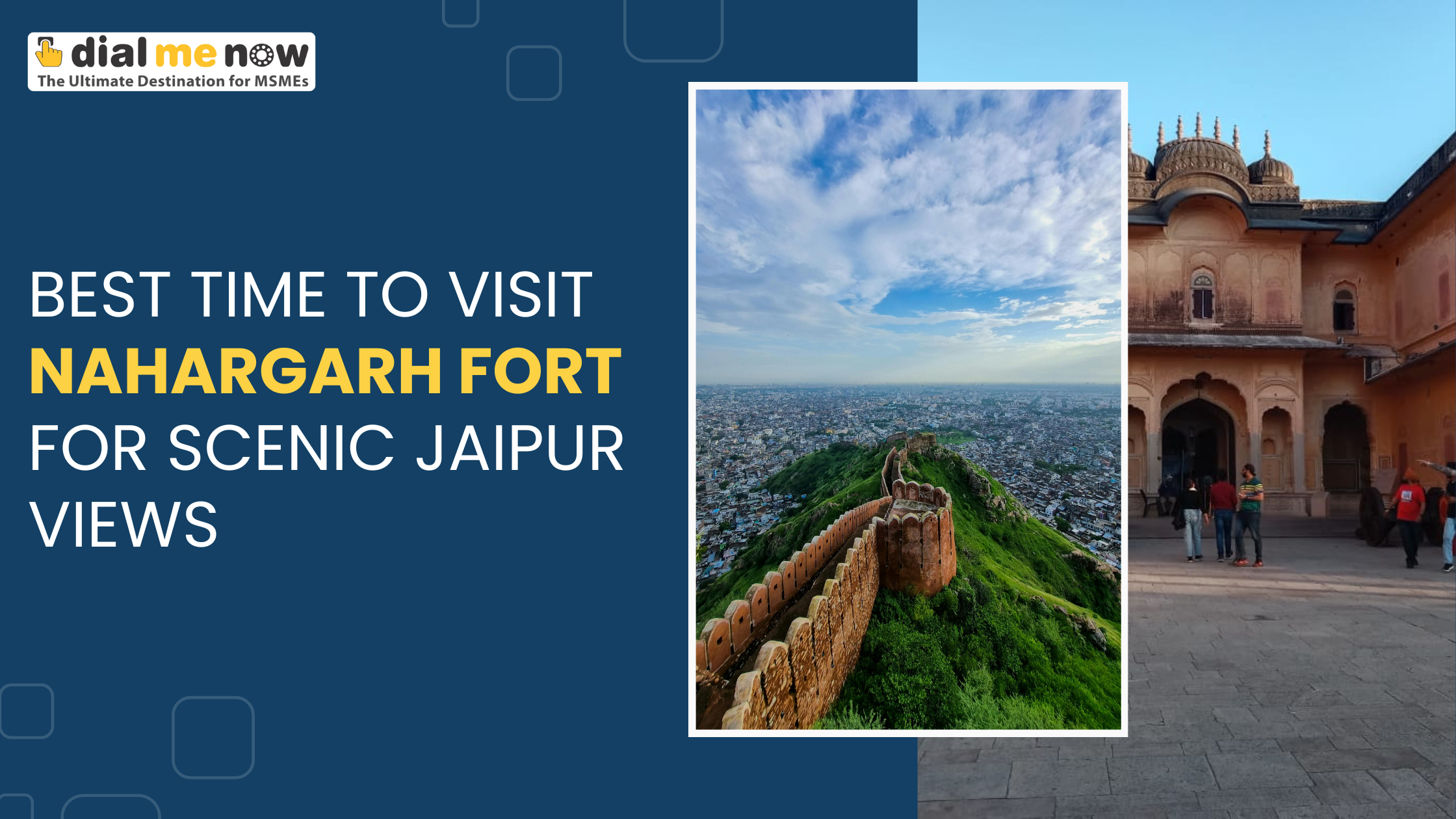
Nestled high atop the verdant Aravalli Hills, overlooking the honey-coloured expanse of Jaipur, stands Nahargarh Fort—aptly named the “Abode of Tigers.” A jewel in Rajasthan’s crown of hilltop citadels, Nahargarh is more than just a vantage point for postcard-perfect panoramas. It is a living chronicle of Rajput valor, Mughal diplomacy, colonial adaptation, and modern cultural revival. Whether you’re a history aficionado seeking to trace the footsteps of Maharaja Sawai Jai Singh II, a photographer chasing the ethereal glow of sunrise over Jaipur’s pink ramparts, or a culture vulture keen to witness local rituals in a hilltop temple, Nahargarh Fort rewards every traveler with a tapestry of experiences.
In this in-depth guide, we’ll explore:
- The compelling origins and strategic significance of Nahargarh Fort
- Architectural marvels that span centuries of Rajput and colonial design
- Folklore, festivals, and living legends that breathe life into the stones
- A month-by-month breakdown of weather, light, and crowds to pinpoint the perfect visit
- Practical logistics: how to get there, entry fees, timings, and insider transport hacks
- Tips to elevate your experience—photography gear, safety pointers, culinary delights, and more
- Nearby gems for a seamless Jaipur itinerary, and a note on sustainable, responsible tourism
By the end, you’ll have everything you need to plan an unforgettable journey to Nahargarh Fort—one that blends sweeping vistas with deeper cultural understanding.
Getting to Know Nahargarh Fort: Overview & Strategic Role
Perched at an altitude of roughly 700 meters above sea level, Nahargarh Fort gazes south-east across Jaipur, commanding a strategic ridge that once formed the western bulwark of the city’s defenses. Its name combines “Nahar” (tiger) with “garh” (fort), evoking strength, agility, and the ferocity of the Rajput warrior spirit. But its story is woven from diplomatic triumphs and cultural patronage as much as from military might.
- Defensive Triangle: Along with Amer Fort to the northeast and Jaigarh Fort just a few kilometers away, Nahargarh completed a protective arc around the capital. Ramparts link all three, creating a near-impenetrable network in the 18th century.
- Cannon Outposts & Watchtowers: Each bastion once bristled with cannons trained on potential invaders, while elevated watchtowers enabled early detection of hostile movements across the plains.
- Modern Adaptation: Under Maharaja Sawai Ram Singh II (r. 1835–1880), Nahargarh’s function shifted from purely martial to civic: it served as a summer retreat, a shelter during the 1857 uprising, and even a time-signal station, firing a cannon at 1 pm daily to synchronize clocks in Jaipur.
Today, Nahargarh is a living museum—an open-air gallery where every wall, courtyard, and hidden chamber offers a window into Jaipur’s intertwined heritage of warfare, architecture, and ceremony.
Historical Significance: Origins & Evolution
Foundation by Maharaja Sawai Jai Singh II (1734)
In 1734, Maharaja Sawai Jai Singh II—renowned astronomer, mathematician, and founder of Jaipur—commissioned Nahargarh to address a strategic weakness. The existing fortresses of Amer and Jaigarh guarded the eastern flanks, but the western ridge remained vulnerable. Jai Singh’s engineers carved out an alcove in the hilltop ridge, raising tall ramparts of pink sandstone that echoed the aesthetic of his newly planned city below.
- Name & Legend: While originally dubbed Sudershangarh (Stronghold of Submission), the fort became popularly known as Nahargarh after the spirit of Nahar Singh Bhomia, a royal scion whose restless ghost allegedly haunted the ridge until appeased by a temple within the fort.
- Design Philosophy: Jai Singh’s vision merged Mughal defensive engineering—wide moats, sloping glacis, and embrasures—with Rajput artistry: scalloped arches, carved lattices, and ornate gateways.
Late 19th-Century Enhancements
Under Maharaja Sawai Ram Singh II, Nahargarh shed some of its martial austerity in favor of regal leisure and civic functions:
- Madhavendra Bhawan (1883–1892): This palace complex, named after the Rajput deity Madhavendra, introduced sinuous corridors, frescoed ceilings, and open terraces for cool breezes. Suites for the maharaja’s consorts featured private jharokhas and hidden passages for secure movement.
- Time-Signal Artillery: In an era before widespread rail telegraphs, the fort’s central cannon fired daily at precisely 1 pm, serving as Jaipur’s official time broadcast. A nod to precision that mirrored Jai Singh’s astronomical interests in Jantar Mantar.
Role During the 1857 Uprising
Although Jaipur remained largely peaceful during the Indian Rebellion of 1857, European residents found refuge within Nahargarh’s sturdy walls. Sawai Ram Singh II threw open the gates, providing shelter and provisioning until calm returned—underscoring the fort’s evolving role as protector, not just of rajput kinsmen, but of all residents.
Architectural Marvels: Exploring the Fort’s Layout
Nahargarh is less a single monolith than a sequence of interconnected courts, palaces, temples, and bastions—each with its own purpose and design vocabulary. A self-guided exploration typically unfolds along these key zones:
1) The Main Gate (Suraj Pol)
-
- An imposing double-storied arch flanked by guardrooms.
- Carved reliefs of tigers and lotus motifs symbolize protection and purity.
2) Temple of Nahar Singh Bhomia
-
- The heart of the fort’s folk religion.
- A marble shrine where locals offer sweets and incense to placate the tiger-spirit.
3) Madhavendra Bhawan Complex
-
- Suites for the maharaja and his queens, arranged around a central courtyard.
- Intricate frescoes depicting hunting scenes, court ceremonies, and Rajput deities.
4) Sheesh Mahal (“Mirror Palace”)
-
- Embedded glass mosaics shimmer in candlelight, evoking Mughal luxury.
- Floral and geometric patterns cover walls, arches, and ceilings.
5) Wax Museum & Artefact Gallery
-
- A modern addition featuring life-size wax figures of prominent historical figures from Rajputana and beyond.
- Small exhibit halls showcase ancient weapons, manuscripts, and royal costumes.
6) Cross-Ridge Ramparts
-
- A network of battlements offering 360° views.
- Strategic embrasures once held cannons; today they provide ledges for sunrise and sunset gatherings.
7) Padao Restaurant & Sunset Terrace
-
- Hilltop café serving local snacks: kachori, masala chai, and lassis.
- Wooden benches and lanterns create a convivial atmosphere as Jaipur’s lights wink on below.
Cultural Tapestry: Legends, Rituals & Festivals
Nahargarh’s stones resonate with more than cannon fire—they echo with tales passed down through generations:
The Legend of Nahar Singh Bhomia
- Haunting the Ridge: A prince named Nahar Singh Bhomia died under mysterious circumstances while hunting atop the ridge. His restless spirit caused freak storms and tremors, delaying construction.
- Atonement & Temple: Engineers reported dreams of the tiger-spirit demanding a shrine. Builders consecrated a temple in his honour, after which calm returned and the fort’s completion proceeded. Devotees still leave coconuts and flowers at the marble altar.
Temple Rituals & Local Worship
- Weekly Aartis: Every Saturday evening, priests perform bhajans (devotional songs) and aarti (light ceremony), attracting locals from villages around Jaipur.
- Festive Puja during Navratri: The nine nights dedicated to Goddess Durga see special ceremonies in the temple courtyard, where dancers perform garba around a tiger motif drawn in colored sand.
Folklore of Imprisoned Concubines
- Haunted Quarters: Rumour has it that certain chambers in Madhavendra Bhawan once held royal concubines under guard. Late at night, some visitors claim to hear distant music or see dappled torchlight through barred windows.
These narratives infuse the fort with a living cultural ambience, reminding visitors that they tread not only on stone but on the dreams, fears, and devotions of centuries past.
Seasonal Guide: Best Times & Months to Visit
Peak Seasons: October to February
- Climate: Daytime highs of 20–25 °C, lows dipping to 8–12 °C.
- Atmosphere: Crisp, clear air; minimal haze ensures unobstructed vistas stretching 20+ km.
- Advantages: Ideal for sunrise shoots, lens clarity, comfortable hilltop strolls.
- Considerations: Early mornings can be chilly—bring a light jacket. Weekends draw crowds around sunset.
Shoulder Season: March to April
- Climate: Warming up to 30 °C; mornings still pleasantly cool.
- Atmosphere: Early spring blossoms dot the hill slopes; gentle winds sweep across the ramparts.
- Advantages: Smaller crowds than winter; colourful wildflowers on trails.
- Considerations: Days grow warmer—schedule your visit for pre-noon or late afternoon.
Monsoon: July to September
- Climate: Moderate temperatures (25–30 °C), humidity, intermittent showers.
- Atmosphere: Hillsides gleam lush green; Pune breeze carries petrichor.
- Advantages: Unique vantage of cloud-scudded city; dramatic low-hanging mist.
- Considerations: Slippery paths, potential waterlogging; reduced visibility at times.
Summer: May to June
- Climate: Daytime highs often exceed 40 °C; heat haze can blur distant views.
- Atmosphere: Scorching sun drains energy; limited opening hours to avoid midday peak.
- Advantages: Few tourists; early morning visits still rewarding.
- Considerations: Carry ample water, sun protection; avoid mid-day heat.
Seasonal Deep Dive: A Month-by-Month Breakdown
| Month | Temperature (°C) | Highlights | Crowd Level | Best Time of Day |
| January | 10–23 | Cool, festive vibe after New Year festivals | High | Sunrise & Sunset |
| February | 12–25 | Clear skies, Valentine’s Day specials at Padao | High | Early Morning |
| March | 18–30 | Wildflower bloom, pre-summer warmth | Medium | 8–10 AM or 4–6 PM |
| April | 22–35 | Increasing warmth, minimal haze | Medium | Sunrise |
| May | 28–42 | Rare crowds, dramatic shadows early morning | Low | 6–8 AM |
| June | 30–44 | Pre-monsoon heat, chance of storm clouds | Low | Sunrise |
| July | 26–36 | Lush greenery, intermittent showers | Low–Medium | Late Afternoon |
| August | 25–34 | Maximum greenery, cultural fairs in Jaipur | Medium | Post-Rain Golden Hour |
| September | 24–33 | Retreating monsoon, fresh vistas | Medium | Sunrise & Sunset |
| October | 20–30 | Festival season, festive lighting at dusk | High | Sunset |
| November | 15–28 | Diwali illumination, crisp mornings | High | Sunrise |
| December | 10–22 | Winter chill, misty dawns | High | Anytime (with layers) |
Planning Your Visit: Logistics, Entry, Timing
Opening Hours & Entry Fees
- Hours: 10:00 AM – 5:30 PM daily (Sunrise visits at extra charge can be arranged with advance booking through Rajasthan Tourism).
- Fees:
- Indian Adult: ₹50
- Indian Student: ₹25 (with valid ID)
- Foreign Adult: US$4 (≈₹350)
- Foreign Student: US$2 (≈₹175)
- Sunrise Tour: Additional ₹200 per person; check in at 4:30 AM.
How to Reach
- Private Car / Taxi
- 20 km from Jaipur city centre via Gopalpura or Tonk Road.
- Negotiate a round-trip fare (₹800–1,200 depending on season).
- Auto-Rickshaw
- Share auto to the base of the hill (approx. ₹100).
- Short 1 km auto-ride uphill (₹50–75).
- City Bus
- Bus No. 6A/6B: Runs every 30 minutes from Hawa Mahal stop to Nahargarh.
- Final stop is 2 km from the main gate—walk or catch an auto-rickshaw.
- Self-Drive / Bike
- Adventurous route with hairpin bends; early morning is recommended for light traffic.
Recommended Duration
- Quick Visit: 1.5–2 hours (ramparts, main palace, Sunset Padao).
- Full Exploration: 3–4 hours (add temple rituals, camera setups, wax museum).
- Photography Workshop: Half-day (gear setup at sunrise, time-lapse at sunset).
Facilities & Accessibility
- Restrooms: Available near main gate and Padao cafe.
- Parking: Limited at the base; ample near main gate (₹20 per vehicle).
- Wheelchair Access: Restricted—steep ramps and steps; assistance required.
- First Aid: Basic kit at ticket counter; nearest hospital in C-Scheme area, Jaipur.
Insider Tips & Experience Enhancers
- Timing Your Climb
- Start 45 minutes before sunrise: the last stretch unveils the city in golden hues.
- If chasing sunset, arrive by 4 PM to explore then settle at Padao by 5:30 PM.
- Local Guides & Audio Tours
- Certified guides (₹500 flat fee) share insider stories not found on plaques—seek them at the entrance.
- Multi-lingual audio guides (₹100 deposit) available in English, Hindi, French, and Japanese.
- Refreshments & Local Flavors
- Try rabri-puri at the base village stalls—milk-cream dessert with crisp puris.
- Padao Cafe’s mint lemonade and mawa kachori pair well with chilly evenings.
- Sustainable Souvenirs
- Handmade block-printed scarves from local artisans near the ticket counter.
- Reusable water bottles (available in eco-friendly shops) help reduce plastic waste.
- Safety & Respect
- Follow marked paths—edge areas have minimal railings.
- Dress modestly in temple zones; photography is restricted inside the shrine.
- Carry a small torch if you plan to linger after dusk (official closing is strict).
Photography & Scenic Spots: Capturing the Fort
- Sunrise Point (East Rampart)
- Wide panorama of the Old City bathed in pink morning light.
- Use a sturdy tripod to capture time-lapses of shifting shadows.
- Sheesh Mahal Reflections
- Early morning sun through colored glass creates kaleidoscopic floor patterns.
- Macro lens enhances details of glittering glass mosaics.
- Temple Terrace Silhouettes
- Backlit shots of the temple spire against sunrise or sunset sky.
- Silhouette of worshippers offering incense adds narrative depth.
- Bird’s-Eye View of Jaipur
- Telephoto lens from the south bastion isolates Hawa Mahal, City Palace, and Jantar Mantar in one frame.
- Ideal at mid-morning when the city is still waking up.
- Nightscape at Padao
- Long exposures capture Jaipur’s twinkling lights with the fort battlements in the foreground.
- Pair with light painting on nearby stones for creative effects.
Nearby Attractions & Extended Itinerary
- Jaigarh Fort (5 km east)
- Home to the world’s largest cannon on wheels, Jaivana.
- Panoramic link-way to Nahargarh—the two forts share ramparts.
- Amer Fort (12 km northeast)
- Mirror-clad Sheesh Mahal, elephant rides, and the sprawling Maota Lake.
- Jantar Mantar (7 km southeast)
- Jai Singh II’s astronomical observatory with giant sundials.
- Hawa Mahal (6 km southeast)
- Pink sandstone façade with 953 small windows designed for royal women’s privacy.
- City Palace & Albert Hall Museum
- Royal art collections, Mughal gardens, and Indo-Saracenic architecture.
Sample Two-Day Jaipur Itinerary
- Day 1: Sunrise at Nahargarh → Amer Fort tour → Lunch in Amber Village → Jantar Mantar → Evening market crawl in Johari Bazaar.
- Day 2: Early stroll in Central Park → Hawa Mahal photoshoot → City Palace museum → Sunset at Birla Mandir → Rajasthani thali dinner at Chokhi Dhani.
Sustainability & Responsible Tourism
As footfall at Nahargarh increases, mindful travel becomes essential:
- Carry-In, Carry-Out: Dispose of wrappers and bottles in designated bins or bring them back down.
- Support Local: Purchase handicrafts, textiles, and snacks from onsite artisan stalls.
- Water Conservation: Use reusable bottles; the fort’s café offers free refills.
- Respect Wildlife: The Aravalli slopes host jackals, peacocks, and reptiles—maintain distance and avoid feeding.
- Cultural Sensitivity: Seek permission before photographing locals or rituals.
By treading lightly, you ensure Nahargarh’s enduring beauty for generations of travelers and local communities alike.
Conclusion
Nahargarh Fort is far more than a scenic overlook—it is a palimpsest of Jaipur’s grand narrative. From the strategic foresight of Maharaja Sawai Jai Singh II to the architectural flourishes of Sawai Ram Singh II, from the plaintive melodies of temple bhajans to the modern hum of tourist chatter at Padao cafe, the fort embodies Rajasthan’s capacity to balance power with poetry. Plan your visit in the cooler months for dazzling clarity, or embrace monsoon mist for dramatic moodiness. Whether you linger among the whispering ramparts at dawn or sip masala chai as Jaipur’s lights flicker on, Nahargarh will fill your senses—and your camera roll—with memories to last a lifetime.
Disclaimer
All content on this blog is provided solely for general informational purposes—while we strive for accuracy, no warranties (express or implied) are made regarding its completeness, reliability, or suitability, and nothing herein constitutes professional advice (you should consult qualified experts before acting); any brand, product, service, company, or trademark names mentioned are the property of their respective owners and are used only for identification without implying endorsement, sponsorship, or affiliation; in no event shall the blog owner, authors, or affiliates be liable for any damages arising from your use of or reliance on this blog.