

Barmer & Jalore – Desert Frontier Food: A Love Letter to Rajasthan’s Rustic, Hardy Cuisine
10/27/2025
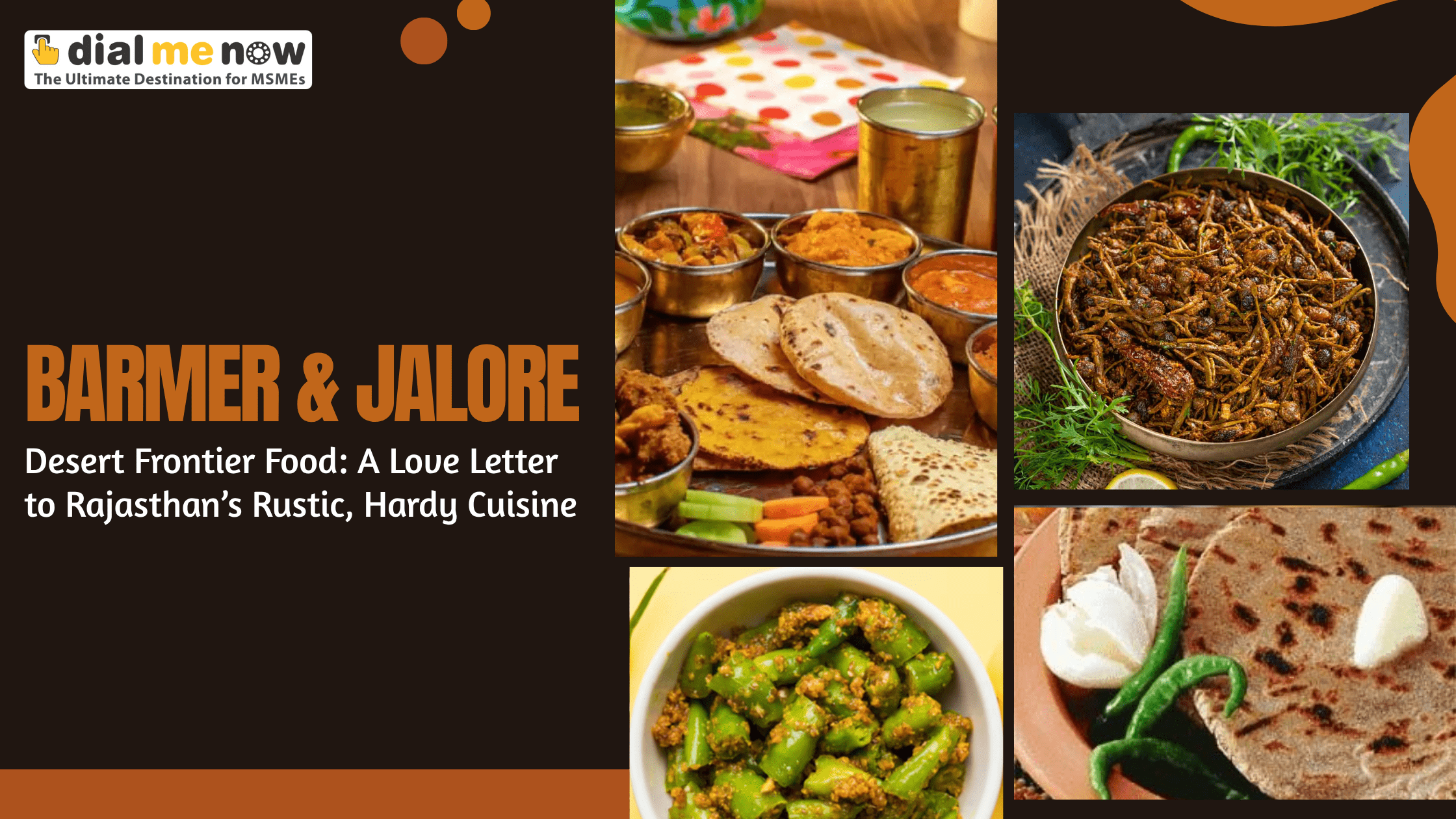
Why Desert Food Feels Different
Rajasthan’s Thar is a masterclass in doing more with less. In Barmer and Jalore, kitchens evolved under sun-tough skies, lean rainfall, and soils that reward patience. The result is desert frontier food that is at once rustic, hardy, and intensely flavorful—a cuisine shaped by millets (bajra), foraged desert berries (ker, kumat, pilu), dried beans (sangri), ghee, chilli heat, and time-honored preservation.
There’s a quiet heroism to this food: rotis that can hold a day’s journey, sabzis made from sun-dried pods that wait out the monsoon, and pickles that bottle courage with every spoon. When you eat in Barmer or Jalore—often at highway dhabas or village-style eateries—you taste ingenuity as much as ingredients.
The Three Icons of the Frontier Table
1) Bajre ka Sogra (Thick, Fire-Kissed Millet Roti)
What it is: A thick bajra (pearl millet) roti, typically patted by hand and cooked on hot griddle or clay. It’s rustic, slightly coarse, and deeply satisfying.
Why it matters: Bajra thrives in arid climates—making it a staple in Barmer and Jalore. Sogra is energy-dense, naturally gluten-free, and keeps well—ideal for herders and travelers.
How it’s served:
- Sogra + White Butter/Ghee + Jaggery: The holy trinity—ghee for richness, gud for a touch of sweetness.
- Sogra + Garlic Chutney (Lasan ki Chutney): A fiery paste with red chillies and garlic, sometimes spiked with kachri (wild melon) for tang.
- Sogra + Kadhi / Dal / Curd: To soften each bite and balance the nuttiness.
What to notice: The charred blisters, the earthy aroma, and the slight crumb—a sogra that breaks with a gentle edge but eats moist when ghee melts over it.
2) Ker Sangri ki Sabzi (Desert Berry & Bean Stir-Fry in Ghee)
What it is: A pan-fried dry sabzi of ker (tart desert berry) and sangri (dried beans from the khejri tree). Often rehydrated, then tossed with ghee, asafoetida, cumin, coriander, amchur, and optional yogurt.
Why it matters: This is the flagship desert dish—celebration food and survival food in one bowl. In good homes, it’s made with patience, the tartness of ker balancing the buttery heft of ghee and the lean chew of sangri.
How it’s served:
- With bajre ka sogra or missi roti
- With boondi raita or chhachh (buttermilk)
- In festive thaals alongside papad ki sabzi and panchmel dal
What to notice: Sweet-sour-tangy-spicy balance; the soft chew of sangri; the caper-like zing of ker.
3) Mirchi ki Sabzi (Green Chilli in a Tangy, Nutty Masala)
What it is: Green chillies cooked with besan (gram flour) or peanut/til (sesame) paste; finished with amchur or a dash of kairi (raw mango) for acidity. Versions range from dry crumbly to lightly sauced.
Why it matters: In a land of preserved flavors, mirchi is both a vegetable and a statement. The sabzi cuts rich rotis and ghee with vivid spice and citrusy lift.
How it’s served:
- As a side with sogra or wheat rotis
- With curd to tame heat
- As a chhonk-heavy accompaniment for travellers who want a bright, compact flavor punch
What to notice: A good mirchi sabzi burns bright, not brutal—the goal is a warmth that lingers, not a challenge for machismo.
What Else to Eat in Barmer & Jalore
- Panchmel Dal: Five-lentil power; tempered with ghee, jeera, and hing.
- Papad ki Sabzi: Papads softened in tangy yogurt gravy; comfort in a bowl.
- Kadhi (Rajasthani style): Thinner, tangier, and spiced for summer fatigue.
- Bajre ki Raab: Fermented millet and buttermilk drink; probiotic, cooling, deeply local.
- Khichda/Khichdi (Millet versions): One-pot sustenance with ghee and cumin.
- Kumat (Kumatiya) ki Sabzi: Desert seeds cooked like beans; foraged notes and festival pride.
- Lasan Chutney & Lahsun ki Kheer (rare): Garlic celebrates the desert—spice, stamina, and story.
- Local Sweets: Churma (often with bajra/wheat mixes), malai ghevar in season, and mawa-based treats on highways.
Where to Find It: Highway Dhabas & Village-Style Eateries
1) Highway Dhabas (NH routes & state roads):
Expect steel plates, mud-brick tandoors, and a choreography of steel tumblers for chhachh. Dhabas near border checkposts, transport hubs, and petrol pumps often serve robust sogra, ker sangri, boondi raita, papad, and onion-green chilli wedges.
How to spot the good ones:
- Local trucks lined up; family seating under a thatched or tin awning
- Tawa in full view, with stacks of bajra dough
- Short menus that rotate with availability (good sign)
2) Village-Style Eateries / Homestays:
The frontier excels at hosted meals—a thali assembled at home kitchens or dhani (hamlet)-style eateries. You’ll taste freshly churned ghee, hand-patted sogra, and seasonal pickles.
Tip: Many local guides can arrange meals; call ahead for sogra (it takes time).
How to Order (and Eat) Like You Belong
- Lead with Sogra: “Bajre ka sogra, ghee ke saath.”
- Add Two Sabzis: “Ker sangri ki sabzi aur mirchi ki sabzi.”
- Ask for Buttermilk: “Thandi chhachh dena.”
- Balance Heat: Pair chilli with curd, boondi raita, or sweet jaggery.
- Respect Pace: Sogra is hand-patted—don’t rush the cook.
- Keep It Simple: Frontier food isn’t about 20 sides; it’s about purity of few, perfect things.
Ingredient Notes: Why the Desert Pantry Works
- Pearl Millet (Bajra): Drought tolerant; nutrient dense (iron, fiber).
- Khejri & Sangri: Khejri trees anchor the desert and power the sabzi; sangri pods are sun-dried for year-round use.
- Ker: A wild berry with sharp, briny notes when pickled or rehydrated.
- Ghee & Buttermilk: Energy and cooling; yin-yang of desert dining.
- Preservation: Sun-drying, fermenting, pickling—the culinary grammar of survival.
Seasonal & Dietary Tips
- Heat & Hydration: Summer demands chhachh and raab; ask for extra buttermilk if you’re on the road.
- Gluten-Free Friendly: Bajra is naturally gluten-free (watch cross-contamination at tawa).
- Vegan Tweaks: Request no ghee; ask for oil tadka. Many sabzis adapt easily.
- Spice Sensitivity: Request mild mirchi sabzi; dhabas understand “kam teekha”.
- Travelers’ Stomach: Keep your buttermilk fresh and water sealed; ask for boiled water if unsure.
A Short, Sensory Trail (Barmer → Jalore)
Morning (Barmer outskirts): Sogra with butter and jaggery; a garlic chutney dab for wakefulness.
Noon (Highway dhaba): Ker sangri, papad ki sabzi, and chhachh under a flapping fan.
Evening (Jalore village eatery): Mirchi ki sabzi, panchmel dal, and bajre ki raab to cool the day.
Takeaway: A jar of ker or kair pickles, a packet of sangri, and if you’re lucky, some kumat seeds.
Responsible & Respectful Eating
- Honor Local Pace: Sogra is labor. Say thank you, mean it.
- Pay Fairly: Desert food is simple, but labor-heavy; tip generously.
- Waste Less: Frontier respect means empty plates or packed leftovers.
- Support Small Vendors: Buy pickles, raab mix, sangri from local co-ops or families.
Frequently Asked Questions (FAQ)
1) Is “bajre ka sogra” the same as bajra roti?
Sogra is a thicker, hand-patted version of bajra roti, with a smoky crust and a soft center—designed for long days and hearty appetites.
2) How spicy is mirchi ki sabzi?
It ranges from medium to hot depending on chilli variety. Ask for “kam teekha” if you prefer mild heat; pair with curd or chhachh.
3) What makes ker sangri special?
It’s the signature desert dish—rehydrated ker berries and sangri beans sautéed in ghee with spices. Tart, nutty, and utterly unique to Rajasthan’s arid belt.
4) Can I find vegan options at highway dhabas?
Yes. Request no ghee and opt for oil tadka. Sogra, dal, and many sabzis adapt well.
5) Is bajra gluten-free?
Yes—naturally gluten-free. Mention cross-contamination concerns so the cook can clean the tawa or use a separate griddle if possible.
6) What should I drink with a desert thali?
Chhachh (buttermilk) is the classic pairing. In cooler months, try bajre ki raab for warmth and gut comfort.
7) Are ker and sangri available year-round?
Typically yes, because sangri is sun-dried and ker is often preserved (pickled/brined). Fresh availability varies by season.
8) Where do I get authentic ker/sangri to take home?
Look for village co-ops, women’s self-help groups, or small local stores around Barmer/Jalore highways. Ask dhaba owners; they usually know the best sources.
9) What’s a classic thali order for first-timers?
Bajre ka sogra + ker sangri + mirchi ki sabzi + boondi raita + chhachh. Add papad ki sabzi if you want gravy comfort.
10) Any etiquette I should know?
Eat with clean hands if you like; break sogra into pieces, add ghee mindfully, and don’t waste. Compliment the cook—frontier kitchens value genuine appreciation.
Disclaimer
This guide celebrates traditional foods from Barmer and Jalore based on widely known regional practices. Recipes, spice levels, and serving styles vary by household, season, and vendor. If you have allergies, dietary restrictions, or medical conditions, please inform the cook and verify ingredients—especially ghee use, peanut/sesame in mirchi sabzi, and milk-based drinks like chhachh/raab.
Final Bite
Barmer and Jalore prove that frontier cooking is an art of attention: to land, to fire, and to flavor. A bajre ka sogra split open with a thumbprint of ghee, ker sangri glistening with memory, mirchi ki sabzi humming with courage—this is desert cuisine at its most honest. If Rajasthan’s royal plates tell palace stories, the desert frontier thali tells you how people endure, share, and thrive.