

Renewable Energy Hub: Why Jodhpur is the Silicon Valley of Solar Power in India
4/4/2026
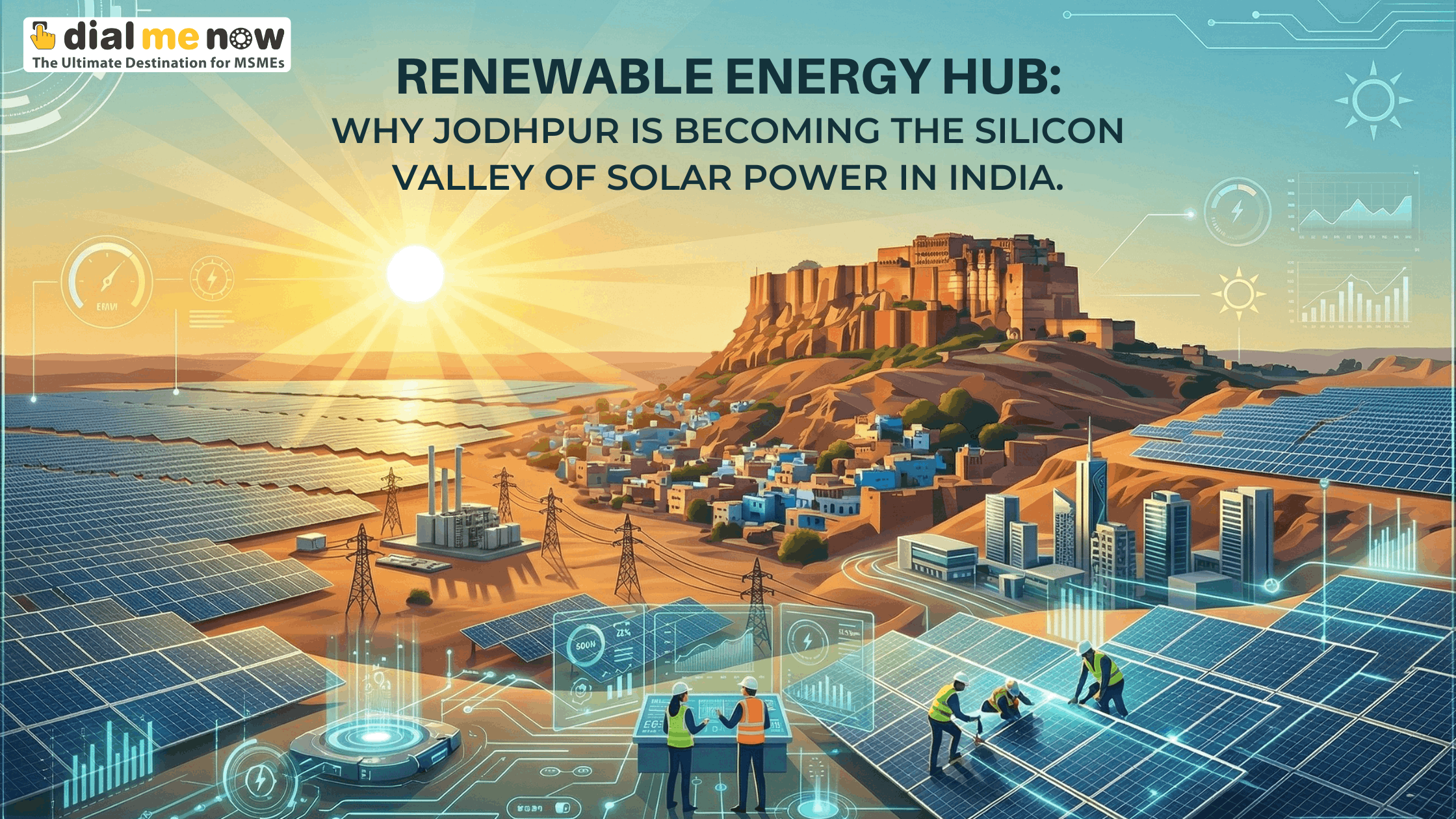
For centuries, Jodhpur has been known as the “Sun City” because of its bright, year-round sunshine. But as we navigate through 2026, that nickname has taken on a multi-billion dollar industrial meaning. Jodhpur is no longer just a city of blue houses and majestic forts; it has evolved into the Silicon Valley of Solar Power in India.
While Bangalore claimed the title for software, Jodhpur has claimed it for the electrons powering India’s green future. From hosting the world’s largest solar park to becoming a hotbed for AI-driven grid research, Jodhpur is the brain and the muscle of the Indian renewable energy revolution.
The Bhadla Benchmark: The World’s Solar Powerhouse
You cannot talk about Jodhpur’s solar dominance without starting at Bhadla. Located in the Phalodi district (an hour’s drive from Jodhpur city), the Bhadla Solar Park remains the undisputed heavyweight champion of the world in 2026.
- Massive Scale: Spanning over 56 square kilometers—an area larger than many small nations—Bhadla boasts an installed capacity of 2,245 MW.
- Technological Sophistication: In 2026, the park has moved beyond simple panels. It now utilizes Dual-Axis Trackers that follow the sun with surgical precision and Waterless Robotic Cleaning systems (developed by local startups) to combat the desert dust without wasting a drop of precious Rajasthan water.
- Global Recognition: Bhadla has attracted over $2.17 billion in investment from global giants like SoftBank, Adani Green, and NTPC, proving that Jodhpur is the primary destination for international green capital.
The Innovation Ecosystem: IIT Jodhpur & RCRICE
Silicon Valley became what it is because of Stanford; Jodhpur is becoming a solar hub because of IIT Jodhpur. The institute’s Rishabh Centre for Research and Innovation in Clean Energy (RCRICE) is the R&D engine of the state.
In 2026, the focus has shifted from just “generating” power to “managing” it:
- BESS (Battery Energy Storage Systems): As seen in the recent April 2026 commissioning of ACME Solar’s 300 MW BESS project in the Jodhpur region, the city is leading the way in storing solar power for use at night.
- Smart Grid Research: IIT Jodhpur is currently running advanced simulations on AI-enabled grid substations that can predict surges in demand and re-route power in milliseconds.
- Thermal Energy Storage: New research in 2026 focuses on low-cost hybrid nanoparticles that allow concentrated solar plants to store heat for up to 18 hours, effectively making solar a 24/7 power source.
The 2026 Policy Landscape: Rajasthan’s ₹2,900 Crore Push
The Rajasthan Government’s 2026-27 Budget has solidified Jodhpur’s position. By allocating ₹29 billion (₹2,900 Crore) toward solar parks and grid strengthening, the state is ensuring that the infrastructure keeps pace with the ambition.
- New Transmission Lines: The budget provides for 19 new high-voltage grid substations (220 kV and 132 kV) across the Jodhpur-Bikaner-Jaisalmer belt.
- Manufacturing Incentives: Under the Rajasthan Investment Promotion Scheme (RIPS) 2024, which has been extended through 2026, companies setting up Integrated Solar Cell and Module manufacturing units in Jodhpur get massive tax holidays and electricity duty exemptions.
- Energy Transition Skilling: Jodhpur now hosts a dedicated “Energy Transition Skilling Cluster,” training thousands of local youth in drone-based panel inspection and robotic maintenance.
The Geography of Light: Why the Thar Desert?
Jodhpur isn’t just lucky; it’s geographically gifted. The Thar Desert provides a unique set of “ingredients” that make it the perfect Silicon Valley for solar:
- Direct Normal Irradiance (DNI): Jodhpur receives some of the highest solar radiation in India (approx. 6.0–6.4 kWh/m²/day).
- Vast Wastelands: The arid plains around Jodhpur, Phalodi, and Bap are unsuitable for agriculture but perfect for sprawling solar arrays.
- Low Humidity: The dry air ensures that solar panels operate with high efficiency, as there is less atmospheric moisture to scatter the sunlight.
Economic Ripple Effects: The Startup Scene
The “Silicon Valley” moniker is most evident in Jodhpur’s burgeoning startup ecosystem. It’s not just about the big players like Adani or Azure Power anymore.
- Vishwakarma Solar & EPC Services: Local Jodhpur-based firms have grown from small contractors to multi-state EPC (Engineering, Procurement, and Construction) leaders.
- Agrivoltaics: Startups in 2026 are experimenting with “Solar Farming,” where crops are grown under the shade of solar panels. This dual-use model is helping local Jodhpur farmers double their income while saving water through reduced evaporation.
- O&M Innovations: Companies like Taypro are leading the “Waterless Robotics” revolution, ensuring that Rajasthan’s solar parks remain the most efficient in the world.
❓ Frequently Asked Questions (FAQ)
Q1: Why is Jodhpur called the Solar Hub of India?
A: Because of its high solar irradiance and the presence of the Bhadla Solar Park, the world’s largest, which generates over 2.2 GW of power.
Q2: What is the current capacity of the Bhadla Solar Park in 2026?
A: It remains at approximately 2,245 MW, though new hybrid (Solar + Wind + Battery) expansions in the surrounding Phalodi region are adding more capacity every month.
Q3: Does IIT Jodhpur offer courses in solar energy?
A: Yes, IIT Jodhpur’s RCRICE offers specialized PhD and M.Tech programs in Clean Energy, focusing on storage, smart grids, and efficiency.
Q4: Can I install a rooftop solar system in Jodhpur under a government subsidy?
A: Yes, under the PM Surya Ghar: Muft Bijli Yojana, residential consumers can get significant subsidies for systems up to 3kW.
Q5: Is Jodhpur better than Gujarat for solar?
A: Both are leaders. While Gujarat is massive in offshore wind and hybrid parks, Jodhpur (Rajasthan) holds the record for the highest land-based solar irradiance and the largest single-location solar park.
Q6: What is a “BESS” project?
A: Battery Energy Storage System. It allows solar power to be stored during the day and used at night, solving the problem of solar being an intermittent power source.
Q7: How does dust affect solar panels in Jodhpur?
A: Dust can reduce efficiency by up to 30%. However, Jodhpur now uses AI-controlled waterless robots to clean panels daily without using water.
Q8: What is the “Viksit Rajasthan @2047” vision?
A: It is a state roadmap that aims to make Rajasthan a $350 billion economy, with renewable energy as its primary export to other Indian states.
Q9: Are there jobs for engineers in Jodhpur’s solar sector?
A: Yes, there is a massive demand for electrical, mechatronics, and data science engineers to manage smart grids and O&M services.
Q10: Can solar power be used for Jodhpur’s handicraft industry?
A: Absolutely. Many handicraft units in Basni and Boranada are switching to solar to lower their production costs and meet “Green Export” standards.
Q11: What is Agrivoltaics?
A: It is the practice of using land for both solar power generation and agriculture simultaneously, often by placing panels high enough for crops to grow underneath.
Q12: How much land is required for a 1 MW solar plant?
A: Typically, about 4 to 5 acres of land is needed for 1 MW of solar installation.
Q13: Does the 2026 budget help small solar businesses?
A: Yes, the ₹2,900 Crore allocation includes funds for strengthening the 33kV grid, which directly benefits smaller rooftop and captive solar plants.
Q14: What is the lifespan of a solar panel in Jodhpur’s heat?
A: High-quality monocrystalline panels are designed to last 25-30 years, even in the extreme 48°C+ temperatures of Rajasthan.
Q15: How can I find a verified solar dealer in Jodhpur?
A: You can use platforms like DialMeNow to find “Green Tick” verified dealers with proven track records in the Jodhpur region.
Disclaimer
Solar project capacities, government subsidies, and policy allocations are based on the 2025-26 Rajasthan Economic Review and the 2026-27 State Budget. While the information is current as of April 2026, we recommend consulting with a certified energy professional before making large-scale capital investments.
Conclusion
Jodhpur’s journey from a historic kingdom to a modern “Silicon Valley” of solar power is a masterclass in leveraging natural assets for a high-tech future. As the world looks for sustainable solutions, the Sun City is providing the answer—one photon at a time. Whether you are an investor, a researcher, or a homeowner, the future in Jodhpur is looking very bright indeed.