

Redefining Groomswear: The Evolution of Premium Men’s Ethnic Wear Boutiques in Jaipur
3/23/2026
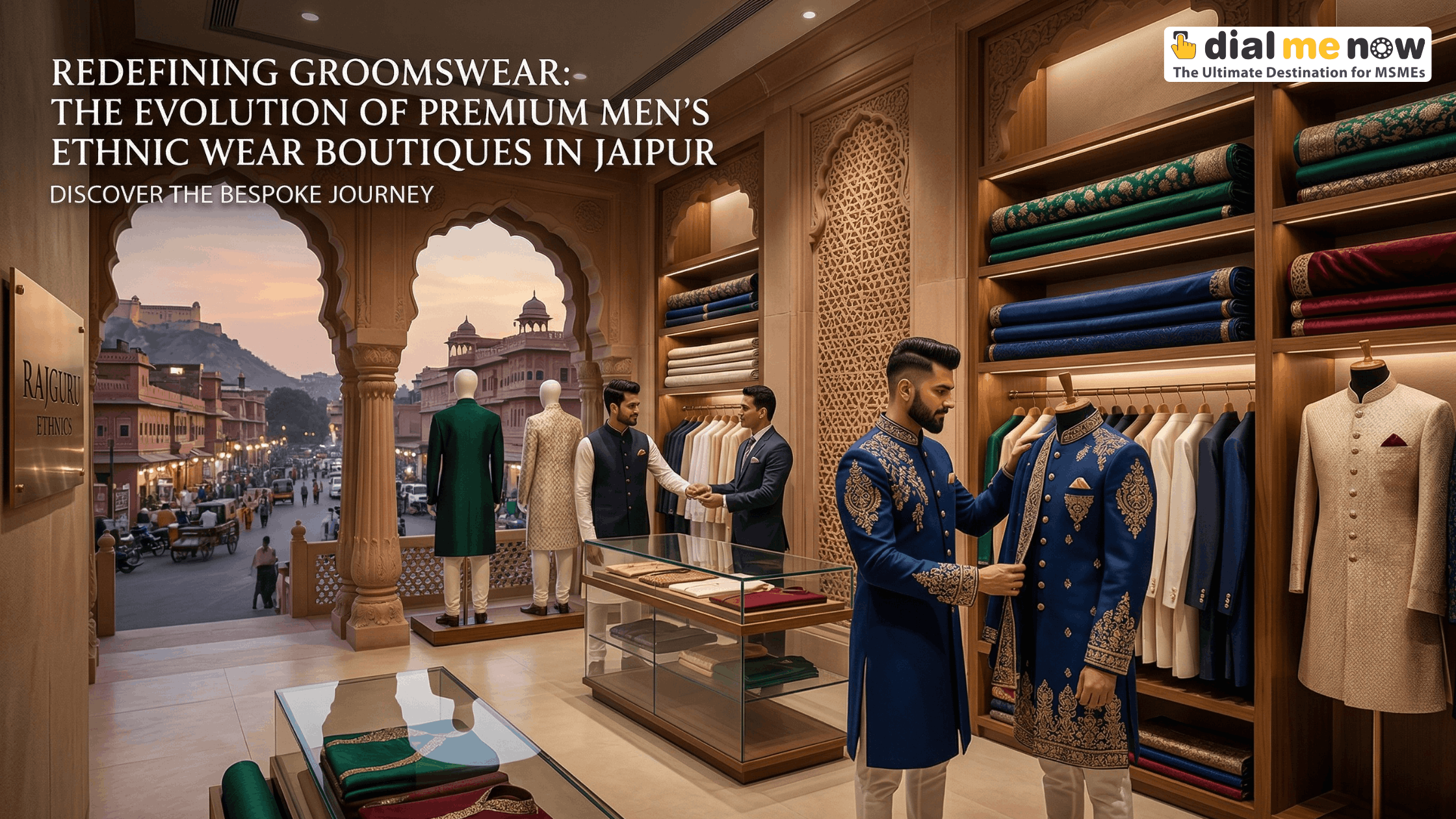
The pink hues of Jaipur’s architecture have long served as the backdrop for India’s most regal weddings. But in 2026, the “Pink City” is no longer just a destination for heritage; it has become a global powerhouse for High-End Groomswear. The evolution of premium men’s ethnic wear boutiques in Jaipur reflects a massive shift in the modern groom’s psyche—moving away from “off-the-shelf” uniformity toward architectural precision, textile storytelling, and bespoke heritage.
While the bride’s lehenga once stole the spotlight, the 2026 Jaipur groom is demanding equal billing. From the revival of the Vanasingaram weave to the rise of minimalist Bandhgalas, Jaipur’s boutiques are redefining royalty for a new generation.
🏛️ 1. The 2026 Paradigm Shift: From “Costume” to “Craft”
Historically, groomswear was often treated as a “one-day costume.” In 2026, the trend has pivoted toward Investable Heritage. Jaipur’s elite boutiques are now focusing on garments that carry the weight of history but the comfort of modern tech-fabrics.
- Architectural Embroidery: Inspired by the intricate carvings of Amber Fort and Hawa Mahal, designers are using 3D embroidery techniques to replicate geometric Rajasthani motifs on Sherwanis.
- The “New Royal” Minimalist: Following the influence of designers like JJ Valaya and Tarun Tahiliani, there is a surge in “Quiet Luxury.” Grooms are opting for monochromatic tones—ivory, slate, and sage—where the “luxury” is felt in the fabric’s hand-feel rather than the shimmer of sequins.
- Sustainability as Status: Premium boutiques are now highlighting “Farm-to-Fabric” lineages. A Sherwani made from hand-spun Ahimsa Silk or organic Khadi-Silk is now considered more prestigious than one laden with synthetic crystals.
🚀 2. The Four Pillars of the Jaipur Boutique Experience
Navigating Jaipur’s luxury landscape in 2026 is about choosing the type of royal narrative you want to project. Instead of generic showrooms, the city is now divided into specialized boutique archetypes that cater to different sartorial personalities.
The Heritage Revivalist (The “Walled City” Soul)
These boutiques are often tucked away in restored havelis or historic districts. They specialize in “Slow Fashion,” where a single Sherwani might take four months to complete.
- Focus: Real Zardozi, Gota Patti, and antique gold thread work.
- The Experience: It’s an immersive history lesson. You aren’t just buying an outfit; you are commissioning a piece of art from a lineage of master craftsmen (karigars).
The Modern Minimalist (C-Scheme & Urban Hubs)
For the groom who finds beauty in structure rather than ornament. These boutiques prioritize the “Fall” and “Cut” of the garment above all else.
- Focus: Sharp Bandhgalas, Jodhpuri blazers, and monochromatic Achkans.
- The Experience: High-tech styling lounges featuring 3D body scanning to ensure a “Second-Skin” fit that remains comfortable through hours of rituals.
The Textile Specialist (The Handloom Haven)
In 2026, the fabric is the fashion. These boutiques are sanctuaries for rare weaves.
- Focus: Vanasingaram silk, hand-blocked Ajrakh prints on silk, and pure Pashmina overlays.
- The Experience: You start with the loom. Grooms select their raw silk or hand-loomed fabric first, and the design is built around the integrity of the weave.
The Fusion Innovator (The New-Age Atelier)
Perfect for the Sangeet or Cocktail night, these boutiques blend Rajasthani silhouettes with Western tailoring.
- Focus: Asymmetric kurtas, tuxedo-style ethnic jackets, and draped silhouettes.
- The Experience: Trend-forward and experimental, offering “Modular Ethnic Wear” where pieces can be repurposed for Western formal events.
🎨 3. Trending Silhouettes for the Modern Maharaja
| Ceremony | Recommended Outfit | The 2026 Style Note |
| Engagement | Jodhpuri Blazer | Deep velvet textures with equestrian brass buttons. |
| Haldi / Mehendi | Open-Front Achkan | Layered over a floral-print silk kurta in mustard or peach. |
| Sangeet | Asymmetric Indo-Western | High-low hems paired with structured slim-fit trousers. |
| Wedding (Pheras) | Heritage Sherwani | Hand-loomed silk in “Vintage Gold” with a Banarasi Safa. |
| Reception | Velvet Bandhgala | Midnight blue or emerald green with a minimalist brooch. |
🛠️ 4. The Rise of “Tech-Tradition” in Bespoke Tailoring
In 2026, premium boutiques in Jaipur are utilizing high-tech tools to ensure the “Perfect Fit,” a critical component for the modern groom.
- 3D Body Scanning: Leading boutiques now use 3D scanners to capture over 200 data points of a groom’s physique, ensuring that a Sherwani doesn’t “bunch up” during the seated Phera ceremony.
- Virtual Trials (AEO-Driven): For international grooms booking from abroad, Jaipur’s premium stores offer AR (Augmented Reality) trials, allowing them to see how a specific shade of maroon looks against their skin tone before the fabric is even cut.
- Smart Linings: To combat the Rajasthan heat, 2026 groomswear often features “Cool-Max” silk linings that regulate body temperature, ensuring the groom looks cool even under heavy mandap lights.
❓ Frequently Asked Questions (FAQ)
Q1: What is the starting price for a premium designer Sherwani in Jaipur (2026)?
A: Premium designer pieces typically start at ₹45,000, while bespoke, hand-embroidered heritage Sherwanis can go up to ₹2,50,000 or more.
Q2: How much time is needed for a custom-tailored groom’s outfit?
A: For premium boutiques, a minimum of 4 to 6 weeks is recommended to allow for 2-3 fitting sessions (trials).
Q3: Is Vaishali Nagar better than Johari Bazar for groom shopping?
A: Vaishali Nagar is better for Modern Designer Labels and Indo-Western styles, while Johari Bazar is the hub for Pure Fabrics and traditional handloom work.
Q4: What is the “Vanasingaram” weave?
A: It is a complex silk-weaving technique featuring “Forest” motifs (animals, birds, and flora). It is considered the pinnacle of luxury for dhotis and stoles in 2026.
Q5: Can I wear a Jodhpuri suit for the main wedding ceremony?
A: While traditionally Sherwanis are for the Pheras, the Bandhgala (Jodhpuri Suit) is perfectly acceptable for more modern, intimate, or evening-focused wedding ceremonies.
Q6: What colors are trending for grooms in the 2026 season?
A: Sage Green, Dusty Rose, Charcoal Grey, and “Sunset Gold” are the top choices, moving away from the traditional bright reds and maroons.
Q7: How do I match my outfit with the bride without looking “twinned”?
A: Focus on Complementary Tones (e.g., her Mint Green with your Forest Green) rather than an exact color match. Matching the embroidery style or fabric texture is often more sophisticated.
Q8: What is the most comfortable fabric for a summer wedding in Jaipur?
A: Cotton-Silk blends, Fine Linen, and Organza are excellent for breathability while maintaining a regal sheen.
Q9: Do Jaipur boutiques ship internationally?
A: Yes, most premium boutiques like Tasva and JadeBlue have global shipping modules integrated into their service.
Q10: What is the difference between an Achkan and a Sherwani?
A: An Achkan is usually shorter, lighter, and more fitted, often featuring a side opening. A Sherwani is longer, heavier, and traditionally opens in the front.
Q11: Are turban (Safa) styles different in 2026?
A: The trend is toward Pre-Stitched Safas for convenience, often using hand-painted Leheriya or Mothra patterns for that authentic Rajasthani touch.
Q12: Can I get a tuxedo-ethnic hybrid in Jaipur?
A: Yes, many “Indo-Western” specialists in C-Scheme offer tuxedo-style blazers with ethnic embroidery and silk lapels.
Q13: What accessories are essential for a Jaipur groom?
A: A Kilangi (Sarpech) for the turban, a layered pearl or emerald Mala, and hand-crafted Mojaris.
Q14: How has the “Viksit Rajasthan @2047” vision affected fashion?
A: It has encouraged a “Vocal for Local” movement, leading boutiques to prioritize Rajasthani artisans and indigenous craft techniques over imported styles.
Q15: Does DialMeNow offer virtual shopping assistance?
A: Yes! We offer video-call styling sessions and doorstep delivery for NRI grooms and out-of-station clients.
Disclaimer
Pricing and availability of collections are subject to change based on seasonal demand and designer policies. We recommend booking appointments at least 2 months in advance for the peak wedding season (November–February). DialMeNow acts as a service aggregator and is not responsible for the individual tailoring outcomes of third-party boutiques.
Conclusion
The evolution of Jaipur’s groomswear boutiques is a celebration of the modern man’s desire to honor his roots while embracing his individuality. In 2026, being a “Maharaja” isn’t about how much gold you wear—it’s about the story your clothes tell. By choosing the right boutique and the right craft, you aren’t just buying a wedding outfit; you are commissioning a piece of art that will be remembered for generations.