

Instagram, Facebook or Your Own Website: What Does a Small Business Really Need?
8/13/2026
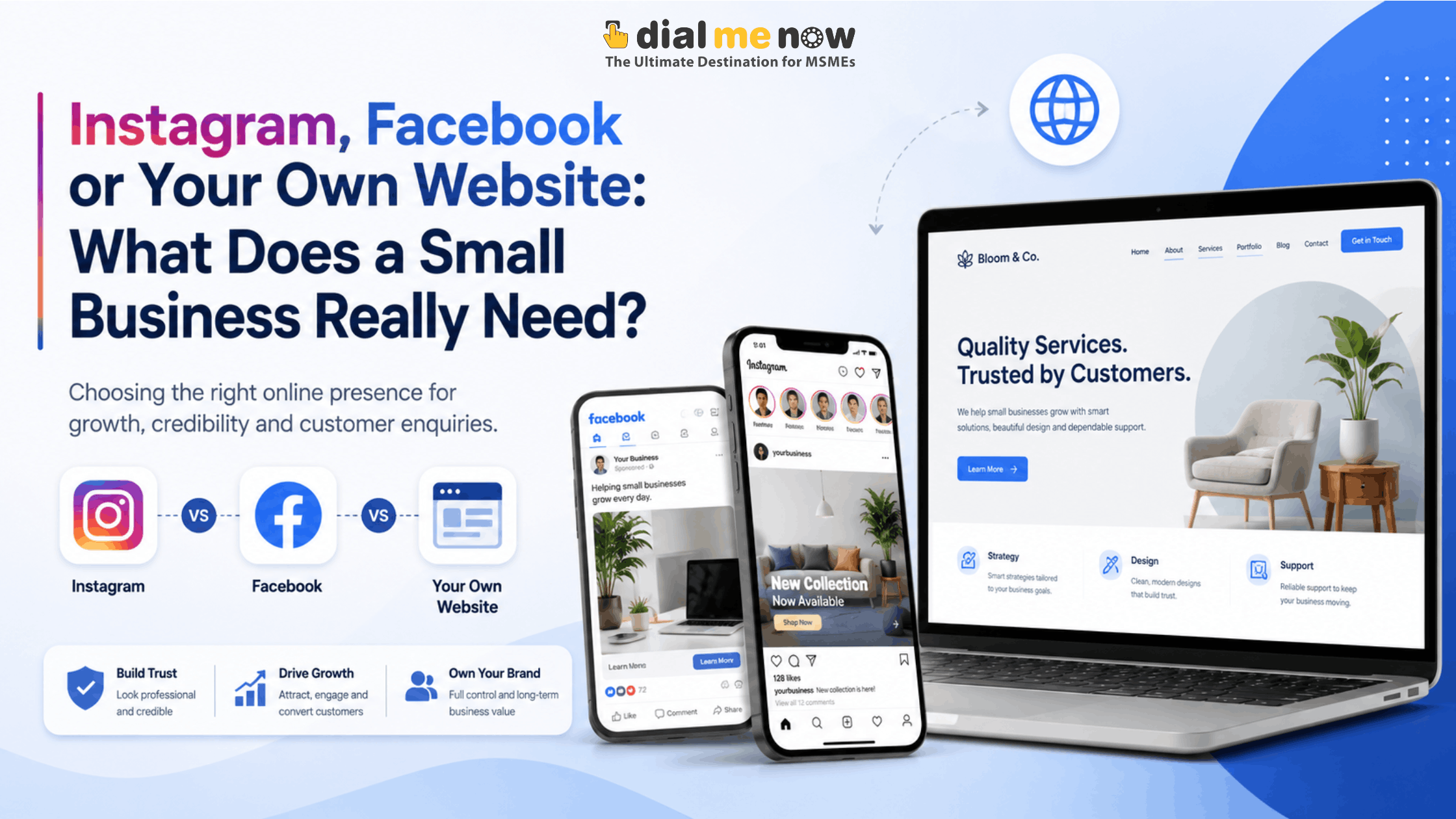
Quick Answer
A small business should usually avoid choosing between social media and a website. Instagram and Facebook are excellent for reach, engagement and regular updates, while an owned website gives the business a stable destination for services, search visibility, enquiries and brand information. The strongest setup is often social media plus a professional website and accurate local business profiles.
A common question from small business owners is simple: if customers already find us on Instagram or Facebook, do we really need a website?
Social media can absolutely generate enquiries. For visual businesses, local stores and service providers, it may even be the first place customers discover the brand. But a social profile and a website play different roles.
Social platforms are rented distribution channels. A website is a digital property the business controls more directly. Rather than treating them as competitors, small businesses should decide how each channel contributes to discovery, trust and conversion.
What Social Media Does Very Well
Instagram and Facebook are built for regular interaction.
They make it easy to post new products, offers, behind-the-scenes content, short videos, customer stories and updates. Followers can comment, share and message the business without leaving the platform.
For businesses that depend on visual discovery or community engagement, social media can be a major growth channel. It is also useful for paid advertising because audiences can move directly from an ad to a message or landing page.
Where Social Media Has Limitations
A social profile is controlled by the platform’s rules, interface and algorithms. The business cannot fully control how information is organised or how many followers see a post.
Important information can also become buried in a feed. A customer looking for one specific service, policy, price range or case study may need to scroll through months of posts.
Account restrictions, changes in platform reach or loss of access can also create business risk when the entire online presence exists in one external platform.
What a Business Website Adds
- A permanent location for your core business information.
- Dedicated pages for important services or products.
- Greater control over branding and navigation.
- Search visibility for relevant Google queries.
- Lead forms and conversion journeys designed around the business.
- Space for case studies, FAQs, policies and detailed information.
- Integration with analytics, CRM or other business systems.
- Ability to expand with blogs, portals, e-commerce or custom features.
Why Websites Build Different Kind of Trust
A customer may discover a business on Instagram and then search its name on Google before purchasing. A professional website can provide the formal information needed for that verification.
An About page, service details, business contact information, privacy policy, portfolio and clear enquiry process make the organisation easier to evaluate.
This is especially important for higher-value services where customers research before contacting the provider.
What About Google Business Profile and Local Listings?
For local businesses, a website and social media should also be supported by accurate local business information.
People may discover a company through map results, local directories or branded searches. Consistent business name, address, phone, service information and website links reduce confusion.
Dial Me Now itself operates as a local business information platform, which illustrates another discovery layer beyond social media and a company’s own site.
A Balanced Online Presence for a Small Business
A practical setup does not need to be complicated.
The website can act as the central source of truth. Instagram and Facebook can distribute content and create interaction. Local listings can support nearby discovery. WhatsApp or calls can provide direct conversation.
Paid advertising can send users to the most appropriate destination depending on the campaign: a focused landing page, product page, lead form or message channel.
Each channel has a job, and the business is less dependent on any single platform.
When a Website Becomes Especially Important
- You offer multiple services that need detailed explanation.
- Customers search Google before buying.
- You want to appear for non-branded search queries.
- You run advertising campaigns and need controlled landing pages.
- You sell higher-value or trust-sensitive services.
- You need enquiry forms, appointment requests or integrations.
- You want to publish blogs, case studies or resources.
- You expect the business to grow beyond one social platform.
Can a Small Business Start With One Page?
Yes. A professional single-page website can be a sensible first step for a small business with limited content.
It can present the core offer, key services, location, trust information and contact options. As the business grows, separate service pages, blogs or other features can be added.
Starting small is better than postponing a website for years because the business assumes it must launch a large corporate portal immediately.
How Dial Me Now Can Help
Dial Me Now supports businesses with online presence, digital marketing and web development services. A business can combine a professional website with social media and local discovery rather than relying on only one channel.
If your company currently operates mainly through Instagram, Facebook or WhatsApp and needs a more complete digital presence, visit DialMeNow.in and submit an enquiry to discuss a suitable website and online presence plan.
Frequently Asked Questions (FAQs)
1. Can Instagram replace a website?
It can serve some very small businesses, but it does not provide the same control, search architecture, content depth or ownership as a website.
2. Do customers still visit business websites?
Yes, particularly when they need detailed service information, proof of credibility, policies, contact details or information found through search.
3. Is Facebook enough for a local business?
It may support discovery and communication, but relying on one social platform creates limitations and platform dependency.
4. What should a small business website include?
At minimum: clear business description, services, trust information, contact details, mobile-friendly design and an enquiry path.
5. Should website and social media use the same content?
They should communicate a consistent brand, but the formats should differ. Social content is often shorter, while the website contains structured evergreen information.
6. Can social media posts help website traffic?
Yes. Relevant posts can direct interested users to deeper service pages, articles, offers or enquiry forms.
7. What if the business has a very small budget?
Start with the most important channels. A focused one-page website plus well-maintained social profiles can be a practical foundation.
8. Does having a website automatically improve Google ranking?
No. Search visibility depends on technical quality, content, relevance, competition and other factors.
9. Should WhatsApp be connected to the website?
It can be useful for businesses that actively manage WhatsApp enquiries, but calls to action should match the sales process.
10. Which should be created first: social profiles or website?
There is no universal order. The business should establish consistent identity and then build the channels most important for its customers.
Conclusion
Instagram and Facebook are powerful channels, but they are not complete substitutes for a business website.
Social platforms are excellent for reach and interaction. A website provides control, structured information, search visibility and a stable conversion destination. Local listings add another layer of discoverability.
For most growing businesses, the strongest answer is not website versus social media. It is a connected online presence. Visit DialMeNow.in to discuss a website, online presence or digital marketing plan with the Dial Me Now team.
| Ready to discuss your requirement? Visit DialMeNow.in or use the Contact Us page to submit your enquiry. |
Suggested Internal Links for This Series
- Single-Page vs Multi-Page Website: Which Is Better for Your Business in 2026?
- What Makes a Good Business Website? 12 Features Every Modern Website Should Have
- From a Simple One-Page Website to a Complete Business Website: Build Your Online Presence with Dial Me Now
Disclaimer
This article provides general digital marketing information. The right mix of website, social media, local listings and advertising depends on your audience, business model, budget and market. Platform features and algorithms may change.